

We are a digital agency helping businesses develop immersive, engaging, and user-focused web, app, and software solutions.
2310 Mira Vista Ave
Montrose, CA 91020

2500+ reviews based on client feedback
What's Included?
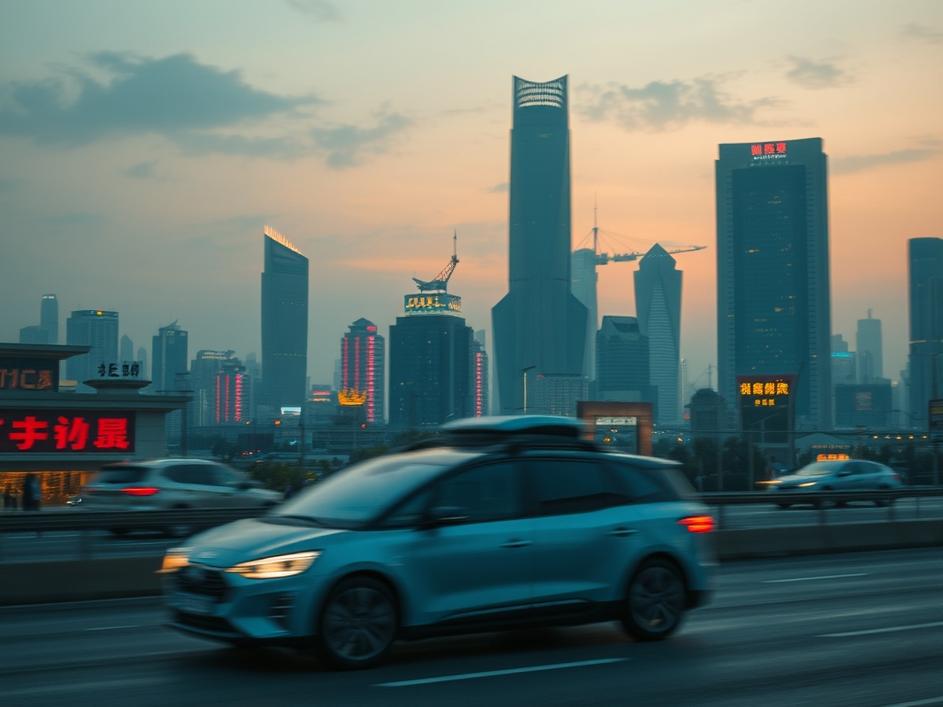
ToggleFor years, the promise of self-driving cars has been just around the corner. We’ve seen the flashy demos, heard the bold predictions, and imagined a future where commutes are a breeze and traffic jams are a thing of the past. But in China, that vision is facing a significant slowdown. Recent news indicates that Chinese regulators are becoming more cautious about widespread adoption of autonomous vehicle technology, and it’s a development that sends ripples through the entire industry.
The primary catalyst for this shift appears to be a fatal accident involving a self-driving car. While details are scarce, the incident has understandably heightened concerns about the safety and reliability of these systems. Regulators, tasked with protecting public safety, are now scrutinizing proposals for mass production and sales of advanced autonomous vehicles with greater scrutiny. The article suggests that only a small fraction of applications from manufacturers seeking permission to sell these vehicles have been approved, signaling a much more conservative approach.
It’s easy to look at this news and see a setback, but it also provides an opportunity to examine the complex challenges involved in bringing self-driving cars to the masses. Autonomous vehicles rely on a combination of sophisticated sensors, powerful computing, and intricate software algorithms. They need to navigate unpredictable real-world conditions, make split-second decisions, and interact safely with human drivers, pedestrians, and cyclists. Achieving this level of reliability is an incredibly difficult engineering problem, and accidents, unfortunately, are a part of the development process.
China’s decision to slow down its self-driving car push has broader implications for the global autonomous vehicle industry. China represents one of the largest and most important markets for automotive technology. If Chinese regulators are taking a more cautious approach, it could influence regulatory decisions in other countries as well. This could lead to a more gradual and measured rollout of self-driving technology worldwide, tempering expectations and potentially delaying the widespread adoption of these vehicles. The race to full autonomy is proving to be a marathon, not a sprint.
So, what does this mean for the future of self-driving cars? It suggests that the industry needs to prioritize safety above all else. More rigorous testing, improved sensor technology, and more robust software algorithms are essential to building public trust and ensuring that these vehicles can operate safely in all conditions. It also means embracing a more gradual and incremental approach to autonomy. Instead of aiming for fully self-driving cars overnight, it might be more realistic to focus on developing advanced driver-assistance systems (ADAS) that gradually take over more driving tasks. These systems can improve safety and convenience without completely removing the human driver from the equation.
One of the keys to advancing self-driving technology is data. Autonomous vehicles need to be trained on vast amounts of real-world driving data to learn how to navigate different scenarios and react appropriately to unexpected events. The more data these systems collect, the better they become at making safe and reliable decisions. This highlights the importance of continuous improvement and over-the-air software updates. As self-driving cars accumulate more data and experience, they can be continuously refined and improved, leading to safer and more reliable performance over time. And it is clear the amount of data is not there yet.
Beyond the technical challenges, there are also important ethical considerations that need to be addressed. How should self-driving cars be programmed to make decisions in unavoidable accident scenarios? Who is liable in the event of an accident involving a self-driving car? These are complex questions that require careful consideration and clear guidelines. Without clear ethical frameworks, it will be difficult to build public trust in autonomous vehicle technology. As China slows its rollout, it provides an opportunity to answer more of these questions.
Ultimately, the success of self-driving cars depends not only on technological advancements but also on public trust and acceptance. People need to feel confident that these vehicles are safe, reliable, and beneficial to society. Building this trust requires transparency, open communication, and a willingness to address public concerns. It also means acknowledging the limitations of current technology and being realistic about the timeline for widespread adoption. The fatal accident mentioned in the news highlights this challenge and underscores the need for a more cautious and measured approach.
China’s decision to slow down its self-driving car push is undoubtedly a setback for the industry, but it’s not a dead end. It’s a reality check that highlights the complex challenges and the need for a more cautious and safety-focused approach. By prioritizing safety, embracing gradual progress, and addressing ethical considerations, the autonomous vehicle industry can ultimately build a future where self-driving cars truly benefit society.



Comments are closed