

We are a digital agency helping businesses develop immersive, engaging, and user-focused web, app, and software solutions.
2310 Mira Vista Ave
Montrose, CA 91020

2500+ reviews based on client feedback
What's Included?
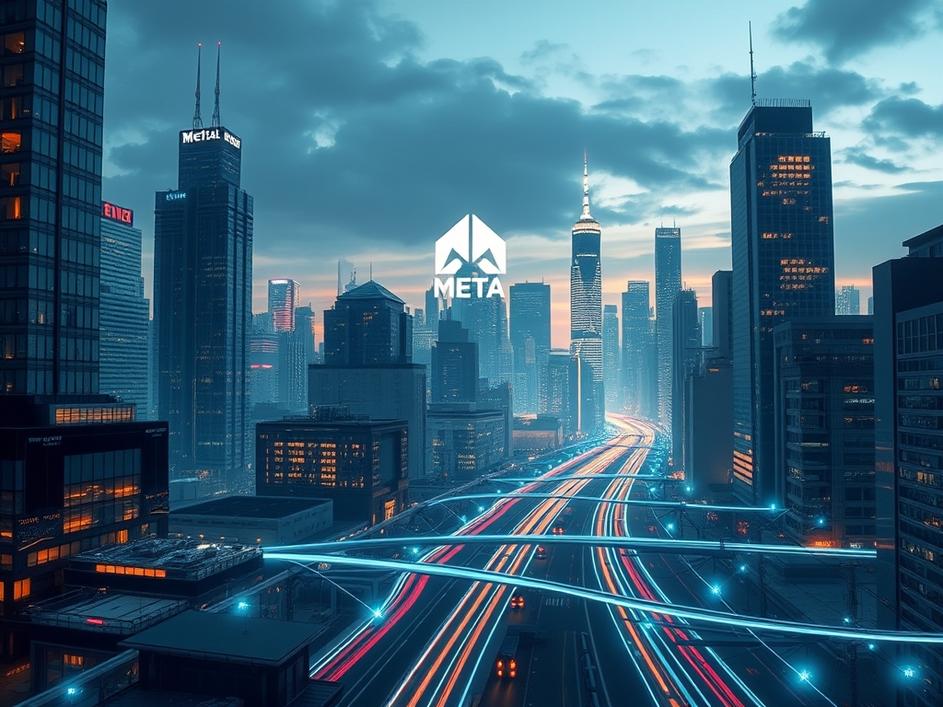
ToggleThe news is buzzing about a new agreement between Corning and Meta. The partnership revolves around fiber optic technology, and the implications for both companies, and especially Corning’s stock valuation, are significant. At its heart, this deal suggests that Meta will be relying heavily on Corning’s expertise to build out its infrastructure, likely to support its growing AI ambitions. But what does this really mean?
Corning is, of course, a giant in the materials science world, best known for its glass. Their fiber optic cables are the backbone of modern internet infrastructure, carrying data at incredible speeds across vast distances. Meta, on the other hand, needs ever-increasing bandwidth to power its various platforms, from Facebook and Instagram to its virtual reality initiatives in the metaverse. AI models demand faster data transmission. This is especially true as AI moves from the theoretical to real-world applications. Meta’s investment suggests that this trend is accelerating.
Meta’s vision for the metaverse is ambitious, to say the least. Creating immersive, realistic virtual experiences requires massive amounts of data. Every interaction, every visual detail, every sound needs to be transmitted in real-time with minimal latency. And remember that Meta wants this to be a global phenomenon, accessible to billions of users simultaneously. To achieve this vision, a robust and reliable fiber optic network is essential. Corning is poised to be a primary supplier in this arena. This deal could be massive for Corning, if Meta’s metaverse plans come to fruition. Even if it doesn’t, the need for bandwidth to support other products is unlikely to diminish any time soon.
Beyond the metaverse, the explosion of AI is driving an unprecedented demand for data. Training complex AI models requires processing enormous datasets. Serving AI applications requires rapid data transfer and analysis. Meta is investing heavily in AI research and development, incorporating AI into everything from content recommendation to personalized advertising. All of this generates an insatiable hunger for bandwidth. And since older copper-based systems are hitting their limits, fiber optic cables are becoming the only viable solution. It’s not just about speed; it’s about reliability and scalability. Meta is betting that Corning can provide the fiber optic infrastructure needed to support its AI ambitions.
For investors, this partnership with Meta is a strong signal that Corning is well-positioned to capitalize on the growing demand for bandwidth. The increased demand is primarily due to AI and metaverse-style applications. The deal could translate into substantial revenue growth for Corning. It also lends credibility to Corning’s long-term strategy, suggesting that the company’s investments in fiber optic technology are paying off. The market is already reacting positively to the news, with Corning’s stock price showing strong gains. But beyond the immediate financial impact, the partnership has broader implications for Corning’s valuation. The company is establishing itself as a key enabler of the AI revolution. This association could attract even more investors and strategic partners, further boosting its long-term prospects.
Of course, Corning is not the only player in the fiber optic market. Companies like CommScope and Prysmian Group are also vying for a share of the growing pie. Furthermore, the deployment of fiber optic networks involves significant upfront costs and logistical challenges. Laying cables across vast distances, obtaining permits, and managing construction projects can be complex and time-consuming. And there’s always the risk that new technologies could emerge that challenge the dominance of fiber optics. Wireless technologies, for example, are constantly evolving, and could eventually offer a cost-effective alternative to wired networks. However, for the foreseeable future, fiber optics remain the most reliable and scalable solution for high-bandwidth data transmission. And Corning, with its long history of innovation and its strong relationships with major technology companies, is well-positioned to maintain its leadership position.
The partnership between Corning and Meta is more than just a business deal; it’s a sign of the times. It reflects the growing importance of bandwidth in the digital age, and the critical role that fiber optic technology plays in enabling everything from social media to artificial intelligence. The relationship could be mutually beneficial. Meta secures access to the high-performance infrastructure it needs to achieve its ambitious goals, and Corning solidifies its position as a leading provider of fiber optic solutions. And if Meta’s AI programs and metaverse initiatives achieve escape velocity, Corning will likely have a front-row seat to the unfolding expansion.
Ultimately, the Corning-Meta agreement signals a bullish outlook for both companies. It also represents a powerful argument for the continued importance of physical infrastructure in the digital world. As AI becomes more integrated into our lives, and as virtual reality becomes more immersive, the demand for bandwidth will only continue to grow. And companies like Corning, that are capable of providing the underlying infrastructure, are likely to thrive in the years to come.


Comments are closed