

We are a digital agency helping businesses develop immersive, engaging, and user-focused web, app, and software solutions.
2310 Mira Vista Ave
Montrose, CA 91020

2500+ reviews based on client feedback
What's Included?
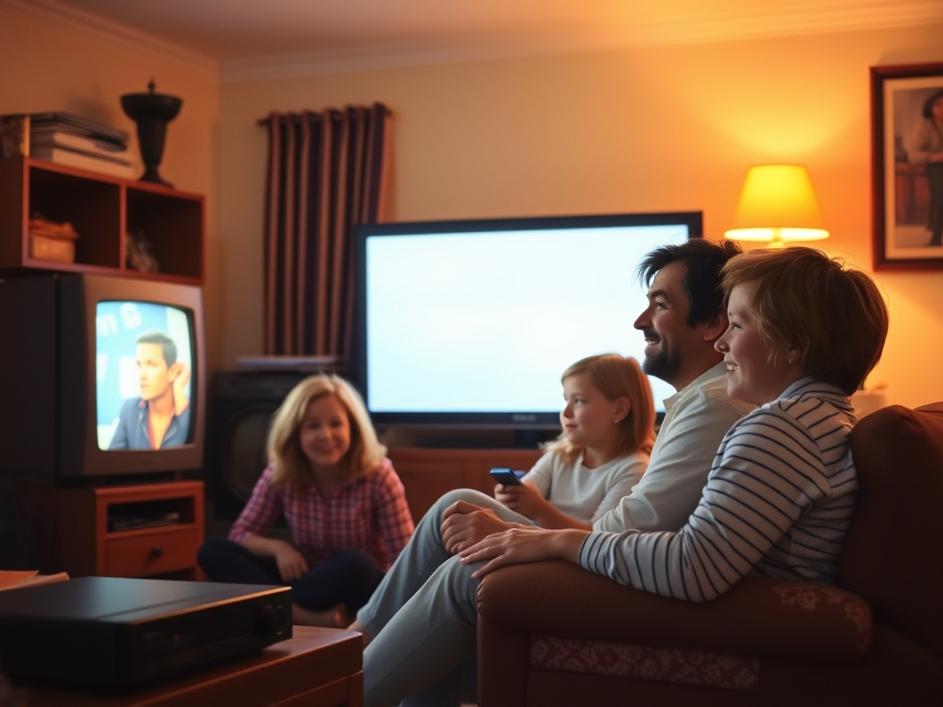
ToggleRemember the days of adjusting rabbit ears, hoping for a clear picture? Before streaming services dominated our screens, cable television reigned supreme. It was a technological leap, bringing dozens, even hundreds, of channels directly into our homes through a network of coaxial cables. This innovation wasn’t just about more viewing options; it was about a new way to access information and entertainment. Forget fuzzy signals and limited choices; cable promised clarity and variety, for a price, of course.
So, how did cable TV actually work? It all starts with the coaxial cable, a specially designed wire that carries television signals over long distances with minimal signal loss. These cables connect to a vast network of amplifiers and signal processors, ensuring that the picture and sound remain clear as they travel from the broadcast source to your television. The system uses frequency modulation to transmit multiple channels simultaneously along the same cable. It’s like a superhighway for TV signals, allowing providers to bundle different channels into packages. This complexity made it a game-changer, but it also meant that maintaining the network required skilled technicians and constant upgrades.
For a long stretch, cable TV was king. The industry built its success on bundling services – offering television, phone, and internet access in a single package. This strategy provided convenience and, often, cost savings for consumers, solidifying cable’s position as the primary source for home entertainment and communication. The ‘bundle’ became synonymous with modern living, and cable companies enjoyed significant growth and profitability. And the variety of channels was something we never saw before. We had news, sports, movies, home improvement. It was great.
However, the reign of cable was not to last forever. The advent of high-speed internet and the rise of streaming services like Netflix, Hulu, and Amazon Prime Video disrupted the industry. Suddenly, consumers had access to a vast library of on-demand content, often at a lower price than traditional cable packages. Streaming offered greater flexibility and personalization, allowing viewers to watch what they wanted, when they wanted, on any device. This shift in viewing habits led to a phenomenon known as ‘cord-cutting,’ as millions of households canceled their cable subscriptions in favor of streaming alternatives.
What does the future hold for cable television? The industry faces a critical juncture, needing to adapt to the changing landscape or risk becoming obsolete. Some cable providers are attempting to compete with streaming services by offering their own on-demand platforms and improving their internet services. Others are focusing on niche markets or partnering with streaming companies to offer bundled packages that combine traditional cable with streaming content. The key to survival will likely depend on the ability to offer competitive pricing, innovative services, and a seamless user experience that caters to the evolving needs of today’s viewers.
But it is hard to compete with streaming because streaming has much lower overhead. There is no physical infrastructure to maintain. And customers can subscribe to what they want, when they want. Cable’s old strategy of the bundle is just not competitive in today’s market.
I remember a time when channel surfing was an art form, flipping through dozens of channels, hoping to stumble upon something interesting. Now, with streaming, the choices are seemingly endless, leading to a different kind of experience – endless scrolling, trying to find the perfect show or movie. While the sheer volume of content is impressive, I sometimes miss the simplicity of flipping through channels, discovering hidden gems along the way. The abundance of choice can be overwhelming, and sometimes, less is more. But even though the world has changed, cable TV played a very big part in our lives, and the coaxial cable will forever be linked to how entertainment entered our homes.
Even with streaming taking over, coaxial cable still plays a role. Many internet providers still use coaxial cable to deliver internet service to homes. So, while it may not be carrying your TV signal, it’s likely carrying your internet signal, which you are probably using to stream a TV signal. The infrastructure is still there. It is simply doing a different job. It’s a great example of technology adapting and evolving. From TV to Internet, it’s doing what it needs to do.
So, cable television isn’t what it used to be. Streaming services have changed the game, but the lessons learned from cable TV’s rise and fall are important. It reminds us that technology is always evolving and that businesses must adapt to survive. And who knows what the future holds? Maybe cable will make a comeback in some new and unexpected form. But one thing is for sure: The story of cable television is a story of innovation, disruption, and the ever-changing world of entertainment.

Comments are closed