

We are a digital agency helping businesses develop immersive, engaging, and user-focused web, app, and software solutions.
2310 Mira Vista Ave
Montrose, CA 91020

2500+ reviews based on client feedback
What's Included?
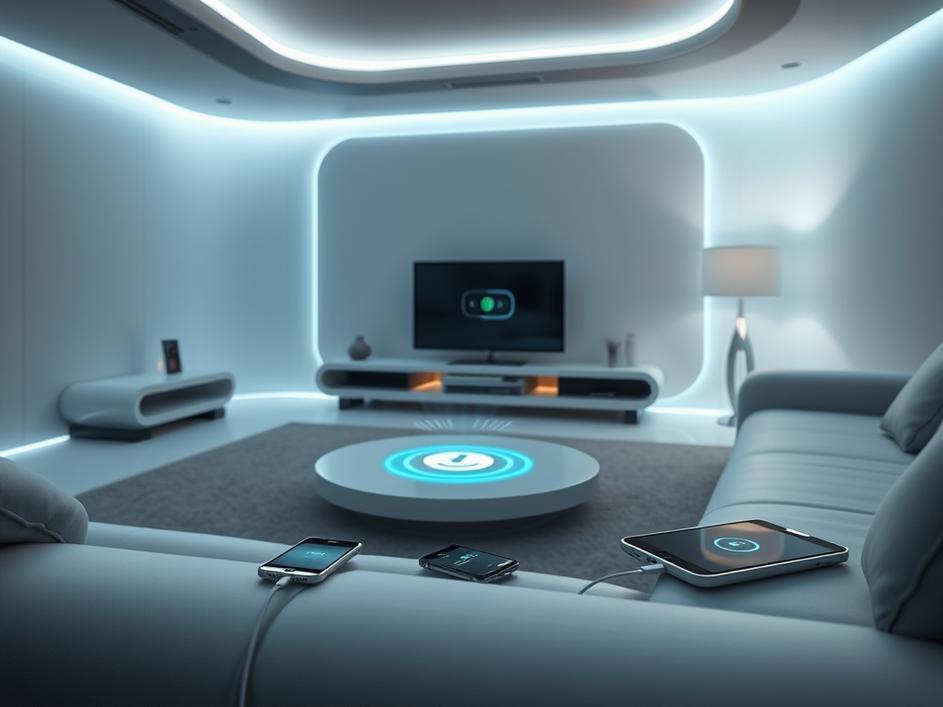
ToggleCES 2026 is shaping up to be a showcase of future tech, and one announcement is already generating serious buzz: Etherdyne Technologies (ETI) is set to unveil its position-free, multi-device wireless power technology. Imagine a world without tangled cords, a world where your gadgets charge themselves automatically, no matter where they are in a room. That’s the promise Etherdyne is making, and it could change how we interact with our devices forever.
The press release is light on technical details, which is typical for pre-CES announcements. They’re keeping the specifics close to the vest until the big show. But the key phrase, “position-free,” suggests a significant advancement over existing wireless charging technologies. Current wireless charging, like Qi, requires devices to be placed directly on a charging pad. Etherdyne’s system seems to eliminate that requirement, potentially using some form of directed energy or resonant inductive coupling to transmit power over a distance. The “multi-device” aspect is also crucial. If it can simultaneously charge multiple devices, it overcomes a major limitation of current wireless solutions, where each device needs its own dedicated charging spot. This could truly remove a major headache in modern living.
Of course, bold claims are common at CES. It’s vital to look beyond the hype and consider the real-world implications. How efficient is the system? Wireless power transfer always involves some energy loss. If the efficiency is too low, it could be more wasteful than using traditional wired charging. What is the effective range? If the power only works within a few inches, its usefulness is limited. The announcement conspicuously omits these important performance specifications.
And, safety is paramount. Sending energy wirelessly raises concerns about potential health risks. Etherdyne will need to demonstrate that its technology is safe for humans and doesn’t interfere with other electronic devices. These are important points they will have to convincingly answer at CES. Regulations and standards will inevitably follow if it becomes widely adopted.
Assuming Etherdyne can address these concerns, the potential applications are vast. Imagine offices where laptops, tablets, and phones are constantly charging, without ever needing to be plugged in. Think of smart homes where sensors, security cameras, and other devices are powered wirelessly, simplifying installation and maintenance. Medical devices could be charged remotely, reducing the risk of infection and improving patient care. Even industrial applications could benefit, with robots and automated systems powered wirelessly on factory floors. The possibilities are genuinely exciting.
Etherdyne isn’t the only company working on wireless power. Several other players are developing similar technologies, and some have already released products with limited range. The challenge for Etherdyne will be to differentiate itself by offering superior performance, efficiency, and safety. They will also face the hurdle of cost. Wireless power systems are currently more expensive than wired charging solutions. For widespread adoption, the cost needs to come down to a competitive level. Furthermore, establishing industry standards will be crucial for ensuring interoperability and preventing fragmentation.
CES 2026 will be a critical moment for Etherdyne. They’ll need to demonstrate a working prototype that delivers on its promises. If the technology is real, efficient, and safe, it could be a game-changer. But if it’s just another overhyped concept, it will likely fade into obscurity. The world will be watching to see if Etherdyne can truly cut the cord and usher in a new era of wireless power. Success in the marketplace relies heavily on establishing trust and confidence, not just technical prowess.
Etherdyne’s announcement signals a clear trend: the future is wireless. While significant hurdles remain, the pursuit of truly wireless power is gaining momentum. It may take several years for the technology to mature and become widely adopted. But the potential benefits are so compelling that it’s likely only a matter of time before we say goodbye to tangled cords and embrace a world where our devices power themselves. The promise of truly seamless charging moves closer to reality, and that’s something to be excited about.


Comments are closed