

We are a digital agency helping businesses develop immersive, engaging, and user-focused web, app, and software solutions.
2310 Mira Vista Ave
Montrose, CA 91020

2500+ reviews based on client feedback
What's Included?
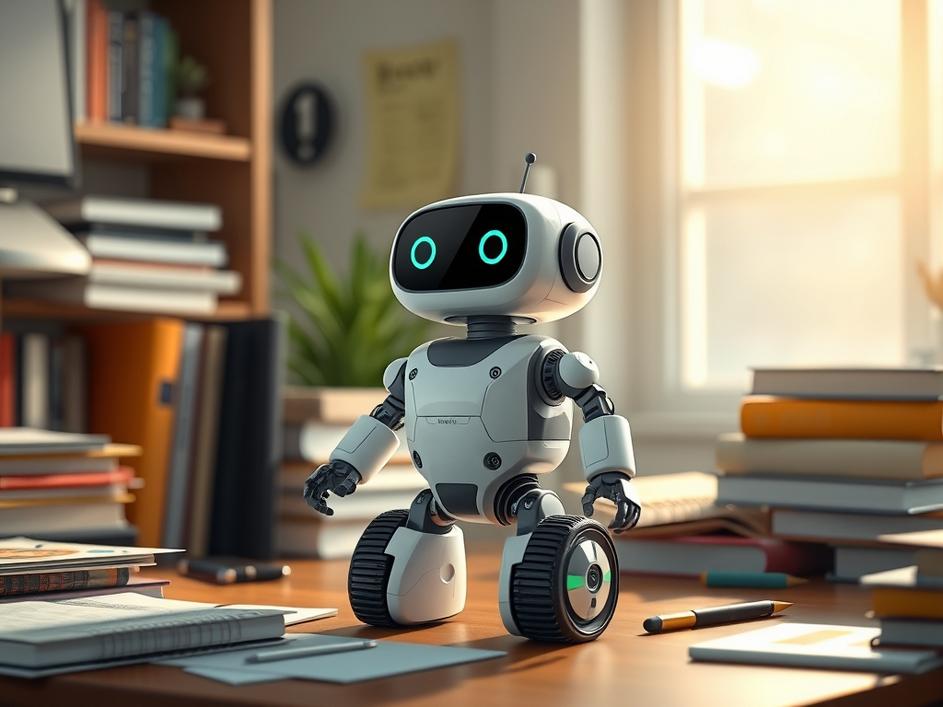
ToggleRobotics and artificial intelligence have long been seen as technologies reserved for well-funded research labs and major corporations. The cost of entry, both in terms of hardware and expertise, has been a significant barrier. But what if that was about to change? ASUS and Hugging Face are teaming up to try and make AI robotics more accessible, with the Reachy Mini robot powered by NVIDIA technology. This collaboration aims to lower the barrier to entry, opening up exciting possibilities for education, research, and even everyday applications. This isn’t just about creating a cool gadget; it’s about putting the power of AI and robotics into the hands of more people.
The Reachy Mini is designed to be an accessible and versatile robotics platform. Instead of a fixed set of functions, Reachy Mini is more like a blank canvas. Its open-source nature encourages users to customize and program it for a wide range of tasks. Imagine students learning about AI by programming Reachy Mini to recognize objects, navigate a room, or even perform simple interactions. The potential applications are vast, limited only by the user’s imagination and coding skills. Plus, by leveraging NVIDIA’s processing power, the Reachy Mini can handle complex AI tasks that would have been impossible on less powerful systems. This robust processing capability enables the robot to perform real-time analysis and decision-making, which is crucial for many robotics applications.
Hugging Face has already made a name for itself by democratizing access to AI models and tools. Their platform allows developers to easily access, share, and deploy pre-trained AI models, lowering the barrier to entry for AI development. By partnering with ASUS on the Reachy Mini project, Hugging Face is extending its mission to the realm of robotics. They are essentially providing the AI “brain” for the robot, while ASUS provides the hardware “body.” This combination of expertise could be a powerful catalyst for innovation in the field. Think of it as providing the tools to allow AI and robotics to be within reach of a wider audience.
NVIDIA’s involvement is also critical. Their processors provide the computational horsepower needed to run sophisticated AI algorithms on the Reachy Mini. Real-time object recognition, natural language processing, and autonomous navigation all require significant processing power, and NVIDIA’s technology is well-suited to these tasks. NVIDIA’s chips are known for their ability to accelerate AI workloads, allowing the Reachy Mini to perform complex tasks efficiently and effectively. This allows developers to focus on creating innovative applications without being limited by hardware constraints. It is very likely that future versions will incorporate even more advanced NVIDIA technology, further boosting the robot’s capabilities.
While the Reachy Mini is an exciting development, it’s important to consider its potential real-world applications. One obvious area is education. The robot could be used to teach students about AI, robotics, and programming in an engaging and hands-on way. It could also be used in research labs to develop and test new AI algorithms and robotics applications. But the possibilities extend beyond these traditional areas. Imagine Reachy Mini being used in healthcare to assist patients, in retail to provide customer service, or in manufacturing to automate tasks. The key is the robot’s versatility and open-source nature, which allows it to be adapted to a wide range of different scenarios. The future of AI and robotics is not just about building more advanced robots, but about making these technologies accessible and useful to everyone.
Of course, there are challenges to overcome. The Reachy Mini will still require some level of technical expertise to program and customize. Not everyone will be able to immediately start building complex robotics applications. There’s also the question of cost. While the Reachy Mini aims to be more affordable than other robotics platforms, it will still represent a significant investment for many individuals and organizations. There are also ethical considerations to keep in mind. As AI becomes more pervasive, it’s important to ensure that it’s used responsibly and ethically. This means addressing issues such as bias, privacy, and security. However, these challenges should not overshadow the potential benefits of making AI robotics more accessible. By lowering the barrier to entry, ASUS, Hugging Face, and NVIDIA are paving the way for a new era of innovation in the field.
The collaboration between ASUS, Hugging Face, and NVIDIA represents a significant step towards democratizing AI and robotics. By making these technologies more accessible, they are empowering individuals and organizations to explore new possibilities and create innovative solutions. The Reachy Mini is not just a robot; it’s a platform for learning, experimentation, and innovation. It’s a tool that could help shape the future of AI and robotics, and it’s exciting to see what people will do with it. This initiative has the potential to inspire a new generation of engineers, scientists, and entrepreneurs, and to create a world where AI and robotics are used to solve some of the world’s most pressing problems. It is more than just a press release, this collaboration has the potential to create something truly impactful.

Comments are closed