

We are a digital agency helping businesses develop immersive, engaging, and user-focused web, app, and software solutions.
2310 Mira Vista Ave
Montrose, CA 91020

2500+ reviews based on client feedback
What's Included?
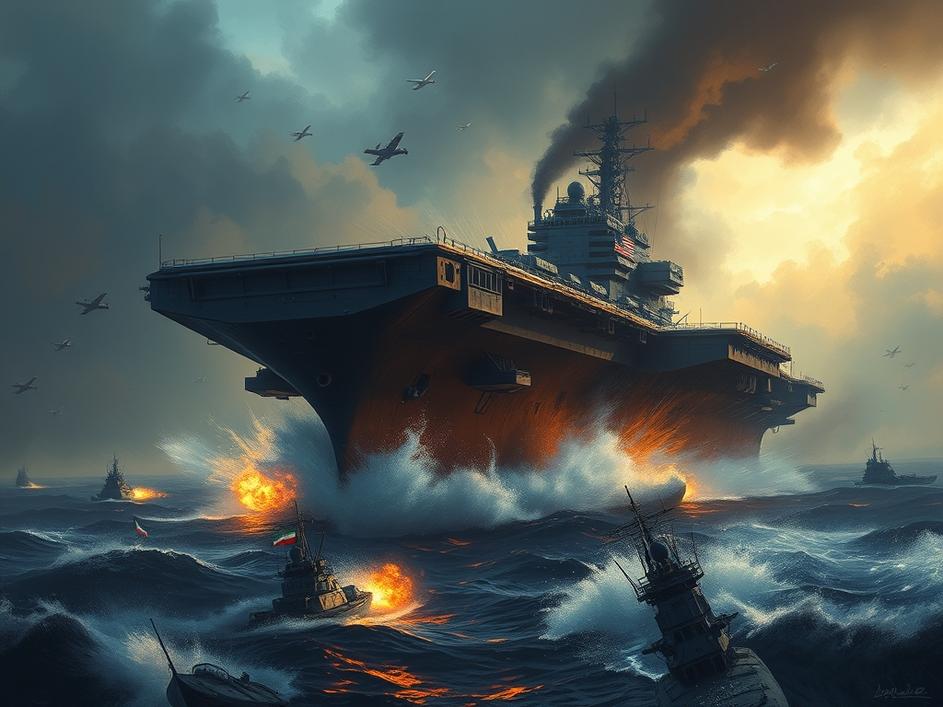
ToggleTensions in the Middle East are never really “gone,” are they? The latest chapter involves a provocative AI-generated video released by Iran, depicting a simulated attack on a U.S. Navy aircraft carrier. Simultaneously, the United States has strategically positioned the USS Gerald R. Ford, a powerful symbol of American naval strength, within striking distance of Iranian waters. It’s a classic case of saber-rattling in the digital age, with both sides using a mix of technology and military might to send very clear messages.
The Iranian video, showcasing a digitally rendered sinking of what appears to be the USS Lincoln, is more than just a collection of pixels. It’s a carefully crafted piece of propaganda intended to project an image of strength and technological prowess. While the video is obviously fictional, the message is clear: Iran wants to demonstrate its ability to inflict damage on its adversaries, even if only in a virtual world. The use of AI in creating such content is a concerning development, as it lowers the barrier to entry for producing sophisticated, believable propaganda.
The U.S. response, in the form of deploying the USS Gerald R. Ford, is a direct counter to Iran’s posturing. This isn’t just about matching Iran’s aggression; it’s about reaffirming America’s presence and dominance in the region. The Gerald R. Ford, one of the most advanced aircraft carriers in the world, represents a significant investment in military power. Its presence near Iranian waters serves as a tangible reminder of the U.S.’s capabilities and its willingness to project force when necessary.
What’s interesting here is the psychological aspect of this exchange. Iran is using AI to create a narrative of vulnerability for the U.S., aiming to influence public perception both domestically and internationally. The U.S., on the other hand, is using the physical presence of its naval assets to project an image of unwavering strength and commitment. This interplay of digital and physical displays of power is a hallmark of modern geopolitical conflicts, where perception management is just as crucial as actual military capabilities.
Iran’s strategy seems to be a blend of defiance and deterrence. By showcasing its (albeit simulated) ability to strike at U.S. assets, Iran seeks to deter potential aggression. This also plays well with a domestic audience, projecting an image of a nation standing up to a global superpower. However, such provocative actions also carry significant risks, potentially escalating tensions and miscalculations that could lead to unintended consequences.
The U.S. strategy is more straightforward: demonstrate overwhelming force and deter any potential Iranian adventurism. The deployment of the Gerald R. Ford is a clear signal that the U.S. is prepared to defend its interests and allies in the region. This approach aims to maintain stability, but it also carries the risk of being perceived as overly aggressive, potentially fueling anti-American sentiment and further destabilizing the region.
It’s essential to remember that this standoff is happening within a broader context of regional rivalries, nuclear ambitions, and economic pressures. Iran’s actions are driven by a desire to assert its regional influence and break free from international isolation. The U.S., meanwhile, is focused on containing Iranian expansionism and maintaining the existing regional order. These conflicting interests create a volatile environment where miscalculations can have far-reaching consequences.
The biggest danger in this situation is the potential for miscalculation. Both sides are engaging in a high-stakes game of brinkmanship, and any misstep could trigger a rapid escalation. A misinterpreted signal, a faulty intelligence report, or an accidental encounter could quickly spiral out of control, leading to a conflict that neither side initially intended.
The only viable path forward is through diplomacy and de-escalation. Both Iran and the U.S. need to find ways to communicate clearly and avoid actions that could be perceived as escalatory. This requires a willingness to compromise and a recognition that neither side can achieve its goals through military confrontation. International mediation and renewed negotiations could provide a framework for addressing the underlying issues and reducing tensions. The alternative is a dangerous spiral of escalation that could have catastrophic consequences for the entire region and beyond.
The current standoff between Iran and the U.S., marked by AI-driven propaganda and strategic naval deployments, highlights the delicate balance of power in the Middle East. Both sides are playing a dangerous game, and the risk of miscalculation is ever-present. Diplomacy and de-escalation are essential to prevent a further escalation of tensions and to pave the way for a more stable and peaceful future.

Comments are closed