

We are a digital agency helping businesses develop immersive, engaging, and user-focused web, app, and software solutions.
2310 Mira Vista Ave
Montrose, CA 91020

2500+ reviews based on client feedback
What's Included?
ToggleLast week the halls of COMPUTEX buzzed with new chips, software demos and a lot of talk about the next wave of industrial tech. Among the many booths, Telit Cinterion drew a steady crowd with two live shows that put the spotlight on edge intelligence. The company used the event to prove that AI can run right where the machines are, instead of sending every picture or sensor reading back to a distant cloud. The demos were simple to watch, but they hinted at big changes for factories that need speed and reliability.
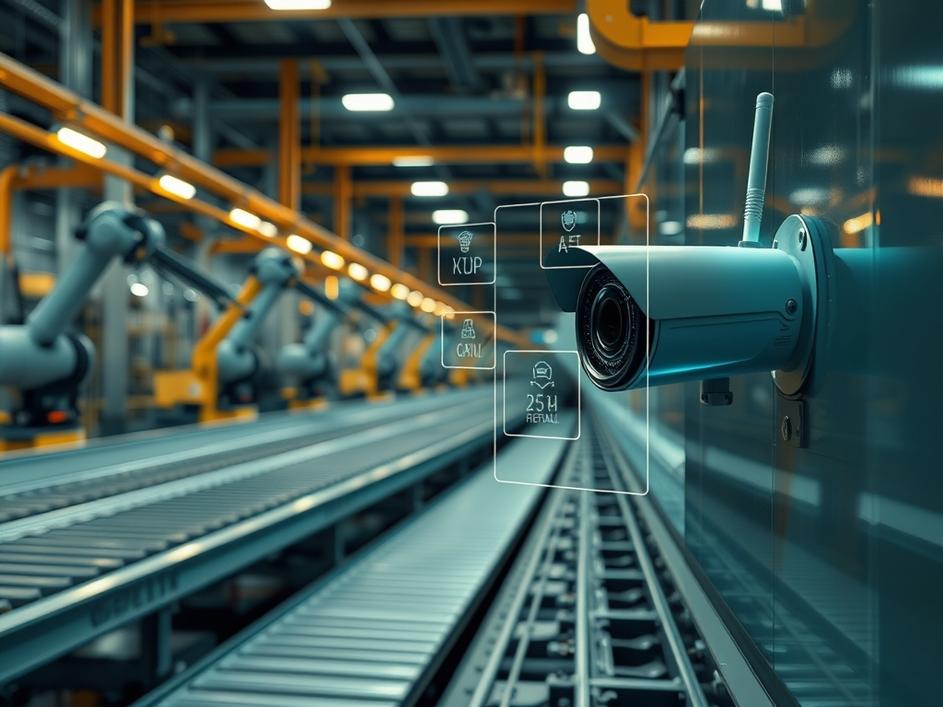
deviceWISE Visual Inspection is a software stack that runs on Telit’s own hardware and can spot defects on a production line in real time. Imagine a camera watching a conveyor belt and instantly flagging a mis‑shaped part. The system does that without waiting for a server to crunch the data. It uses a lightweight neural network that has been trimmed to fit the memory limits of an edge device. Because the model lives on the device, latency drops to a few milliseconds and bandwidth use stays low. The demo showed a camera mounted on a mock‑up assembly line, catching missing screws and mis‑aligned panels as they moved by. The engineers behind the demo emphasized that the solution can be trained for many different products, making it a flexible tool for manufacturers of all sizes.
The second showcase centered on the FE910C04, a cellular module that runs OpenWRT, the open‑source router operating system. By giving developers a familiar Linux environment on a tiny board, Telit opened the door to rapid prototyping. The module supports 5G, LTE‑Advanced and a range of GNSS constellations, so it can stay connected in almost any setting. In the demo, the team attached the module to a small PLC and showed how quickly it could pull data from sensors, run a tiny AI routine, and push the results to a cloud dashboard. The OpenWRT base means developers can add custom packages, scripts or even containerised workloads without waiting for a vendor update. That level of control is rare in commercial cellular modules.
Putting AI at the edge solves a few pain points that have haunted factories for years. First, latency. When a defect is caught a split second too late, the whole batch can be ruined. By processing images locally, deviceWISE cuts the decision time dramatically. Second, bandwidth cost. Sending high‑resolution video to a cloud server can quickly become expensive, especially in remote plants where data links are limited. The FE910C04’s 5G capability helps, but the real savings come from keeping the heavy lifting on the device. Third, reliability. A local AI model can keep working even if the internet drops, which is a common scenario in harsh industrial environments. Together, these benefits make a compelling case for moving more intelligence to the edge.
Seeing these tools in action makes me think the industrial IoT market is reaching a tipping point. Companies have spent the last decade building cloud platforms, but now they are looking for ways to bring some of that power back to the shop floor. Telit’s approach feels pragmatic – they are not promising a one‑size‑fits‑all AI engine, but rather a toolkit that can be customized. That fits well with the way many manufacturers operate: they have legacy equipment, strict safety standards and a need to keep downtime low. The open nature of the FE910C04 also lowers the barrier for startups that want to experiment with edge AI without buying expensive licences. On the flip side, there are challenges. Training reliable models for each product line still requires data science expertise, and maintaining those models over time can be a hidden cost. Security is another concern; a device that runs code locally must be hardened against attacks, especially when it talks to the internet via 5G.
The demos at COMPUTEX gave a clear signal: edge AI is moving from the lab into real factories. Telit Cinterion showed that with the right combination of hardware and software, you can run vision‑based inspections and flexible networking on the same small platform. For manufacturers, that means faster feedback, lower data costs and a more resilient production line. For developers, the OpenWRT‑based module offers a playground that feels familiar yet powerful enough for industrial use. The road ahead will still need careful planning around model management and security, but the tools are now in place. If the industry embraces these solutions, we could see a new era where every machine has a bit of brain power, making factories smarter without adding a lot of complexity.
Source: Original Article


Comments are closed