

We are a digital agency helping businesses develop immersive, engaging, and user-focused web, app, and software solutions.
2310 Mira Vista Ave
Montrose, CA 91020

2500+ reviews based on client feedback
What's Included?
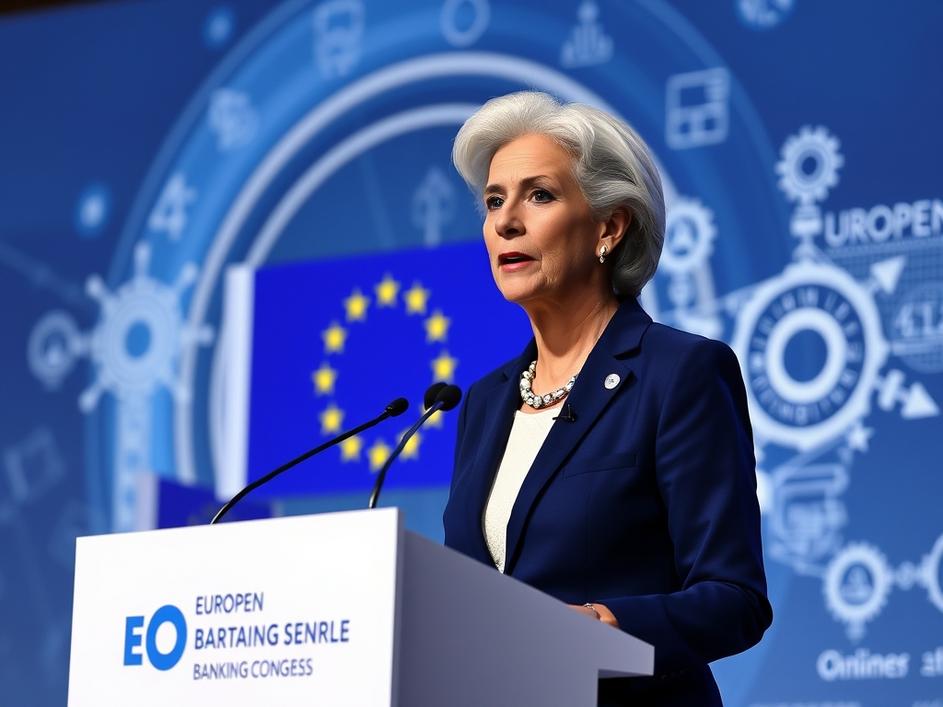
ToggleChristine Lagarde, the head of the European Central Bank, recently delivered a stark message at the European Banking Congress: Europe needs to get its act together. She didn’t mince words, emphasizing the urgent need for the continent to bolster its internal capabilities, invest heavily in artificial intelligence, and build up resilience against global shocks. It’s not just about economic growth anymore; it’s about ensuring Europe’s future in an increasingly competitive and uncertain world.
Let’s be honest, Europe hasn’t been firing on all cylinders lately. Economic growth has been sluggish, and while inflation is starting to cool down, it’s still a concern. Geopolitical tensions, supply chain disruptions, and the ongoing energy crisis have all taken a toll. Lagarde’s message is a clear acknowledgement that Europe can’t afford to be complacent. It’s time for a proactive approach, one that focuses on strengthening the foundations of the European economy.
So, what does it mean to boost domestic strength? It’s about creating an environment where European businesses can thrive. That means cutting red tape, streamlining regulations, and making it easier for companies to invest and grow. It also means investing in education and training to equip the workforce with the skills needed for the jobs of the future. Lagarde is essentially saying that Europe needs to become more self-reliant and less dependent on external factors.
Artificial intelligence is no longer a futuristic concept; it’s a present-day reality that’s transforming industries across the globe. Lagarde is spot-on in highlighting the importance of AI investment for Europe. If Europe wants to remain competitive, it needs to be at the forefront of AI development and adoption. This means not only investing in research and development but also creating a regulatory framework that fosters innovation while addressing ethical concerns. It’s a delicate balance, but one that’s crucial for Europe’s future.
The past few years have shown just how vulnerable the global economy can be to unexpected shocks, from pandemics to geopolitical conflicts. Lagarde’s emphasis on resilience is a recognition that Europe needs to be better prepared for future crises. This means diversifying supply chains, strengthening cybersecurity, and building up financial buffers to withstand economic downturns. It also means fostering greater cooperation among European countries to address common challenges.
Lagarde’s speech is more than just a policy address; it’s a wake-up call for Europe. It’s a reminder that the continent faces significant challenges and that complacency is not an option. While the task ahead is daunting, it’s not insurmountable. By focusing on domestic strength, AI investment, and resilience, Europe can position itself for a brighter future. However, it will require a concerted effort from policymakers, businesses, and individuals alike. It’s time for Europe to step up and take control of its destiny.
The solutions Lagarde proposes aren’t novel; they are necessary. Europe has the talent, the resources, and the potential to be a global leader in the 21st century. But it needs to act decisively and strategically. This means fostering greater collaboration between European countries, encouraging innovation, and creating a business-friendly environment that attracts investment. It also means addressing social inequalities and ensuring that everyone benefits from economic growth.
One of the biggest challenges facing Europe is the lack of a unified vision. Different countries have different priorities and different approaches to economic policy. Lagarde’s message is a call for greater coordination and cooperation. It’s a reminder that Europe is stronger when it works together. By aligning their interests and pooling their resources, European countries can achieve far more than they could on their own.
Ultimately, Lagarde’s call for action is not just about economics; it’s about sovereignty. It’s about ensuring that Europe remains a relevant and influential player in the global arena. In a world that’s increasingly dominated by superpowers like the United States and China, Europe needs to assert its own identity and its own interests. By strengthening its domestic capabilities, investing in AI, and building up resilience, Europe can secure its future and maintain its position as a global leader.
Christine Lagarde’s warning serves as an important reminder that Europe’s future is not predetermined. It’s a future that will be shaped by the choices that Europe makes today. By embracing change, fostering innovation, and working together, Europe can overcome its challenges and build a brighter future for its citizens. The time for action is now. The world is changing rapidly, and Europe cannot afford to be left behind. The next few years will be critical in determining whether Europe rises to the occasion and secures its place in the 21st century.



Comments are closed