

We are a digital agency helping businesses develop immersive, engaging, and user-focused web, app, and software solutions.
2310 Mira Vista Ave
Montrose, CA 91020

2500+ reviews based on client feedback
What's Included?
ToggleFoxconn, the name synonymous with electronics manufacturing, especially for Apple’s iPhones, has announced a significant milestone. Chairman Young Liu revealed that the company is currently capable of producing 1,000 AI racks every week. And, even more impressively, they anticipate boosting that number even further in the coming year. This isn’t just a blip on the radar; it’s a strong indicator of the escalating demand and production capabilities in the AI hardware sector.
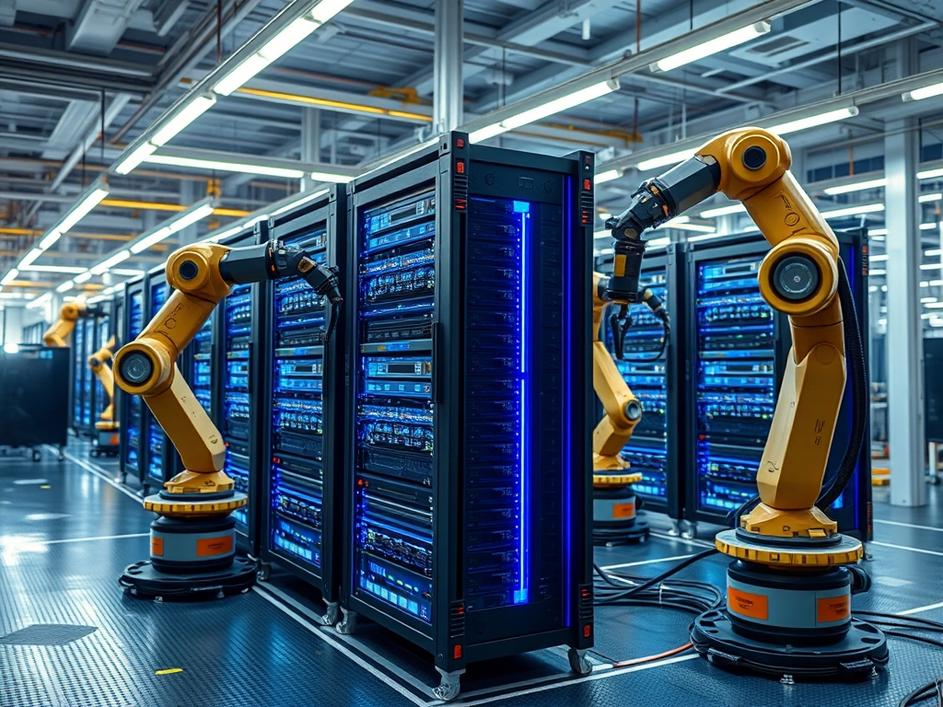
Now, you might be wondering, what exactly *is* an AI rack? Think of it as a super-powered computer system, custom-built to handle the intense processing demands of artificial intelligence and machine learning tasks. These racks are packed with powerful processors (GPUs are especially popular), memory, and networking components, all working together to train AI models, run complex simulations, and power AI-driven applications. They’re the backbone of any serious AI operation, from research labs to large-scale data centers.
Foxconn’s ability to churn out 1,000 of these complex systems weekly speaks volumes. It suggests a mature and highly efficient manufacturing process, along with a robust supply chain. This level of production isn’t achieved overnight; it requires significant investment in infrastructure, expertise, and strategic partnerships. The fact that they’re planning to increase production next year also underscores their confidence in the continued growth of the AI market. It is a signal that Foxconn is heavily invested in AI hardware.
The question then becomes: who is buying all of these AI racks? The answer is diverse, spanning a wide range of industries. Cloud computing providers are major consumers, using AI racks to power their AI-as-a-service offerings. Research institutions and universities need them for cutting-edge AI research. Large corporations across finance, healthcare, and manufacturing are deploying AI for various applications, from fraud detection to drug discovery to automated quality control. Self-driving car companies need massive processing power to train AI models that can handle the complexities of real-world driving. The demand is clearly there, and it’s only going to increase.
It’s important to consider that Foxconn’s move into AI rack production isn’t happening in isolation. The company is likely looking to position itself as a key player in the broader AI ecosystem. This could involve developing its own AI solutions, partnering with AI software companies, or even investing in AI startups. By controlling a significant portion of the AI hardware supply chain, Foxconn gains considerable leverage and influence in this rapidly evolving field. The company may be in a position to influence the design and performance of AI systems.
We can’t ignore the geopolitical element either. Foxconn’s expansion of AI hardware production happens amid a global race for AI dominance. Countries around the world are investing heavily in AI research and development, recognizing its strategic importance for economic competitiveness and national security. Foxconn, being a major player in the global electronics manufacturing landscape, finds itself at the center of this competition. Its production capabilities will likely be crucial for fueling the AI ambitions of various nations and companies. It’s a key part of the tech cold war that’s brewing, and hardware capability is essential.
Of course, there are challenges ahead. Scaling up production of complex AI systems requires careful planning and execution. Supply chain disruptions, component shortages, and skilled labor shortages could all pose obstacles. Furthermore, the rapid pace of innovation in AI hardware means that Foxconn needs to stay ahead of the curve, constantly adapting its manufacturing processes to accommodate new technologies. Power consumption and cooling are also critical considerations, as AI racks can generate significant heat. As more AI hardware is manufactured, so more electricity and better cooling is needed.
Foxconn’s AI rack production milestone isn’t just a story about one company’s success; it’s a reflection of the broader trends shaping the future of technology. Artificial intelligence is rapidly transforming every aspect of our lives, from how we work to how we communicate to how we solve complex problems. The demand for AI hardware is only going to increase, and companies like Foxconn are positioning themselves to capitalize on this growth. The AI revolution is well underway, and the production of AI racks is a key metric of that progress.



Comments are closed