

We are a digital agency helping businesses develop immersive, engaging, and user-focused web, app, and software solutions.
2310 Mira Vista Ave
Montrose, CA 91020

2500+ reviews based on client feedback
What's Included?
ToggleWe hear it everywhere: artificial intelligence is poised to steal our jobs. From writers to accountants, it seems no profession is safe from the looming threat of automation. But there’s one industry where the robots aren’t quite ready to clock in: construction. While AI is making inroads, the idea of it completely replacing human workers on building sites is still a long way off. And that’s good news for the millions who depend on these jobs.
So, what makes construction so resistant to the AI takeover? Unlike many office-based jobs that involve predictable tasks and data processing, construction is incredibly complex. Each project is unique, with its own set of challenges, from unexpected weather to tricky site conditions. Think about it: a software algorithm can easily manage invoices. But can it navigate a muddy trench, weld steel beams at dizzying heights, or troubleshoot a faulty electrical system in the pouring rain? These are tasks that require human ingenuity, adaptability, and physical dexterity – qualities that AI, at least for now, struggles to replicate.
Construction also demands a high level of collaboration and communication. Workers need to coordinate their efforts, solve problems on the fly, and adapt to changing circumstances. While AI can certainly assist with project management and planning, it can’t replace the nuanced interactions and personal relationships that are essential for a successful construction project. The ability to read body language, understand unspoken cues, and build trust among team members is something that comes naturally to humans but remains a significant hurdle for AI.
That’s not to say AI has no place in the construction industry. In fact, it’s already being used in a number of ways to improve efficiency and safety. Drones are surveying sites, robots are performing repetitive tasks like bricklaying, and AI-powered software is optimizing project schedules and resource allocation. But the key here is that AI is augmenting human capabilities, not replacing them entirely. It’s helping workers to be more productive, make better decisions, and avoid dangerous situations. For example, AI could analyze structural blueprints to identify potential safety hazards or inefficiencies, allowing human engineers to address them before they become problems. AI powered tools can prevent accidents by using machine vision to detect workers not wearing proper safety gear.
Instead of worrying about AI stealing their jobs, construction workers should be focusing on developing new skills that will allow them to work alongside AI-powered tools. As the industry becomes more technologically advanced, there will be a growing demand for workers who can operate and maintain these systems. Think of it like the shift from manual labor to operating heavy machinery: people had to learn how to use the new equipment. Similarly, future construction workers will need to be comfortable with AI and other technologies. Currently, the industry faces a significant skills gap, with many employers struggling to find qualified workers to fill open positions. Addressing this gap through training and education is a far more pressing concern than the hypothetical threat of AI taking over.
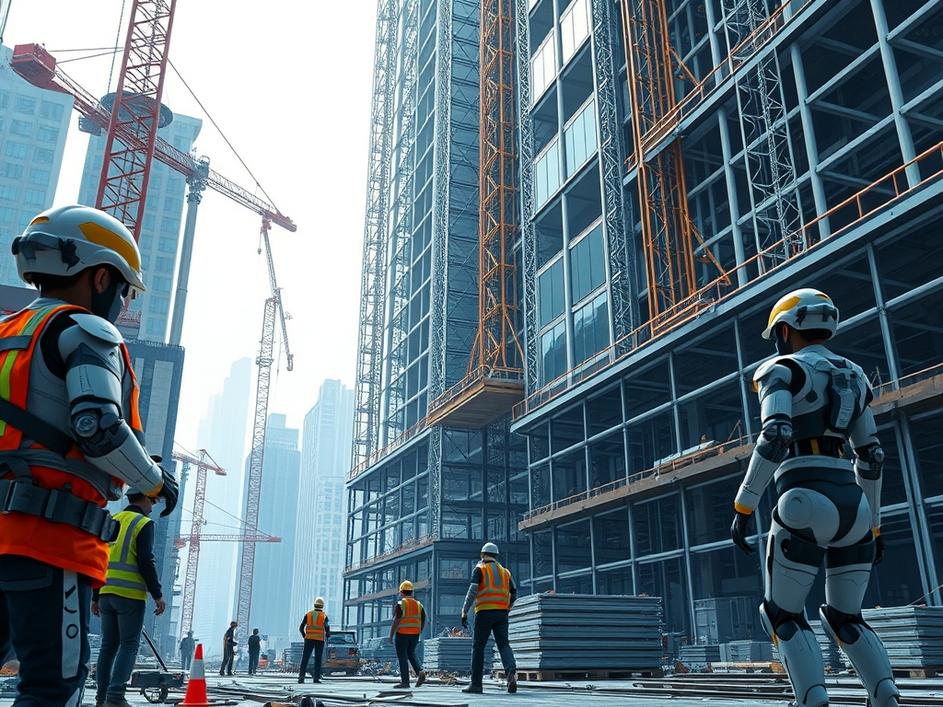
The future of construction is likely to be a collaborative one, with humans and AI working together to build the world around us. AI will handle the tedious, repetitive tasks and provide valuable insights and analysis, while humans will focus on the creative problem-solving, critical thinking, and interpersonal skills that are essential for success. This partnership will lead to safer, more efficient, and more sustainable construction projects. It’s not about man versus machine; it’s about man and machine working together to build a better future.
So, while anxiety about AI is understandable, construction workers can breathe a little easier. The unique demands of their profession mean that human skills will remain essential for the foreseeable future. The key is to embrace the changes that AI is bringing to the industry and to focus on developing the skills that will be needed to thrive in this new environment. Instead of fearing the robots, construction workers should see them as valuable partners in building a better world.



Comments are closed