

We are a digital agency helping businesses develop immersive, engaging, and user-focused web, app, and software solutions.
2310 Mira Vista Ave
Montrose, CA 91020

2500+ reviews based on client feedback
What's Included?
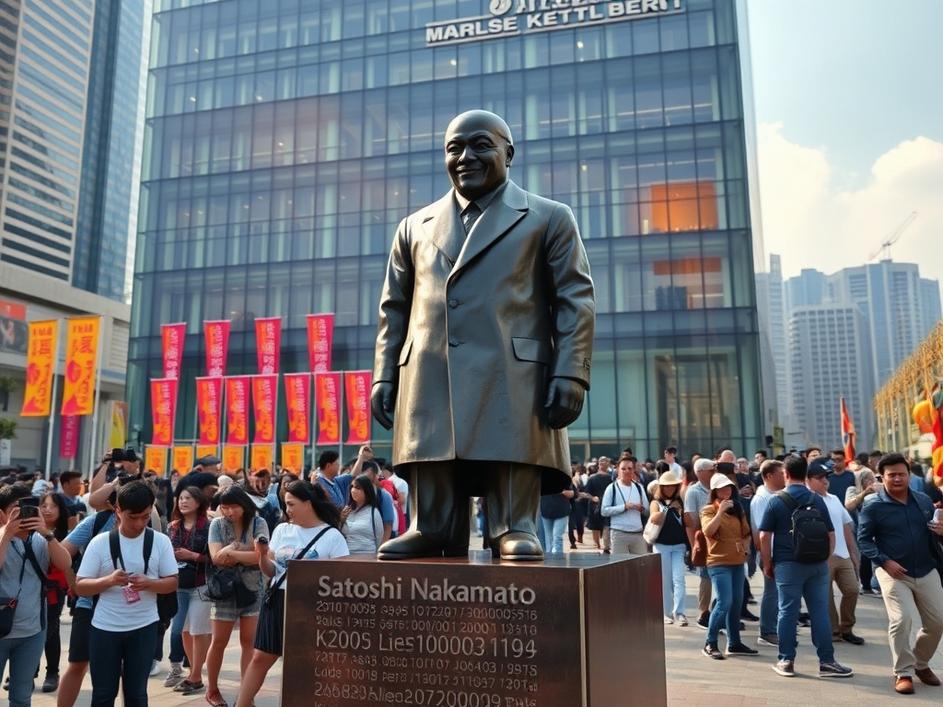
ToggleLast weekend Hong Kong turned a corner in its cultural scene by unveiling a statue dedicated to the person—or people—known as Satoshi Nakamoto. The ceremony took place at the city’s annual Web3 Festival, a gathering that brings together developers, investors, and curious onlookers who share an interest in blockchain technology. The moment felt like a blend of ceremony and street art, with a crowd that ranged from seasoned crypto traders to tourists snapping photos. For many, the statue is more than a piece of metal; it is a symbol of how a once‑niche idea has seeped into everyday conversation. The decision to place a physical monument to an anonymous figure highlights how the digital world is now demanding a place in the real one.
The bronze figure stands about two meters tall, its posture relaxed yet thoughtful, as if pondering the next block to be added to a chain. The sculptor chose a minimalist style, avoiding any facial features that could tie the work to a specific individual. Instead, the statue holds a stylized ledger in one hand, its pages etched with faint code snippets that resemble the original Bitcoin whitepaper. The base is engraved with the date of Bitcoin’s launch, 2009, and the words “Genesis Block” in both English and Chinese. The location—outside the Hong Kong Convention and Exhibition Centre—means thousands will pass by it daily, turning a fleeting curiosity into a permanent landmark.
Why would a city known for its skyscrapers and financial markets decide to celebrate a figure from the crypto world? Hong Kong has been positioning itself as a hub for fintech innovation, and the statue is a public declaration of that intent. The government has recently rolled out a sandbox for blockchain projects, offering a testing ground for new ideas without the heavy hand of regulation. By showcasing a statue at a high‑profile festival, officials send a message that they are open to experimentation while still keeping an eye on consumer protection. The move also serves to attract talent from around the globe, signaling that Hong Kong is a place where digital pioneers can find both support and visibility.
Part of the statue’s allure comes from the fact that nobody knows who Satoshi Nakamoto really is. The name could belong to a single person, a group of developers, or even a government agency. This anonymity has turned the creator into a modern myth, a kind of tech‑age folklore. By giving a physical form to an unknown entity, Hong Kong is effectively turning mystery into a tourist attraction. It also raises questions about how we honor creators whose identities are deliberately hidden. Is it appropriate to memorialize a person who chose to stay out of the spotlight? The statue invites visitors to reflect on those paradoxes while also celebrating the impact of the technology.
The intersection of sculpture and cryptocurrency is a reminder that art and technology have always borrowed from each other. In this case, the medium—bronze—represents something ancient, while the subject matter is cutting‑edge. The piece acts as a bridge between generations, showing that the values of decentralization, trust, and community can be expressed in many forms. For the festival audience, the statue becomes a conversation starter, prompting discussions about the future of money, the role of open‑source development, and the power of collective action. It also demonstrates how cultural institutions can adapt, using contemporary themes to stay relevant in a rapidly changing world.
As the sun set on the unveiling, the crowd lingered, taking selfies and debating the next steps for blockchain in Hong Kong. The statue will likely become a backdrop for future events, a quiet witness to the city’s evolving relationship with digital finance. Whether the gesture leads to more concrete policy changes or simply remains a symbolic gesture, it has already sparked conversation. In a world where ideas can travel faster than any physical object, giving a statue to an invisible creator feels both ironic and fitting. The bronze figure stands as a reminder that even the most abstract concepts can find a home in stone, and that the story of Bitcoin is still being written—one block, one statue, one conversation at a time.


Comments are closed