

We are a digital agency helping businesses develop immersive, engaging, and user-focused web, app, and software solutions.
2310 Mira Vista Ave
Montrose, CA 91020

2500+ reviews based on client feedback
What's Included?
ToggleArtificial intelligence is rapidly advancing, but it’s also creating a massive energy demand. Training complex AI models requires huge data centers, which consume vast amounts of electricity. This raises concerns about sustainability and the environmental impact of AI. Can we keep pushing the boundaries of AI without burning the planet?
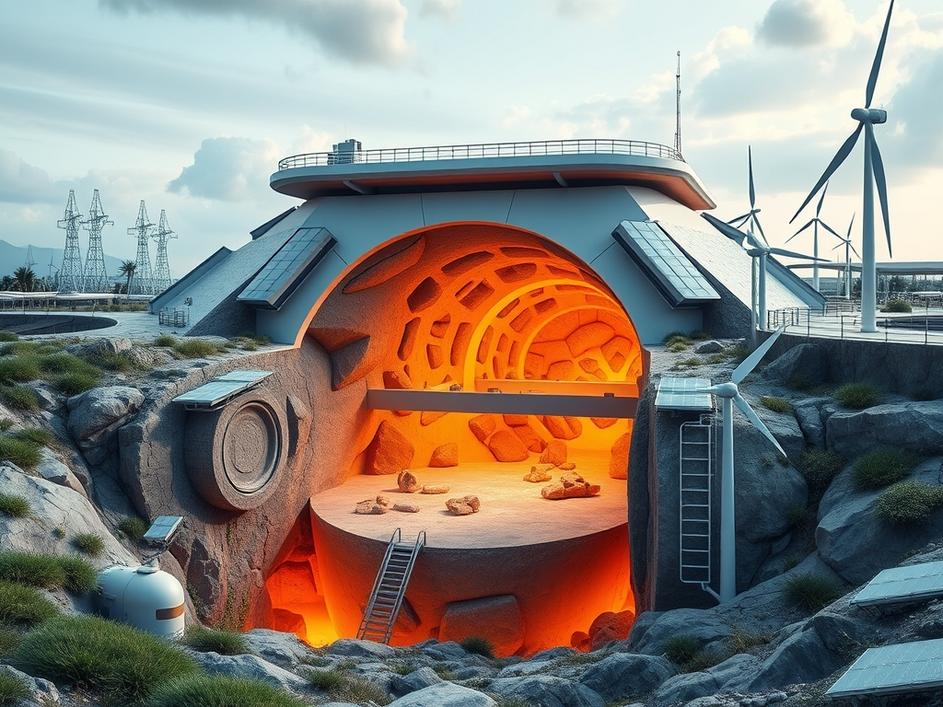
Exowatt, a startup backed by Sam Altman, believes it has an answer: store energy as heat in rocks. The company aims to heat massive quantities of rocks using renewable energy sources like solar and wind. This stored heat can then be converted back into electricity on demand, providing a reliable and affordable power source for AI data centers. Their target? One cent per kilowatt-hour.
The basic concept is straightforward. Excess energy from renewable sources is used to heat the rocks to very high temperatures. The rocks act as a thermal battery, storing the energy until it’s needed. When electricity is required, a heat engine converts the thermal energy back into electricity. This approach could potentially solve the intermittency problem of renewable energy, making it a more viable option for powering energy-hungry AI systems.
There are several potential benefits to using hot rocks for energy storage. First, rocks are cheap and abundant. Unlike batteries, which rely on expensive and often scarce materials, rocks are readily available. Second, thermal storage can be very efficient, with minimal energy loss over time. Third, the system can be scaled up easily to meet the growing energy demands of AI data centers.
Of course, there are also challenges to overcome. Building and operating a large-scale hot rock energy storage system is a complex engineering feat. Maintaining the high temperatures required for efficient energy conversion is not easy. And the initial investment costs could be significant. Exowatt will need to demonstrate that its technology is both reliable and cost-effective to attract customers and investors.
The goal of one cent per kilowatt-hour is incredibly ambitious. If Exowatt can achieve this, it would revolutionize the energy market and make AI much more sustainable. It would also give the company a significant competitive advantage, attracting data centers looking for cheap and reliable power. However, achieving this price point will require significant technological breakthroughs and economies of scale.
While Exowatt is focused on powering AI data centers, the potential applications of hot rock energy storage are much broader. It could be used to provide electricity to remote communities, power industrial processes, and even heat homes. If the technology proves successful, it could play a significant role in the transition to a cleaner and more sustainable energy future.
Exowatt’s concept is intriguing, and the backing from Sam Altman adds credibility. The core idea of using abundant and inexpensive materials like rocks for energy storage is appealing. However, turning this idea into a practical and scalable solution will be a major challenge. The engineering hurdles are significant, and the company will need to demonstrate that its technology can deliver on its promises. The feasibility of achieving the targeted cost of one cent per kilowatt-hour is a crucial factor that will determine its success.
Exowatt isn’t the only company working on innovative energy storage solutions. Other companies are developing advanced batteries, pumped hydro storage, and other technologies. The energy storage market is becoming increasingly competitive, and Exowatt will need to differentiate itself to succeed. Its focus on hot rocks and its ambitious cost target could give it an edge, but it will need to execute flawlessly to stay ahead of the game.
The demand for energy from AI is only going to increase in the coming years. Finding sustainable and affordable ways to power AI data centers is essential. Exowatt’s hot rock energy storage technology is a promising approach, but it’s still early days. Whether it succeeds or not, the company is helping to drive innovation in the energy sector and raise awareness of the energy challenges posed by AI. The need for solutions like Exowatt is clear, and the coming years will be crucial in determining if hot rocks can truly cool down the AI energy crisis.
Exowatt’s venture represents a bold attempt to tackle a growing problem: the energy consumption of AI. While significant hurdles remain, the potential rewards are enormous. If they can successfully harness the power of hot rocks, they could not only power the AI revolution but also contribute to a more sustainable energy future for everyone.



Comments are closed