

We are a digital agency helping businesses develop immersive, engaging, and user-focused web, app, and software solutions.
2310 Mira Vista Ave
Montrose, CA 91020

2500+ reviews based on client feedback
What's Included?
ToggleWhen most people think about AI education they picture a rush of interest after ChatGPT hit the headlines. The reality at the University of Florida was different. A small team of faculty members decided years ago that students needed a solid grounding in machine learning, data ethics, and practical AI tools. They built a full‑semester curriculum from scratch, testing labs and projects while the rest of the world was still figuring out what a large language model could do. The result was a class that taught students how to write code, evaluate bias, and deploy models on real hardware. It wasn’t a hype‑driven add‑on; it was a deliberate effort to give students a working skill set before the buzz even started. That early start now feels like a quiet advantage, especially as other schools scramble to catch up.
The program didn’t stay hidden in a basement lab. After a few pilot runs, the faculty packaged the syllabus, assignment templates, and a set of open‑source tools into a package they call the “AI Curriculum Kit.” The kit includes lecture slides, hands‑on labs that run on Nvidia GPUs, and a guide for integrating ethics discussions throughout the semester. What makes it stand out is that it’s written to be portable – a community college with a modest computer lab can follow the same steps as a research university. The team even recorded video walkthroughs for each lab, so an instructor who has never taught AI can still deliver the material. By publishing the kit under a permissive license, the university hopes other institutions will adapt it rather than reinvent the wheel.
One of the most eye‑catching details in the story is Ethan Pecora, a graduate student who relies on a crew of fifteen specialized AI agents to run his day. Some of those bots handle his calendar, others draft emails, and a few even monitor his mental‑wellness app for signs of stress. Pecora says the agents let him focus on the creative parts of his research, like designing new neural network architectures. While the university’s curriculum teaches students how to build such agents, Pecora’s own setup shows what a fully integrated AI assistant can look like in practice. It also raises questions about dependence on automated helpers and how we teach students to maintain control over the tools they create.
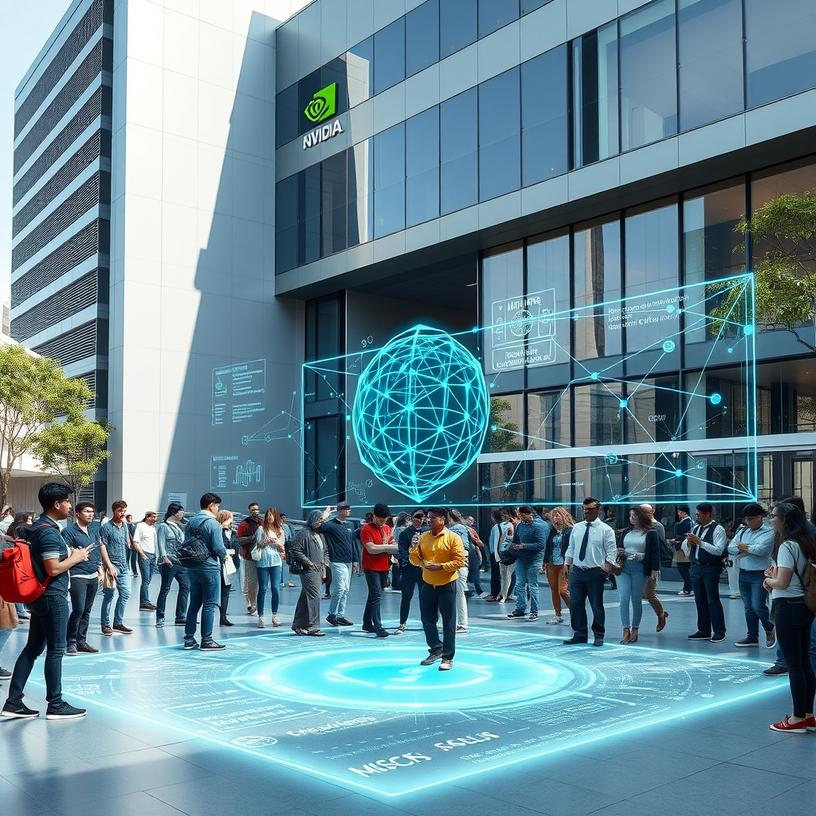
The curriculum’s lab component runs on Nvidia’s latest GPUs, and the university has a research agreement that gives students access to cloud‑based GPU time at reduced cost. This partnership means the labs stay current with the hardware that powers most commercial AI services. Students get to train small models, experiment with quantization, and see how performance changes when they move from a laptop to a data‑center GPU. The university also uses Nvidia’s software stack, which includes libraries for accelerated inference and tools for measuring energy use. By exposing learners to the same ecosystem that industry uses, the program bridges the gap between theory and the day‑to‑day work of AI engineers.
From my point of view, the biggest takeaway is that curriculum can be a public good. When a school invests time to map out a learning path and then shares it openly, the ripple effect can be huge. Smaller colleges that lack dedicated AI faculty can now offer a credible course without hiring a full team. That could level the playing field for students across the country, especially those in regions that have been left out of the recent AI boom. At the same time, the model shows that universities can act as incubators for practical tools – not just research papers. If more schools adopt a similar open‑source mindset, we might see a faster, more coordinated rollout of AI literacy that matches the speed of technological change.
There’s a risk that spreading a ready‑made curriculum too quickly could lead to superficial teaching. Schools need to adapt the material to their own context, add local case studies, and keep the ethics conversations alive. The University of Florida’s approach tries to avoid that trap by embedding discussion prompts and encouraging instructors to bring in community voices. If they succeed, the model could become a template for responsible AI education – one that moves fast enough to stay relevant but slow enough to think through the consequences. In the end, the real success will be measured by the students who walk out of those classrooms, not just by the number of institutions that adopt the kit. That’s a hopeful sign that the early effort to teach AI before the hype can still pay off.
Source: Original Article


Comments are closed