

We are a digital agency helping businesses develop immersive, engaging, and user-focused web, app, and software solutions.
2310 Mira Vista Ave
Montrose, CA 91020

2500+ reviews based on client feedback
What's Included?
ToggleVR Vision has stepped into the future with its new training platform that combines artificial intelligence (AI) and extended reality (XR). They’re calling it “The Intelligent Training Era,” and it’s designed to give workers smarter, more personalized coaching. Instead of one-size-fits-all training programs, this platform offers adaptive learning that adjusts to how each person performs. This makes training more effective because it focuses on what the learner needs to improve, not just delivering the same information repeatedly.
The AI component doesn’t just watch—it learns and predicts. By analyzing patterns from each training session, the system can foresee potential safety risks before they become serious issues. This kind of predictive safety feature is a huge step forward for industries where accidents are a real threat. Instead of waiting for problems to show up, companies can now get early warnings and take action sooner. The platform’s AI also provides real-time coaching, helping trainees fix mistakes quickly by giving immediate feedback. This helps build better habits faster than traditional methods.
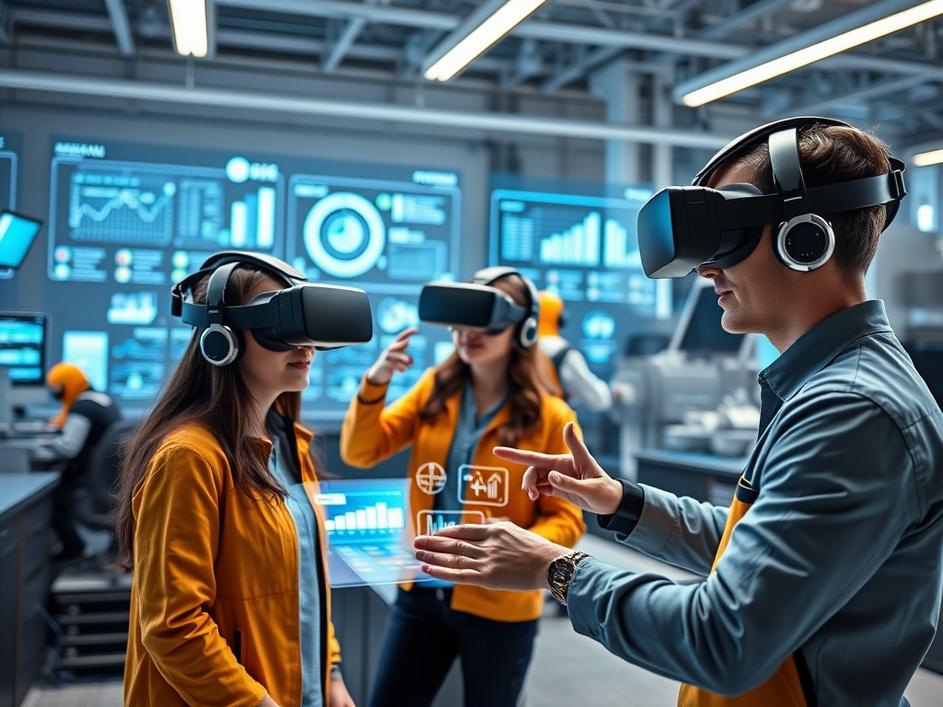
Extended reality adds a layer of immersion that’s hard to beat. Instead of reading manuals or watching videos, learners step into virtual environments where they can practice skills as if they were in the real world. XR can simulate complex situations that are hard or dangerous to recreate in a classroom, like operating heavy machinery or dealing with hazardous materials. This hands-on experience builds confidence and competence. Plus, training in XR tends to be more engaging, which means learners are more likely to pay attention and retain what they learn.
One of the biggest challenges in training is knowing how well someone is actually doing. VR Vision addresses this with objective scoring, which removes guesswork by using data to assess performance. Trainees get clear insights into their strengths and areas that need improvement. On top of that, the platform uses intelligent digital twins—virtual models of equipment or workspaces—that can be manipulated during training sessions. This allows for realistic practice without risking real-world damage or downtime. Together, these features make it easier for companies to track progress and get a real sense of how prepared their workforce is.
All these features are managed through VR Vision’s Vision Portal. This centralized dashboard gives trainers and managers a clear overview of training activities, performance metrics, safety alerts, and more. It simplifies the process of organizing, monitoring, and improving training programs. Having everything in one place saves time and helps companies make data-driven decisions to continuously enhance their workforce skills. This shift toward integrating AI and XR under one platform points to a future where training is smarter, safer, and more efficient.
What VR Vision has created feels like a thoughtful answer to the gaps in traditional workforce training. By merging AI’s adaptability, XR’s immersive experiences, and data-driven management, this platform offers a new way to learn that’s more tailored and practical. Companies that adopt tools like this could see better safety records, faster skill development, and clearer insights into employee progress. While not every training need fits perfectly into virtual environments, having such powerful tools in the arsenal is a step forward. As workplaces evolve, training has to evolve too, and VR Vision’s approach shows us one possible path forward.



Comments are closed