

We are a digital agency helping businesses develop immersive, engaging, and user-focused web, app, and software solutions.
2310 Mira Vista Ave
Montrose, CA 91020

2500+ reviews based on client feedback
What's Included?
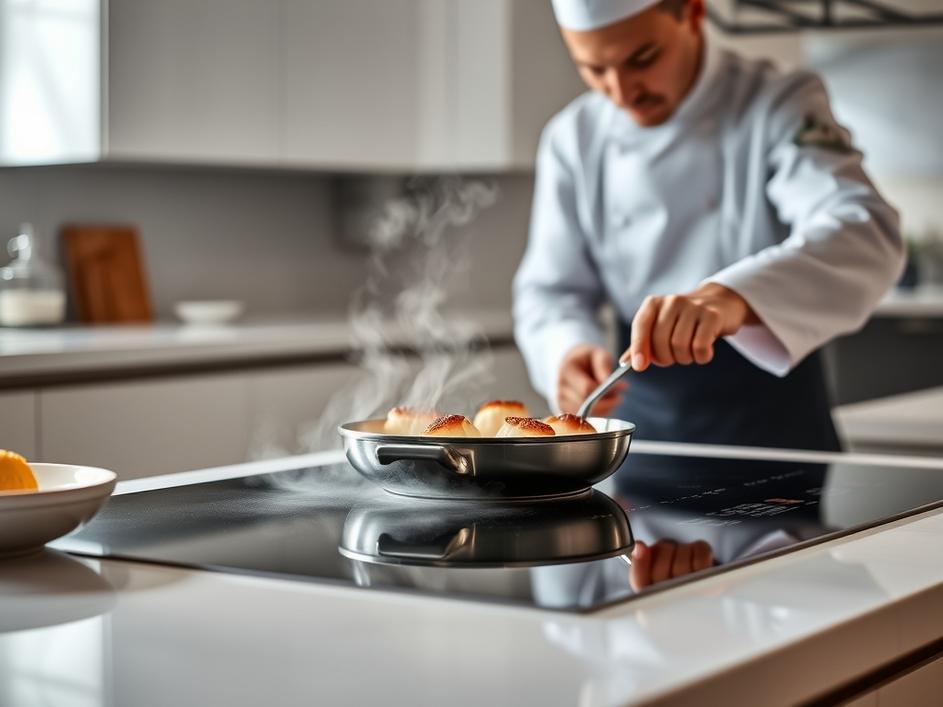
ToggleFor years, gas stoves reigned supreme in professional kitchens across the United States. Chefs loved the instant heat control and the visual feedback of a live flame. But a new technology is changing the landscape: induction cooking. Induction cooktops use electromagnetism to directly heat the cookware, offering precise temperature control, faster heating times, and a cooler kitchen environment. And professional chefs are starting to take notice.
So, what’s driving this shift? Many chefs cite the ease of cleaning as a major factor. “I am… tired of cleaning open burners,” one chef confessed. Anyone who has scrubbed burnt food off a gas range knows the pain. Induction cooktops, with their smooth, glass surfaces, wipe clean in seconds. But the benefits extend beyond cleanliness. Induction offers superior temperature control, allowing chefs to fine-tune the heat for delicate sauces or rapid searing. Plus, they provide a safer and cooler working environment, reducing the risk of burns and lowering air conditioning costs.
Of course, switching to induction isn’t without its challenges. Chefs accustomed to the visual cues of a flame need to adapt to a new way of cooking. Understanding how different cookware interacts with the induction surface is key, as only magnetic cookware (cast iron or stainless steel) will work. This might require replacing some pots and pans. But many chefs find the learning curve manageable and the advantages well worth the effort. And, the responsive temperature adjustments allow for far more nuance in cooking than traditional gas ranges.
Beyond the kitchen itself, induction cooking has a significant impact on the environment. Gas stoves release methane, a potent greenhouse gas, into the atmosphere even when they’re not in use. By switching to electricity-powered induction, restaurants can reduce their carbon footprint and contribute to a more sustainable future. As consumers become increasingly aware of environmental issues, restaurants that embrace eco-friendly practices gain a competitive edge. This can bring more customers to their business and enhance the reputation of the establishment.
One of the biggest hurdles for restaurants considering induction is the initial cost. Induction cooktops are generally more expensive than gas ranges. Installation may also require electrical upgrades, adding to the upfront investment. However, the long-term cost savings can be substantial. Induction cooktops are more energy-efficient than gas ranges, reducing utility bills. Lower air conditioning costs and reduced cleaning time also contribute to savings. Over time, the initial investment can pay for itself through lower operating expenses.
And the debate continues: some chefs love the control of gas; others feel like induction cooktops have changed the game. What seems certain is that induction cooking technology will continue to improve in the coming years. New models will offer even greater precision, responsiveness, and energy efficiency. As more chefs embrace induction, it’s likely to become the standard in professional kitchens across the country. The days of open flames might be numbered. The transition is underway, driven by a desire for cleaner, safer, and more sustainable cooking practices.
But induction’s reach extends far beyond restaurant kitchens. Home cooks are also discovering the benefits of this technology. Portable induction cooktops are becoming increasingly popular for small kitchens, dorm rooms, and outdoor cooking. As the price of induction cooktops continues to fall, more and more households will likely make the switch. Soon, induction cooking will not be a technology used only by professional chefs, but will be a core part of the everyday cooking lives of home cooks as well.
The shift to induction cooking represents a significant evolution in the culinary world. It’s a move towards greater efficiency, sustainability, and control. While some chefs may initially resist the change, the benefits are undeniable. As the technology matures and becomes more affordable, induction is poised to transform the way we cook, both at home and in restaurants. The future of cooking is electric, and it’s looking brighter than ever before.



Comments are closed