

We are a digital agency helping businesses develop immersive, engaging, and user-focused web, app, and software solutions.
2310 Mira Vista Ave
Montrose, CA 91020

2500+ reviews based on client feedback
What's Included?
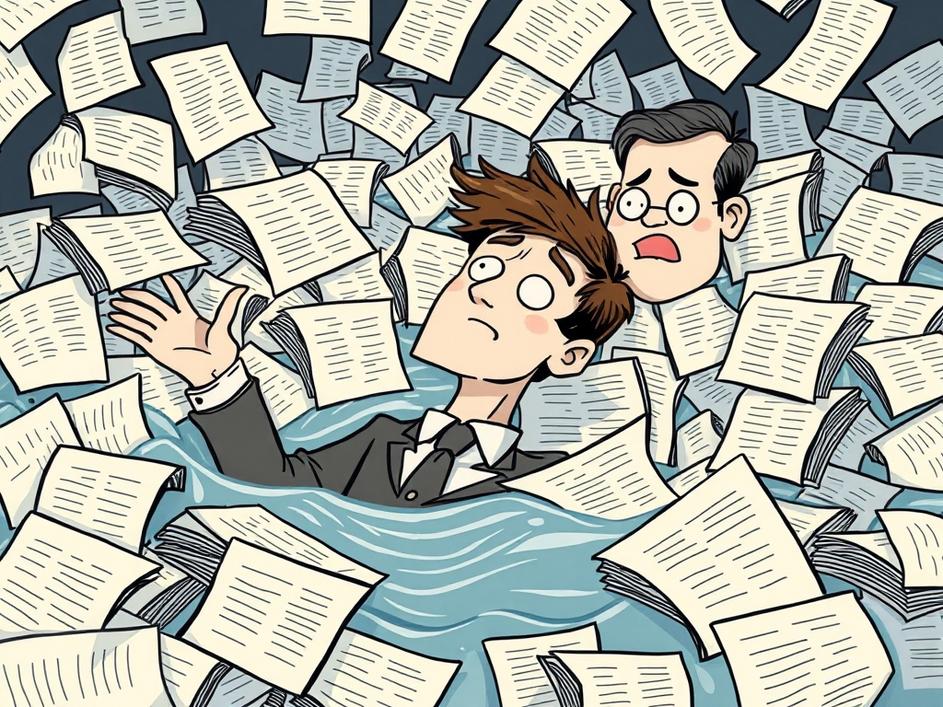
ToggleWe’ve all heard the hype about artificial intelligence making our lives easier. And in some ways, it does. But a recent survey from Resume.org suggests there’s a growing problem brewing in the workplace: “AI slop.” What exactly is “AI slop?” It’s the term they’re using to describe the costly errors and workflow disruptions stemming from employees’ over-reliance on AI tools. And it seems to be a widespread issue.
The Resume.org survey found that a whopping 70% of managers are reporting recurring, costly errors linked to their direct reports’ use of AI. That’s a significant number, and it paints a picture of a workforce that may be a little too eager to let AI take the wheel. These aren’t just minor typos; we’re talking about errors that impact the bottom line and throw wrenches into carefully planned workflows. This could cause a slow down in the business and create distrust in AI systems.
So, what’s causing this “AI slop” crisis? One possibility is a lack of proper training. Employees might be using AI tools without fully understanding their capabilities or limitations. They might not know how to properly prompt the AI, how to verify the output, or how to identify potential biases or inaccuracies. Another factor could be overconfidence. People might assume that because an AI generated the content, it must be correct, leading them to skip crucial fact-checking and critical thinking steps. It is also possible employees are simply not skilled enough and are using AI to make up for a lack of ability. This can be a problem if they aren’t verifying the information they receive from the AI.
The consequences of “AI slop” can be significant. Companies could face financial losses due to incorrect data, flawed reports, or poorly written marketing materials. Workflow disruptions can lead to missed deadlines, project delays, and frustrated clients. And perhaps even more concerning, unchecked AI errors can damage a company’s reputation and erode trust with customers. When a brand puts out incorrect information, it can be difficult to earn back customer loyalty. As AI becomes more prevalent in the workplace, companies must address these challenges to avoid costly mistakes.
While the financial implications of “AI slop” are concerning, there’s also a human element to consider. Over-reliance on AI can stifle creativity, hinder skill development, and create a culture of complacency. If employees are constantly outsourcing their thinking to AI, they may become less engaged, less innovative, and less capable of solving problems independently. The old saying “use it or lose it” rings true in this instance. Furthermore, employees may start to distrust each other when AI errors start appearing in their work. It may lead to a blame-shifting work environment, which is never healthy for a company.
So, what’s the solution? The answer isn’t to ban AI altogether. AI offers incredible potential for boosting productivity and streamlining operations. Instead, companies need to adopt a more balanced approach. This means investing in comprehensive AI training programs that teach employees how to use these tools effectively and responsibly. It also means emphasizing the importance of critical thinking, fact-checking, and human oversight. AI should be seen as a tool to augment human capabilities, not replace them entirely. When AI is used properly, it can greatly improve productivity for workers.
Companies should also establish clear guidelines and protocols for AI use. These guidelines should outline when AI is appropriate, how it should be used, and what steps employees should take to verify the output. It’s also important to foster a culture of accountability, where employees are encouraged to take ownership of their work and are held responsible for any errors, regardless of whether they were caused by AI. It is important to remember that AI tools should not be used for sensitive or confidential information. They should also not be used to make decisions that could have a significant impact on people’s lives. Data security and privacy are important when using AI tools.
Ultimately, the key to avoiding the “AI slop” crisis is to empower employees to use AI intelligently and ethically. This means providing them with the knowledge, skills, and support they need to make informed decisions about when and how to use AI. It also means fostering a culture that values critical thinking, creativity, and human judgment. By embracing a balanced approach to AI, companies can harness its power while mitigating the risks and ensuring that their employees remain engaged, skilled, and capable of thriving in the age of artificial intelligence.
The future of work isn’t about humans versus AI; it’s about humans and AI working together. By addressing the “AI slop” crisis head-on and investing in our workforce, we can create a future where AI empowers us to be more productive, more creative, and more successful. But we must not allow AI to erode our critical thinking skills and human judgment. It is a tool, and like any tool, it can be used for good or for ill. It is up to us to ensure that AI is used in a way that benefits society as a whole.



Comments are closed