

We are a digital agency helping businesses develop immersive, engaging, and user-focused web, app, and software solutions.
2310 Mira Vista Ave
Montrose, CA 91020

2500+ reviews based on client feedback
What's Included?
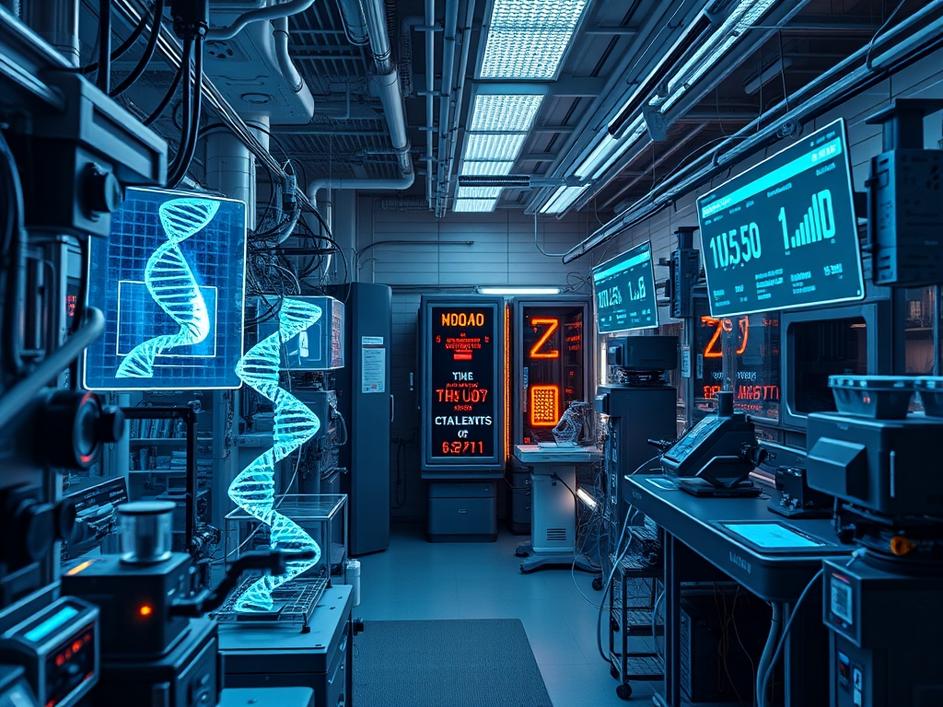
ToggleWe are creating data at an unprecedented rate. Every photo, every video, every social media post adds to the ever-growing digital mountain. Current storage technologies like hard drives and flash memory are struggling to keep pace. They consume significant energy, take up a lot of physical space, and have limited lifespans. The search is on for a better way to store the information that fuels our modern world. And some researchers believe the answer lies within our own bodies: DNA.
Atlas Data Storage, a company focused on DNA data storage, is joining forces with imec, a leading research and innovation hub in nanoelectronics and digital technologies. This partnership aims to scale up DNA-based data storage, making it a viable alternative to traditional methods. Imec brings its expertise in advanced chip manufacturing and nanofabrication, while Atlas Data Storage contributes its knowledge of DNA synthesis and sequencing. It’s a marriage of biology and technology that could revolutionize how we think about archiving data.
DNA offers several compelling advantages as a storage medium. First, its density is unmatched. A single gram of DNA can theoretically store a petabyte of data – that’s a million gigabytes! Second, DNA is incredibly durable. Under the right conditions, it can last for hundreds or even thousands of years. This makes it ideal for long-term archival storage, where data needs to be preserved for future generations. Third, DNA doesn’t require constant power to maintain the data, unlike traditional storage devices. This significantly reduces energy consumption and the associated costs.
While DNA data storage holds immense promise, it also faces significant challenges. The cost of synthesizing and sequencing DNA is currently high. Writing data to DNA (synthesizing it) and reading data from DNA (sequencing it) are both relatively slow processes compared to electronic storage. For DNA storage to become widespread, these costs need to come down drastically, and the read/write speeds need to improve substantially. This is where the collaboration between Atlas Data Storage and imec becomes crucial. Imec’s expertise in nanofabrication could lead to new methods for synthesizing and sequencing DNA more efficiently and cost-effectively.
Imagine a future where entire libraries are stored on a few strands of DNA. Or where government archives and historical records are preserved for centuries in a compact, energy-efficient format. DNA data storage could also have applications in fields like personalized medicine, where vast amounts of genomic data need to be stored and analyzed. And as AI continues to develop and generate ever more data, DNA storage could provide a sustainable way to manage this information explosion. The possibilities are truly vast. But before any of this happens, the technology needs to mature and become more practical for real-world applications.
Like any new technology, DNA data storage raises ethical questions. Who controls access to this data? How do we ensure privacy and prevent misuse? What are the environmental impacts of synthesizing and disposing of large quantities of DNA? These are important questions that need to be addressed as the technology develops. We need to have open and honest conversations about the ethical implications of DNA data storage to ensure that it is used responsibly and for the benefit of all.
The partnership between Atlas Data Storage and imec is a significant step towards realizing the potential of DNA data storage. While the technology is still in its early stages, the progress being made is encouraging. Overcoming the challenges of cost, speed, and scalability will require continued innovation and collaboration between researchers, engineers, and policymakers. If these challenges can be overcome, DNA data storage could become a key technology for managing the data deluge of the AI age, offering a sustainable and long-lasting solution for preserving our digital heritage.
Whether DNA will become the dominant data storage medium of the future remains to be seen. But the potential benefits are too significant to ignore. The combination of high density, long lifespan, and low energy consumption makes DNA an attractive alternative to traditional storage methods. The work being done by Atlas Data Storage and imec is helping to pave the way for a future where our digital lives are stored not on silicon chips, but within the very building blocks of life itself.

Comments are closed