

We are a digital agency helping businesses develop immersive, engaging, and user-focused web, app, and software solutions.
2310 Mira Vista Ave
Montrose, CA 91020

2500+ reviews based on client feedback
What's Included?
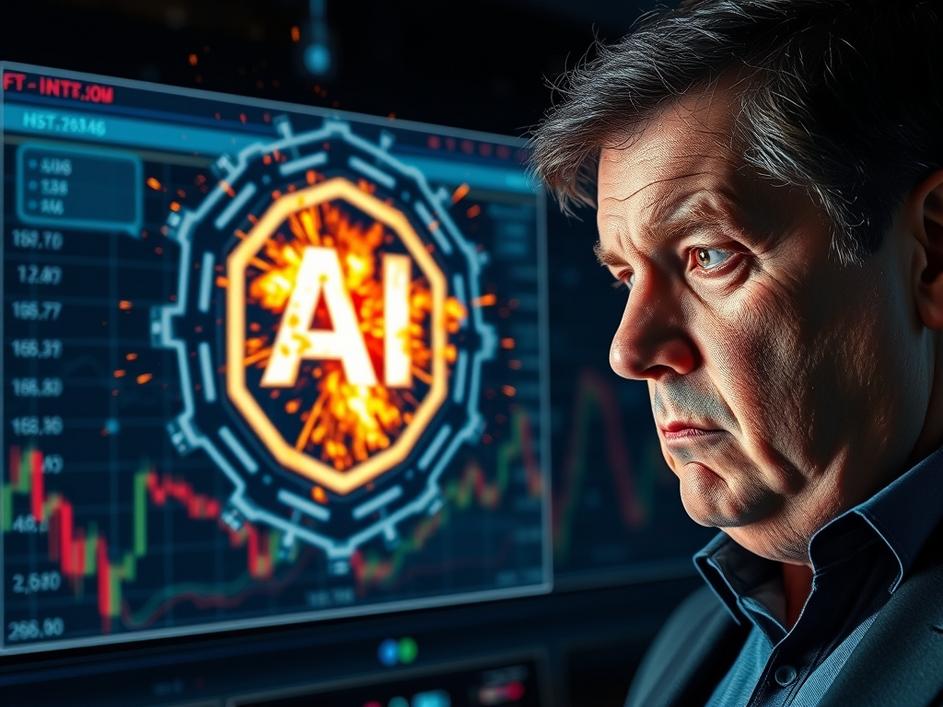
ToggleMichael Burry, the investor who famously predicted the 2008 housing market crash and was immortalized in the book and movie “The Big Short,” is raising eyebrows again. This time, his skepticism is directed at artificial intelligence, the darling of Wall Street and Silicon Valley. Burry believes the current enthusiasm for AI is not just overblown, but a full-fledged bubble waiting to burst. But is he right, or is this just another case of a contrarian investor swimming against the tide?
Burry’s analysis, while not publicly detailed, reportedly suggests that the current AI boom is built on shaky foundations. He likely sees parallels with past tech bubbles, where immense hype and inflated valuations overshadowed a lack of real-world applications and sustainable business models. Think back to the dot-com era: companies with little more than a website and a business plan were trading at astronomical multiples. Could AI be following a similar trajectory?
The core of Burry’s argument probably lies in the excessive valuations of AI-related companies, especially those promising future growth rather than delivering current profits. Many AI startups are burning through cash at an alarming rate, fueled by venture capital and the promise of a technological breakthrough. But what happens when the money runs out, or when the promised breakthroughs don’t materialize? A harsh reckoning could be in store, particularly for companies that haven’t yet proven their ability to generate revenue. And it’s not just startups; even established tech giants are pouring billions into AI, often without a clear path to profitability. This level of investment can create a self-fulfilling prophecy, driving up valuations regardless of underlying fundamentals.
Of course, the potential of AI is undeniable. It has the capacity to revolutionize numerous industries, from healthcare and finance to transportation and manufacturing. The problem, however, is the disconnect between the long-term potential and the short-term expectations. The market seems to be pricing in decades of future growth right now, ignoring the significant challenges that still need to be overcome. These challenges include the ethical considerations of AI, the potential for job displacement, and the need for robust regulatory frameworks. Furthermore, the current AI models are heavily reliant on vast amounts of data and computing power, making them expensive to train and maintain. This concentration of resources in the hands of a few large companies could stifle innovation and create new forms of inequality. And let’s not forget the potential for AI to be misused, whether for malicious purposes or simply due to unintended biases in the algorithms.
So, is Burry right? Is AI a bubble about to pop? It’s difficult to say definitively. Bubbles are, by their nature, hard to identify until they’ve already burst. But Burry’s skepticism serves as a valuable reminder to temper enthusiasm with caution and to focus on fundamentals rather than hype. It’s a call to look beyond the flashy headlines and ask tough questions about the underlying economics of AI. While AI undoubtedly holds immense promise, it’s important to remember that not every company or every technology will succeed. And even the most successful ventures may take longer to deliver on their potential than the market currently anticipates.
For investors, the key is to be selective and to focus on companies with strong fundamentals, proven business models, and realistic valuations. Avoid chasing the latest hot stock or investing in companies simply because they have “AI” in their name. Instead, do your own research, understand the risks, and be prepared for the possibility of setbacks. Diversification is also crucial, as it can help to mitigate the impact of any individual investment that goes wrong. And most importantly, don’t let the fear of missing out (FOMO) drive your investment decisions. The AI revolution is likely to be a marathon, not a sprint, and there will be plenty of opportunities to participate along the way.
Burry’s warning about AI is a microcosm of a larger concern about market exuberance and the tendency to overestimate the impact of new technologies. Throughout history, there have been countless examples of technological revolutions that failed to live up to the hype, at least in the short term. The key is to distinguish between genuine progress and fleeting trends, and to avoid getting caught up in the frenzy. Burry’s track record suggests that he has a knack for identifying these kinds of imbalances, and his latest warning about AI should be taken seriously, even if it ultimately proves to be incorrect.
Ultimately, whether AI is a bubble or not remains to be seen. But Michael Burry’s contrarian perspective offers a valuable counterpoint to the prevailing narrative of unbridled optimism. It’s a reminder that even the most promising technologies can be overhyped and overvalued, and that a healthy dose of skepticism is always warranted. As investors, we should strive to be informed, rational, and disciplined, and to avoid letting emotions cloud our judgment. And sometimes, the best investment strategy is simply to wait for the hype to subside and the dust to settle.



Comments are closed