

We are a digital agency helping businesses develop immersive, engaging, and user-focused web, app, and software solutions.
2310 Mira Vista Ave
Montrose, CA 91020

2500+ reviews based on client feedback
What's Included?
ToggleWearable technology is nothing new. We’ve seen smartwatches dominate wrists for years, and augmented reality glasses have been trying to break into the mainstream with varying degrees of success. But now, a company called MOVA is throwing its hat into the ring – literally – with the launch of its Smart Ring H1 and Smart Glasses S1. The goal? To create a seamless AI-powered experience that’s both personal and practical. It’s a bold move, but does it have what it takes to stand out in a crowded market?
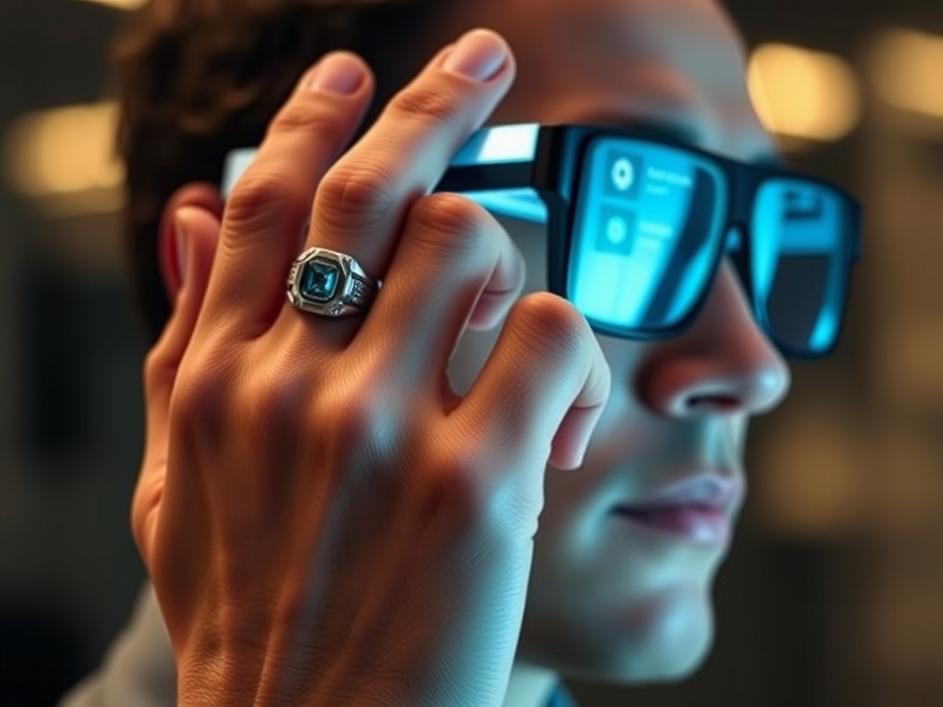
The Smart Ring H1 isn’t just about looking good, although its sleek design certainly seems to be a selling point. The real magic lies in its ability to track your health and activity, control smart home devices, and even make payments. We’ve seen rings attempt this before. Many lack the proper execution to make any of these features work seamlessly together. The promise here is that the H1 aims to do it all, and do it well. Imagine unlocking your front door, tracking your sleep, and paying for your morning coffee, all with a simple tap of your finger. It sounds convenient, but the proof will be in the pudding when it comes to real-world performance and battery life.
The Smart Glasses S1 are designed to provide augmented reality experiences in a stylish and accessible way. Unlike some clunky AR headsets, the S1 glasses appear to be designed with aesthetics in mind, hopefully making them more appealing for everyday wear. MOVA envisions these glasses being used for everything from navigation and communication to entertainment and productivity. Imagine seeing directions overlaid on your view of the street, or collaborating with colleagues on a virtual workspace, or watching a movie on a big screen that only you can see. While the use cases of AR are broad, if the glasses don’t look good, people will be less likely to wear them. So MOVA’s design-first approach may pay off.
MOVA is pitching these two devices as part of an integrated AI ecosystem. This means that the ring and the glasses are designed to work together, sharing data and providing a unified user experience. For example, the ring could track your heart rate during a workout, and the glasses could display that information in real-time. Or, the glasses could use the ring to authenticate payments, adding an extra layer of security. The idea of an AI ecosystem is not new, but the ability to make it a seamless user experience would be compelling. It’s an ambitious goal, and its success will depend on how well MOVA can integrate the hardware, software, and AI components.
The wearable tech market is fiercely competitive. Big players like Apple, Samsung, and Google already have a strong foothold. For MOVA to succeed, it needs to offer something truly unique and compelling. That could be superior design, innovative features, or a more seamless user experience. Price point is also going to be key. Many consumers have been burned by high priced wearable tech that becomes obsolete in a few years. Also, adoption is never guaranteed with new technology, and MOVA will need to convince people that its products are worth the investment.
With any device collecting personal data, privacy is a major concern. MOVA will need to be transparent about how it collects, stores, and uses user data. It also needs to implement strong security measures to protect against data breaches. Consumers are increasingly aware of privacy risks, and they will be hesitant to adopt wearable tech if they don’t trust the company behind it. If they can address these concerns, then they may be able to build a solid foundation of loyal users.
MOVA’s Smart Ring H1 and Smart Glasses S1 are intriguing products that have the potential to disrupt the wearable tech market. The company’s focus on design and AI integration is a smart move, but it remains to be seen whether it can execute its vision effectively. The company must first prove that these devices are more than just gadgets; they need to be essential tools that enhance our lives. If MOVA can deliver on its promises, it could become a major player in the wearable tech space. If not, it risks becoming just another flash in the pan.



Comments are closed