

We are a digital agency helping businesses develop immersive, engaging, and user-focused web, app, and software solutions.
2310 Mira Vista Ave
Montrose, CA 91020

2500+ reviews based on client feedback
What's Included?
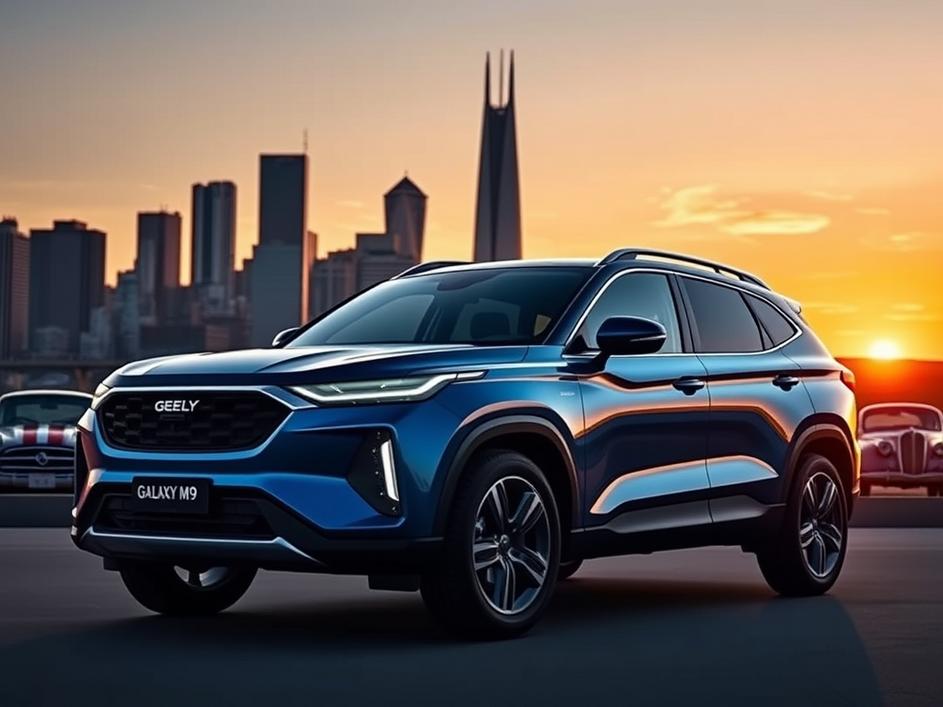
ToggleWord is spreading about a Chinese automaker making waves. Edmunds, a trusted source for car reviews, recently got their hands on the Geely Galaxy M9, a plug-in hybrid SUV. What’s particularly interesting is its price tag: around $25,000 in China. That’s a price that could seriously undercut the competition in the US market, and it has some experts wondering if American car companies should be worried. The Edmunds test wasn’t just a casual look; they put the M9 through its paces, evaluating everything from range and acceleration to braking performance. The results, while not fully detailed to the public yet, seem to have raised some eyebrows. Could this be the start of a new era where affordable, tech-laden Chinese vehicles challenge the dominance of established brands?
The American car market has been shifting for years, with SUVs and trucks becoming increasingly popular. Hybrids and electric vehicles are also gaining traction as consumers look for more fuel-efficient and environmentally friendly options. However, the price of entry for many of these vehicles remains a barrier. That’s where the Geely Galaxy M9 could find its niche. A spacious SUV with a hybrid powertrain at a price point significantly lower than comparable American or Japanese models? That’s a compelling proposition for many buyers. The key, of course, will be whether Geely can meet US safety and emissions standards, and whether consumers will embrace a brand that’s largely unknown in this market.
Price is undoubtedly a major factor for car buyers, but it’s not the only one. Reliability, build quality, and brand reputation also play significant roles. Geely will need to prove that the Galaxy M9 isn’t just cheap; it’s also well-built and dependable. This is where independent reviews and long-term testing will be crucial. Consumers want to know that their car will last for years and won’t require constant repairs. Furthermore, Geely needs to establish a strong dealer network and provide excellent customer service. A smooth buying experience and readily available maintenance are essential for building trust with American consumers.
Modern cars are rolling computers, and consumers expect a certain level of technology and connectivity. If the Galaxy M9 is going to compete, it needs to offer features like a user-friendly infotainment system, advanced driver-assistance systems (ADAS), and seamless smartphone integration. Chinese automakers have been investing heavily in these areas, and many of their vehicles boast cutting-edge technology. The ability to deliver these features at a lower price point could give the Galaxy M9 a significant advantage. Edmunds’ testing likely evaluated these aspects of the car too, and their findings will be instrumental in shaping public perception.
Of course, Geely faces several hurdles in entering the US market. Tariffs, regulatory hurdles, and establishing a brand presence are all significant challenges. And there are serious questions about long-term durability and parts availability. But if they can overcome these obstacles, the potential rewards are enormous. The US is one of the largest and most competitive car markets in the world. Success here would not only boost Geely’s bottom line but also elevate its global profile. Whether the Galaxy M9 becomes a hit or a miss, its arrival signals a shift in the automotive landscape. American automakers need to pay attention, not just to the price, but to the quality, technology, and value that Chinese manufacturers are bringing to the table.
The automotive industry is constantly evolving, and the entry of Chinese automakers like Geely could accelerate that process. More competition typically leads to lower prices, more innovation, and better choices for consumers. The Geely Galaxy M9 may not be perfect, but it represents a new breed of affordable, technologically advanced vehicles that could disrupt the status quo. It’s a wake-up call for established automakers to up their game and deliver better value to customers. The future of driving may be more diverse and competitive than ever before, and that’s ultimately a good thing for everyone.


Comments are closed