

We are a digital agency helping businesses develop immersive, engaging, and user-focused web, app, and software solutions.
2310 Mira Vista Ave
Montrose, CA 91020

2500+ reviews based on client feedback
What's Included?
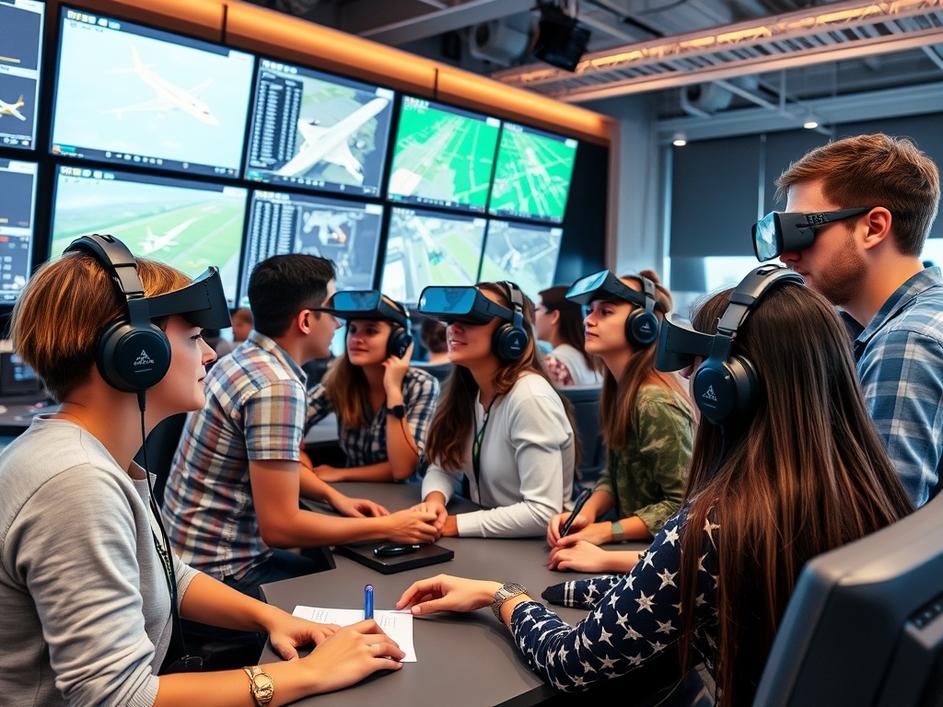
ToggleThe Federal Aviation Administration (FAA) is trying something different to solve a persistent problem: staffing air traffic control towers. Instead of only looking at candidates with traditional backgrounds, they’re now actively recruiting gamers. Yes, you read that right. The DOT believes that the skills honed in video games – quick decision-making, spatial reasoning, and the ability to manage multiple tasks simultaneously – could make gamers excellent air traffic controllers.
It might sound odd at first, but when you think about it, the connection makes sense. Many video games require intense focus and the ability to react quickly to changing situations. Players often have to monitor multiple things at once, prioritize tasks, and make split-second decisions that can have significant consequences within the game. These are all skills that are crucial for air traffic controllers, who are responsible for the safe and efficient movement of aircraft.
The FAA has faced staffing challenges for years, leading to concerns about overworked controllers and potential safety risks. By tapping into the gaming community, the agency hopes to find a new pool of talented individuals who might not have considered air traffic control as a career path otherwise. This initiative is a creative way to address a real need and could bring fresh perspectives to the field.
Of course, being a skilled gamer isn’t the only qualification for becoming an air traffic controller. Successful candidates will still need to undergo rigorous training and demonstrate the ability to handle the immense pressure that comes with the job. Air traffic control is a high-stakes profession, and controllers are responsible for the lives of hundreds of people every day. The FAA’s training program is designed to equip them with the knowledge and skills they need to handle any situation that might arise.
This new initiative raises some interesting questions about the future of air traffic control. Will the FAA’s gamble pay off? Will gamers bring a new level of efficiency and innovation to the field? It’s too early to say for sure, but one thing is clear: the FAA is willing to think outside the box to solve its staffing challenges and ensure the safety of air travel. This unconventional approach highlights the evolving nature of work and the potential for skills learned in unexpected places to be valuable in demanding professions. It will be interesting to see if it works, and if it leads to other industries looking at similar skill sets in new ways. Maybe chess players will be recruited for high-finance positions next!
I think this is actually a pretty smart idea. For years, we’ve seen skills developed in gaming translate to other areas – from esports athletes earning millions to game developers creating groundbreaking technologies. Recognizing the cognitive abilities honed in gaming and applying them to air traffic control could be a real win-win. It gives gamers a new career path to consider and provides the FAA with a potentially valuable source of talent. It also shows that the agency is willing to adapt and embrace new approaches to solving complex problems. There will no doubt be skeptics, but if even a small percentage of these recruits turn out to be successful, it will be a positive step forward. It’s also a great way to get a new generation excited about a vital career path that they may never have considered before.
The biggest challenge, in my opinion, will be bridging the gap between the simulated environments of video games and the real-world pressures of air traffic control. While gamers are accustomed to making quick decisions under pressure, the stakes are far higher in the real world. The FAA will need to ensure that its training program is effective in preparing these recruits for the unique challenges of the job. It’s one thing to virtually crash a plane in a video game and entirely another to be responsible for the safety of real passengers. The FAA will have to find innovative methods to build confidence and replicate pressure-cooker situations during training.
Overall, the FAA’s decision to recruit gamers is a bold and innovative move. It’s a recognition that skills are transferable and that talent can be found in unexpected places. While there are certainly challenges to overcome, the potential rewards are significant. By opening up the field to a new pool of candidates, the FAA could address its staffing shortages, improve the efficiency of air travel, and ensure the safety of millions of passengers. This initiative is definitely worth watching, as it could serve as a model for other industries facing similar challenges. It also highlights the growing importance of gaming as a source of valuable skills and a potential career path.



Comments are closed