

We are a digital agency helping businesses develop immersive, engaging, and user-focused web, app, and software solutions.
2310 Mira Vista Ave
Montrose, CA 91020

2500+ reviews based on client feedback
What's Included?
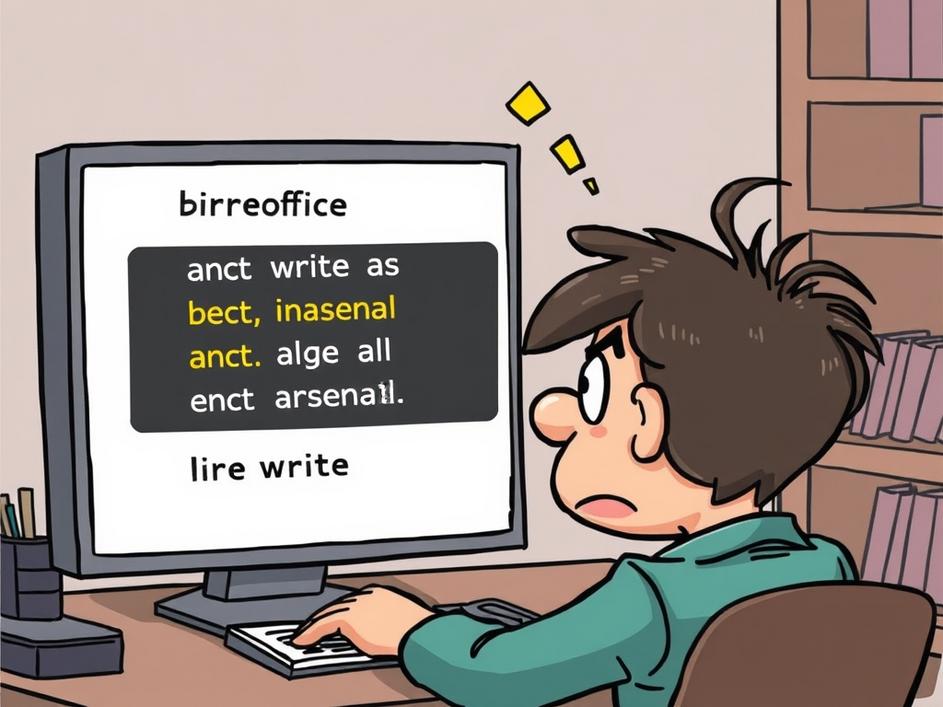
ToggleWe’ve all been there, staring blankly at a screen, willing the perfect word to materialize. It’s a universal experience for writers, a moment where the creative well seems to have run dry. And when you’re relying on software to lend a helping hand, the results can be… well, let’s just say less than ideal. Imagine crafting a blog post, a novel, or even just a simple email, and the thesaurus function suggests a word that’s not just wrong, but hilariously off-base. This is the plight of the user who recently shared their LibreOffice experience: seeking “arsenal,” and getting a suggestion that missed the mark by a mile.
The original poster (OP) on Tumblr was looking for the word “arsenal”. Now, “arsenal” implies a collection of resources or equipment, often weapons. So, the fact that LibreOffice suggested something so wildly different opens up a whole can of worms about how these programs actually work. Was it a simple typo? A bizarre coding error? Or is the AI just having a bad day? We can only guess at the exact process that yielded such a strange recommendation. It does beg the question: how do word processing programs determine their word suggestions? It’s all algorithms, of course, but algorithms built by people, and people have biases, blind spots, and sometimes, a quirky sense of humor (intentional or not).
This little mishap perfectly highlights the limitations of AI in creative endeavors. While these programs can be incredibly useful for checking grammar, identifying repetitive phrases, and even suggesting synonyms, they often lack the nuanced understanding of context that a human writer possesses. They are tools, not replacements for human intellect. They can spit out options, but they can’t truly grasp the intent behind your words. This means that writers still need to be discerning and critical thinkers, even when relying on software to aid their process.
But let’s be honest, there’s also something inherently funny about this situation. The absurdity of a word processor suggesting a completely inappropriate word is a reminder that technology isn’t always perfect, and that’s okay. It’s in these moments of technological failure that we find humor and connection. We’ve all had similar experiences, whether it’s a GPS leading us down a dead end or autocorrect changing a perfectly innocent word into something embarrassing. These glitches are part of the human experience in the digital age, and they serve as a reminder not to take things too seriously.
So, what’s the takeaway from this tale of the misused thesaurus? It’s a reminder that while technology can be a powerful tool for writers, it’s ultimately the human element that matters most. Our ability to think critically, understand context, and choose the right words to convey our message is what makes writing such a unique and powerful form of communication. Don’t be afraid to embrace the imperfections of technology, and don’t ever underestimate the power of your own creative voice. And maybe double-check those thesaurus suggestions before hitting “publish.”
Looking ahead, the evolution of writing software will undoubtedly continue. AI will become more sophisticated, and the suggestions will (hopefully) become more relevant. However, it’s crucial to remember that these tools should augment, not replace, human creativity. The ideal scenario is a symbiotic relationship where technology handles the tedious tasks, freeing up writers to focus on the more nuanced aspects of their craft: storytelling, character development, and conveying emotions. The challenge lies in striking the right balance between automation and human input, ensuring that technology enhances the writing process without stifling creativity.
LibreOffice, as an open-source suite, offers a unique advantage: community involvement. Users can contribute to its development, suggest improvements, and even fix bugs. This collaborative approach fosters a sense of ownership and empowers users to shape the software to better suit their needs. Perhaps the OP’s experience could lead to a discussion within the LibreOffice community about refining the thesaurus function or incorporating more contextual awareness into the word suggestion algorithms. The beauty of open source is that it allows for continuous improvement driven by the very people who use the software.
Ultimately, this anecdote serves as a valuable lesson for all writers: always proofread your work, and don’t be afraid to laugh at yourself (or your software) along the way. Typos and grammatical errors happen to the best of us, and sometimes, the most unexpected suggestions can lead to creative breakthroughs. Embrace the imperfections, learn from your mistakes, and never lose sight of the human element that makes writing such a rewarding endeavor. And if your word processor suggests something truly ridiculous, share it with the world – you might just brighten someone’s day.



Comments are closed