

We are a digital agency helping businesses develop immersive, engaging, and user-focused web, app, and software solutions.
2310 Mira Vista Ave
Montrose, CA 91020

2500+ reviews based on client feedback
What's Included?
ToggleWe all know that feeling: staring at that spinning wheel, waiting for a program to load, or watching a video buffer. It’s frustrating, and when you rely on your computer for work or creative projects, every second counts. A recent YouTube video showcased a deep dive into upgrading a MacBook, pushing its capabilities far beyond the original factory settings. The creator’s goal? To build the world’s fastest MacBook. It’s a bold claim, but the journey is fascinating and highlights the ongoing desire to squeeze every last drop of performance from our devices.
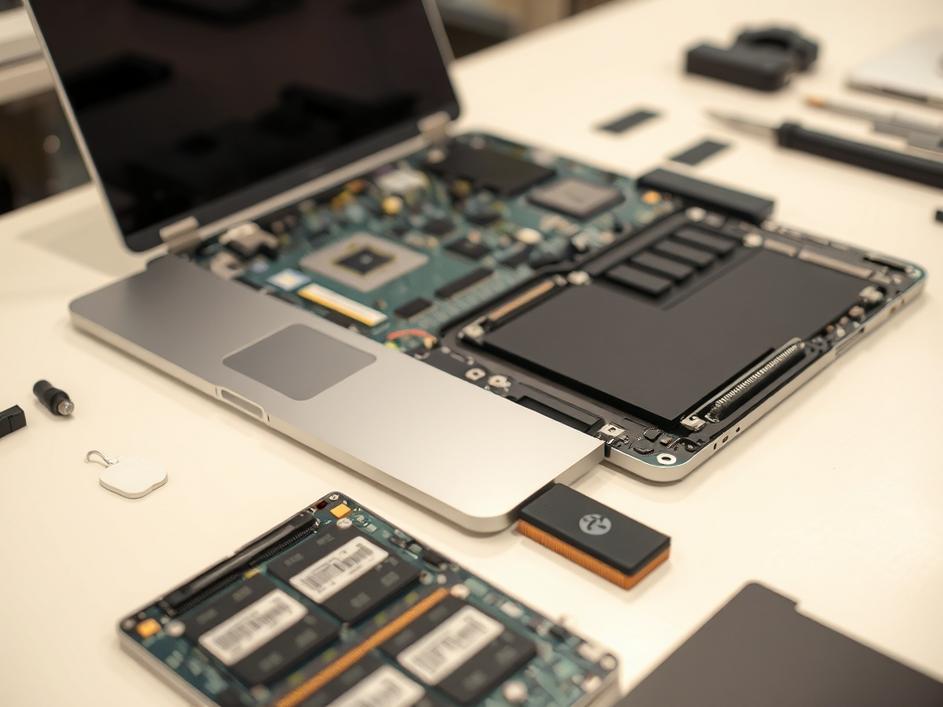
The video begins with a teardown, revealing the inner workings of a MacBook. For those unfamiliar, it’s a dense landscape of chips, circuits, and cooling systems. The creator identifies the key components that can be upgraded: RAM, storage, and sometimes, even the processor, though that’s a much trickier and riskier endeavor. He discusses the limitations imposed by Apple’s design and how these limitations can be overcome (or at least circumvented) with aftermarket parts and careful modifications. The emphasis isn’t just on replacing parts; it’s about choosing components that offer significant performance boosts while remaining compatible with the MacBook’s architecture.
The heart of the upgrade revolves around replacing the stock RAM with higher capacity and faster modules. This allows the MacBook to handle more data simultaneously, resulting in smoother multitasking and improved performance in memory-intensive applications. Similarly, upgrading to a solid-state drive (SSD) with a larger capacity and faster read/write speeds dramatically reduces loading times and improves overall responsiveness. The creator meticulously details each step, highlighting the challenges and potential pitfalls involved. It’s not a simple plug-and-play process; it requires precision, patience, and a good understanding of hardware compatibility.
Beyond the standard upgrades, the video explores the possibility of overclocking the processor. Overclocking involves pushing the processor beyond its factory-set speed, potentially yielding significant performance gains. However, it also generates more heat, which can lead to instability and damage if not properly managed. The creator implements advanced cooling solutions, such as custom heat sinks and thermal paste, to mitigate the increased heat output. This aspect of the project underscores the importance of balancing performance with stability and reliability. It’s a delicate dance, and pushing too hard can have serious consequences.
After completing the upgrades, the creator puts the modified MacBook through a series of benchmarks to assess its performance. The results are impressive, showing significant improvements in processing speed, memory bandwidth, and storage performance. While the claim of building the “world’s fastest MacBook” is difficult to verify definitively, the video clearly demonstrates the potential for dramatically enhancing the performance of these machines. The YouTuber emphasizes that such modifications can provide better performance and extend the life of a perfectly functional computer, giving it new life, even when compared to buying a new machine with similar specs. The upgraded Macbook can give better value for money.
Projects like this are important because they highlight the possibilities of the “Right to Repair” movement and how it impacts consumers. Many technology companies, including Apple, have historically made it difficult for users to repair or upgrade their devices. This creates a cycle of planned obsolescence, where consumers are forced to buy new devices more frequently. By showcasing the feasibility of upgrading a MacBook, the YouTuber empowers viewers to take control of their technology and challenge the manufacturer’s limitations. It’s a statement about user autonomy and the right to modify and repair the products we own. When parts fail, there is no reason a machine cannot be upgraded or repaired for continued use.
It’s crucial to acknowledge the potential drawbacks of these types of modifications. Upgrading a MacBook yourself will almost certainly void the warranty, leaving you responsible for any subsequent repairs. Additionally, there’s always a risk of damaging the device during the upgrade process. It’s essential to weigh the potential benefits against the risks and proceed with caution. The video serves as a source of inspiration, but it’s not a substitute for thorough research and careful planning. If you’re considering similar upgrades, it’s recommended to start with less critical components and gradually work your way up to more complex modifications.
Ultimately, this endeavor signifies a vibrant community of tech enthusiasts eager to explore the boundaries of technology. As new technologies emerge and components become more accessible, the ability to push existing machines will continue to evolve. Whether or not this is the ‘world’s fastest MacBook,’ the video inspires experimentation and innovation, showing that even seemingly closed systems can be opened up and enhanced with ingenuity. As technology advances, this mindset of self-reliance and hands-on experimentation becomes ever more important.



Comments are closed