

We are a digital agency helping businesses develop immersive, engaging, and user-focused web, app, and software solutions.
2310 Mira Vista Ave
Montrose, CA 91020

2500+ reviews based on client feedback
What's Included?
ToggleImagine a world where getting lost inside a large building is a thing of the past. This vision is moving closer to reality with the recent announcement that MazeMap, a leading European provider of indoor navigation, has acquired Thing Technologies GmbH. This acquisition signals a significant step forward in the evolution of wayfinding and space intelligence. But what does this actually mean for you, the average person trying to find your way to a meeting room, a doctor’s office, or even just the nearest restroom in a sprawling complex?
MazeMap has already established itself as a major player in the European market, offering detailed indoor maps and navigation solutions for a variety of spaces, including universities, hospitals, and corporate offices. Their platform helps users find their way around using their smartphones or other devices, providing turn-by-turn directions and real-time location information. Think of it as Google Maps, but for inside buildings.
Thing Technologies, on the other hand, brings a wealth of expertise in space intelligence. This means they focus on collecting and analyzing data about how people use indoor spaces. This data can be used to improve building design, optimize space utilization, and enhance the overall user experience. They look at things like how crowded certain areas get, how long people spend in certain locations, and how effectively the space is being used. By combining these two companies, they are trying to offer detailed mapping but also detailed data for how the buildings are used.
The combination of MazeMap and Thing Technologies is more than just a business deal; it’s a strategic move to create a more comprehensive and intelligent wayfinding solution. By integrating Thing Technologies’ space intelligence capabilities into MazeMap’s existing platform, the company can now offer a more holistic approach to indoor navigation. This will allow them to not only guide people to their destinations but also provide valuable insights into how those spaces are being used.
For example, a hospital could use this technology to track patient flow, identify bottlenecks, and optimize the layout of their facilities to improve efficiency and reduce wait times. A university could use it to analyze student traffic patterns and adjust class schedules or room assignments accordingly. And a corporate office could use it to monitor employee space utilization and make data-driven decisions about office design and resource allocation.
This acquisition is part of a broader trend towards smarter and more connected buildings. As technology continues to advance, we can expect to see even more sophisticated indoor navigation solutions emerge. These solutions will likely incorporate other technologies, such as augmented reality (AR) and the Internet of Things (IoT), to provide even more immersive and personalized experiences.
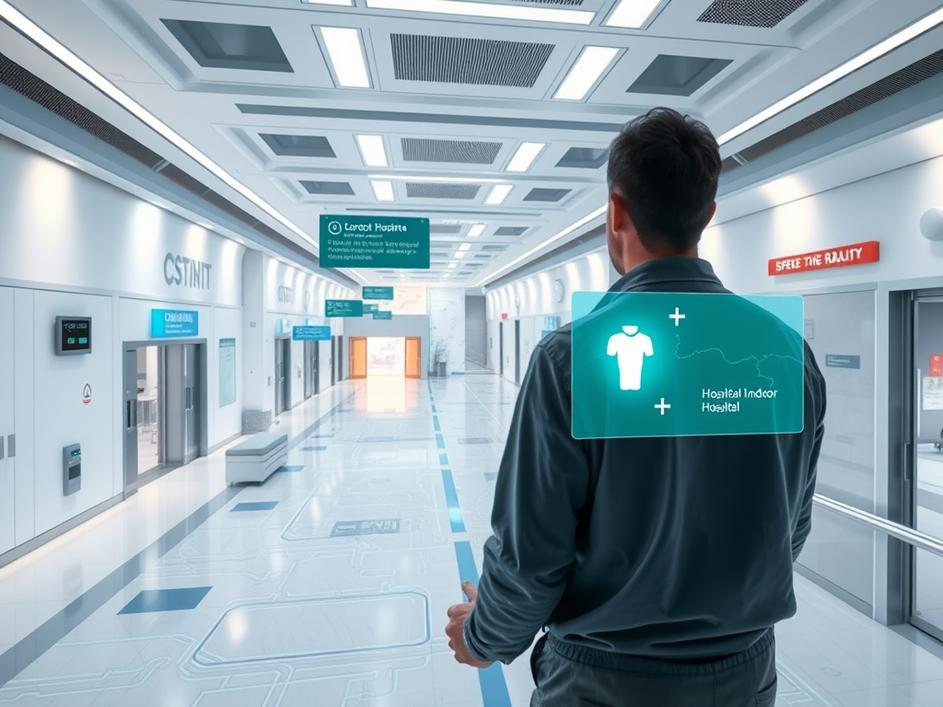
Imagine being able to hold up your smartphone and see virtual arrows overlaid on the real world, guiding you directly to your destination. Or imagine sensors that automatically adjust the lighting and temperature in a room based on the number of people present and their individual preferences. These are just a few of the possibilities that could be unlocked by the convergence of indoor navigation, space intelligence, and other emerging technologies.
Of course, there are also some challenges and considerations to keep in mind as this technology evolves. One important issue is privacy. Collecting and analyzing data about how people use indoor spaces raises concerns about how that data is being used and protected. It’s essential that companies are transparent about their data collection practices and that they implement robust security measures to prevent unauthorized access.
Another challenge is ensuring that these solutions are accessible to everyone, regardless of their technological proficiency. The goal should be to create intuitive and user-friendly interfaces that can be easily adopted by people of all ages and backgrounds. This means paying careful attention to design and usability and providing adequate training and support.
So, how will this acquisition ultimately impact your everyday life? In the short term, you may start to see improved indoor navigation experiences in the buildings you frequent. This could mean more accurate directions, faster routing, and more personalized recommendations. In the long term, this technology could transform the way we interact with indoor spaces, making them more efficient, more comfortable, and more responsive to our needs.
Think about the possibilities: No more wandering aimlessly through a confusing airport terminal, no more struggling to find a specific product in a massive department store, and no more feeling lost and disoriented in a sprawling hospital complex. Instead, you’ll have a powerful tool at your fingertips that can guide you every step of the way.
It will be interesting to see how MazeMap and Thing Technologies integrate their respective technologies and how they plan to expand their reach in the global market. Will they focus on specific industries, such as healthcare or education? Will they partner with other technology companies to create even more comprehensive solutions? Only time will tell.
However, one thing is clear: This acquisition represents a significant step forward in the evolution of wayfinding and space intelligence. As our world becomes increasingly complex and interconnected, the ability to navigate indoor spaces quickly and efficiently will become even more important. And with companies like MazeMap and Thing Technologies leading the way, we can be confident that the future of indoor navigation is bright.
The merger of MazeMap and Thing Technologies is a sign that indoor navigation is not just about finding your way, it’s about understanding space and how people interact with it. As this technology develops, it promises to make our lives easier and indoor spaces more efficient. The future of wayfinding is here, and it’s looking quite intelligent.


Comments are closed