

We are a digital agency helping businesses develop immersive, engaging, and user-focused web, app, and software solutions.
2310 Mira Vista Ave
Montrose, CA 91020

2500+ reviews based on client feedback
What's Included?
ToggleRemember when everyone was talking about the metaverse? Meta, formerly Facebook, certainly does. They bet big on this immersive digital world, envisioning a future where we’d all be interacting as avatars in virtual spaces. Billions were poured into research, development, and acquisitions to bring this vision to life. But the metaverse, while still holding potential, hasn’t quite taken off as quickly as many expected. User adoption has been slower than anticipated, and the initial excitement has somewhat waned. So, what’s a tech giant to do?
Meta is now strategically shifting some of its metaverse investments towards artificial intelligence, specifically focusing on smart glasses. This isn’t a complete abandonment of the metaverse, but rather a recognition that AI and augmented reality (AR) technologies offer more immediate and tangible opportunities. Think about it: instead of escaping into a completely virtual world, imagine enhancing your everyday reality with AI-powered information and assistance right before your eyes. That’s the promise of smart glasses, and Meta is betting that this technology will resonate more strongly with consumers in the near term.
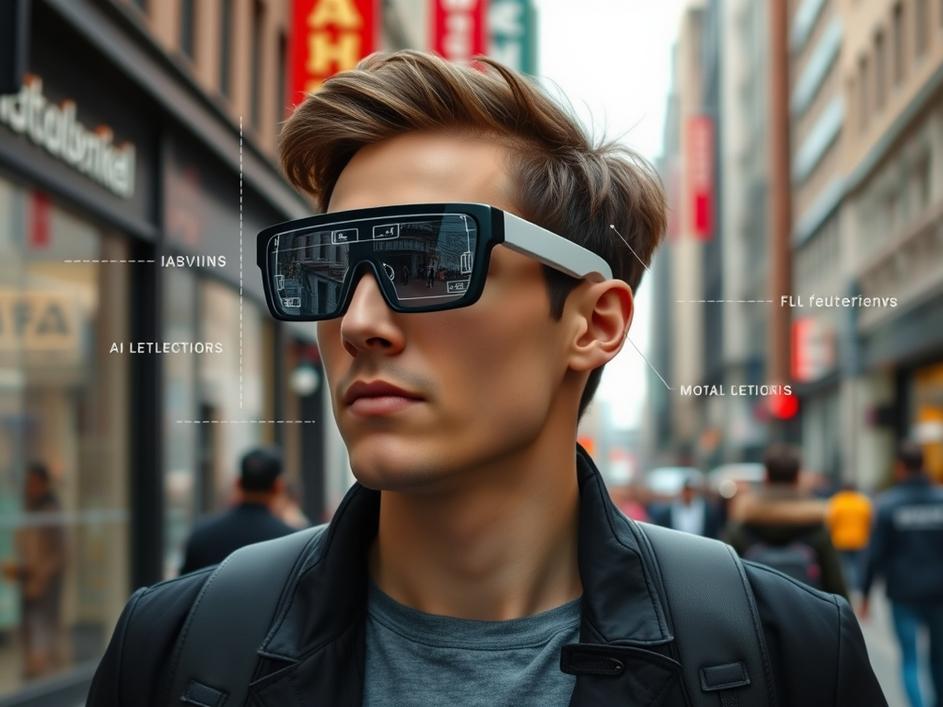
Smart glasses offer a compelling blend of convenience and functionality. Imagine walking down the street and having real-time information about nearby businesses displayed subtly on your lenses. Or think about having step-by-step instructions for a recipe projected in front of you while you’re cooking. These are just a few examples of how smart glasses could seamlessly integrate into our daily lives. The integration of AI takes this a step further, allowing the glasses to learn your preferences, anticipate your needs, and provide personalized assistance. This blend of AR and AI has the potential to be far more practical and useful to the average person than a fully immersive metaverse experience, at least for now.
Of course, developing successful smart glasses is no easy feat. There are numerous technical hurdles to overcome, including miniaturizing the necessary components, optimizing battery life, and creating a comfortable and stylish design. Furthermore, privacy concerns will be paramount. People are already wary of data collection, and the prospect of having a camera constantly recording their surroundings will raise significant ethical questions. Meta will need to address these concerns proactively and transparently to gain consumer trust. Beyond the technology and the optics of wearing a camera, Meta will need developers to build killer apps that people will actually use. They will need to get developers excited in the same way that they got developers excited for iOS and Android. If they cannot do that, the glasses will be an expensive experiment.
This shift in investment suggests that Meta is learning to adapt and respond to changing market dynamics. While the metaverse may still be a part of their long-term vision, the company recognizes the need to focus on technologies that offer more immediate value. AI-powered smart glasses represent a more grounded and practical application of augmented reality, and they have the potential to appeal to a wider audience. By shifting its focus, Meta has a better chance of carving out a leading position in the evolving landscape of AI and wearable technology. Whether it works out remains to be seen, but it’s a smart move for a company that needs to show investors that it can pivot and innovate beyond its core social media business. After all, betting the entire company on the metaverse was a risky endeavor, and diversifying into AI and smart glasses could be the company’s best chance to remain relevant in the coming years.
Meta’s move also highlights the broader trend of augmented reality gaining traction. While virtual reality seeks to replace our physical surroundings, augmented reality aims to enhance them. This approach has the potential to be far more integrated into our daily routines. From navigation and communication to entertainment and education, augmented reality offers a wide range of possibilities. As the technology matures and becomes more accessible, we can expect to see even more innovative applications emerge. Smart glasses are just one piece of the puzzle, but they represent a significant step towards a future where digital information seamlessly blends with our physical world.
It’s important to remember that Meta hasn’t completely abandoned the metaverse. They still see it as a long-term goal, a future where immersive digital experiences play a significant role in our lives. However, they’re now taking a more pragmatic approach, focusing on technologies that can deliver value in the present while laying the groundwork for the metaverse of tomorrow. Smart glasses, with their AI capabilities, could ultimately serve as a bridge to this future, providing a more natural and intuitive way to interact with virtual environments. As technology improves and becomes more widespread, the metaverse may eventually become a reality, but Meta is betting that AI and smart glasses will pave the way.



Comments are closed