

We are a digital agency helping businesses develop immersive, engaging, and user-focused web, app, and software solutions.
2310 Mira Vista Ave
Montrose, CA 91020

2500+ reviews based on client feedback
What's Included?
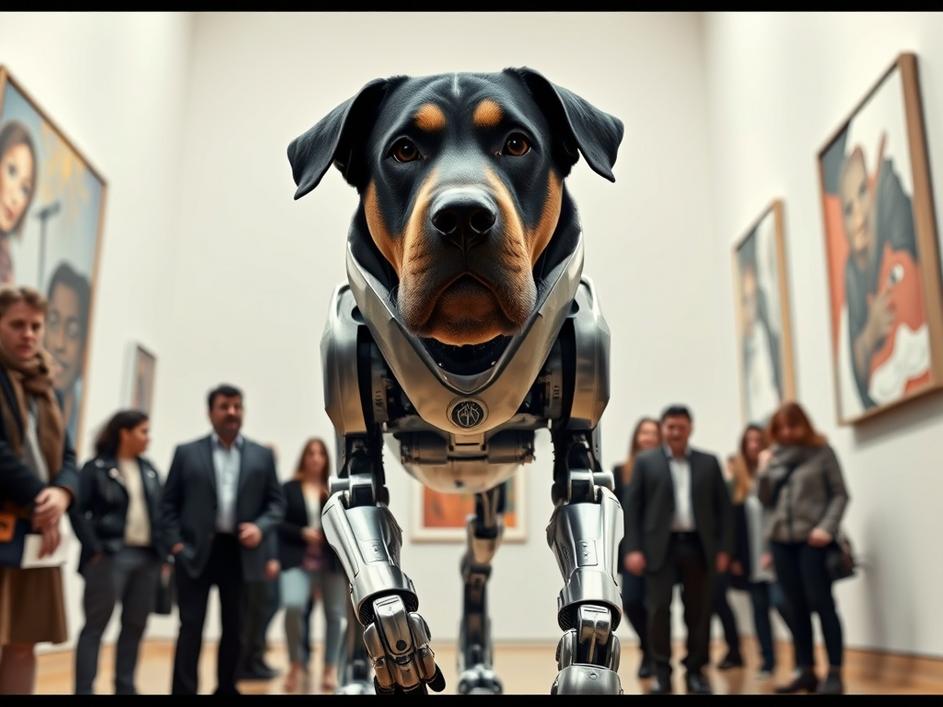
ToggleRemember that feeling of walking into an art gallery, expecting quiet contemplation and maybe a slightly pretentious conversation about brushstrokes? Well, toss that image out the window. The recent Miami art show took a sharp turn into the surreal, featuring robotic dogs sporting the faces of famous billionaires. Yes, you read that right. And no, I’m not entirely sure what to make of it either. The internet is buzzing, and it’s a fascinating blend of awe, confusion, and maybe a little bit of existential dread.
The sculptures—or, rather, the moving, barking sculptures—are the brainchild of an unnamed artist (at least, unnamed in the report I saw). These aren’t just static displays; they’re fully functional, vaguely terrifying robot dogs. The faces affixed to these mechanical canines reportedly resemble well-known billionaires. Picture it: a metallic, four-legged creature with the likeness of, say, Elon Musk, trotting through an art gallery. It’s enough to make you question reality, isn’t it?
Now, is this just a flashy stunt designed to grab headlines? Probably, at least in part. Miami art shows are notorious for their outlandish displays, vying for attention in a sea of creativity (and sometimes, questionable taste). But there’s also something deeper at play here. The artist is clearly making a statement about wealth, technology, and perhaps even our growing reliance on both. Are we creating a world where even our pets are symbols of extreme wealth and technological prowess? It’s a disturbing thought.
The whole concept treads dangerously close to the “uncanny valley,” that unsettling feeling we get when robots or computer-generated images become too realistic. Slapping a billionaire’s face on a robot dog amplifies this effect tenfold. It’s a jarring combination of the familiar (a dog) and the utterly alien (a billionaire’s face on a robot). And it makes you wonder: what is it that draws people to art like this? Is it the shock value? The intellectual stimulation of decoding the message? Or just the sheer, bizarre novelty of it all?
I think it’s a bit of all three. We live in a culture obsessed with wealth, technology, and celebrity. These robot dogs are a grotesque but fascinating mirror reflecting those obsessions back at us. They force us to confront uncomfortable questions about our values and the direction society is headed. Are we so enamored with technology that we’re willing to overlook the potential for dehumanization? Are we so focused on wealth that we’re losing sight of what truly matters? The art isn’t just provocative; it’s a wake-up call. Or at least, it should be.
Judging by the reactions online and the brief video snippet I watched, people are responding in a variety of ways. Some are amused, finding the whole thing darkly humorous. Others are repulsed, seeing it as a symbol of excess and the growing gap between the rich and the poor. And still others are simply confused, scratching their heads and wondering what it all means. This range of responses is precisely what makes the art so effective. It sparks conversation, challenges assumptions, and forces us to think critically about the world around us.
The fusion of technology and art is nothing new, of course. But these billionaire-faced robot dogs feel different. They represent a potential future where technology isn’t just a tool for creativity but a means of amplifying existing inequalities. The art world has always been a place for pushing boundaries and challenging the status quo. But with creations like this, it’s also becoming a reflection of our deepest anxieties.
Ultimately, whether you find these robotic dogs brilliant or disturbing, it’s hard to deny their impact. They’ve sparked a conversation, generated buzz, and forced us to confront some uncomfortable truths about ourselves and our society. And maybe, just maybe, that’s the point of art after all. It’s not always about beauty or inspiration; sometimes, it’s about holding a mirror up to our world and making us question what we see.
Will these billionaire robot dogs be remembered as a significant piece of art in years to come? It’s hard to say. Trends come and go, and what shocks us today might be commonplace tomorrow. But even if they fade from the public consciousness, they’ve already served their purpose. They’ve made us think, made us question, and made us confront the increasingly blurred lines between technology, wealth, and humanity. And that’s something worth barking about.


Comments are closed