

We are a digital agency helping businesses develop immersive, engaging, and user-focused web, app, and software solutions.
2310 Mira Vista Ave
Montrose, CA 91020

2500+ reviews based on client feedback
What's Included?
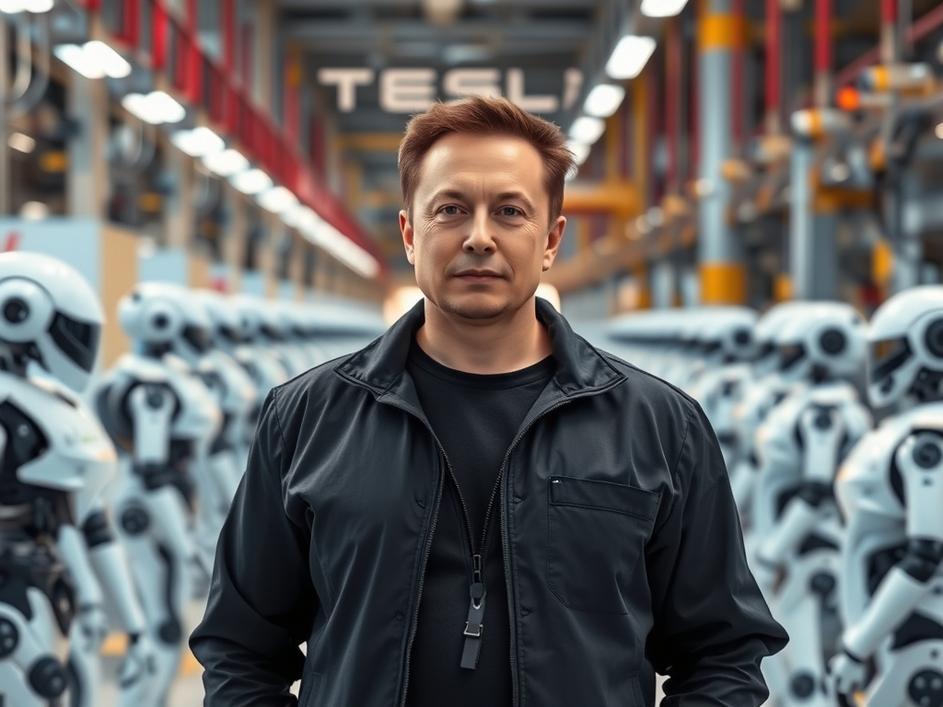
ToggleElon Musk, the CEO of Tesla, is known for his ambitious visions of the future, often involving cutting-edge technology like artificial intelligence and advanced robotics. However, recent reports suggest a surprising twist in his strategy: a renewed focus on the human workforce. This comes at a time when many companies are aggressively pursuing automation to boost productivity and cut costs. Musk’s apparent bet on human capital raises some interesting questions about the future of work and the role of technology in shaping it.
For years, the narrative surrounding manufacturing and other industries has been dominated by the promise of automation. Robots can work tirelessly, without breaks, and with incredible precision, leading to increased efficiency and reduced errors. AI can optimize processes, predict demand, and even design new products. So, why would Musk, a champion of technological advancement, seemingly dial back on this trend and emphasize the importance of human employees? One possible explanation is that complete automation, while theoretically appealing, is proving to be more complex and challenging than initially anticipated. There are still tasks that require human ingenuity, adaptability, and problem-solving skills – qualities that robots, even with the most advanced AI, struggle to replicate consistently. Maybe he realized robots can’t do everything…yet.
Another key factor could be the evolving nature of work itself. As AI and robotics take over repetitive and routine tasks, the demand for uniquely human skills is likely to increase. Creativity, critical thinking, communication, and emotional intelligence become even more valuable in a world where machines handle the mundane. Perhaps Musk recognizes that a skilled and motivated human workforce is essential for driving innovation, responding to unexpected challenges, and providing the kind of customer service that robots simply can’t deliver. There are definitely aspects of customer experience that are impossible to automate.
This shift in strategy, if confirmed, could have significant implications for Tesla and the broader automotive industry. While other manufacturers continue to invest heavily in automation, Tesla might differentiate itself by focusing on building a highly skilled and engaged workforce capable of handling complex tasks and driving continuous improvement. This approach could lead to a more resilient and adaptable organization, better equipped to navigate the rapidly changing landscape of the electric vehicle market. Furthermore, it could give Tesla a competitive advantage in areas where human interaction and craftsmanship remain essential, such as custom design, quality control, and customer support. It is definitely a risky choice, but it may be the right one.
The quote attributed to Musk, “Basically Just Issue Money…,” is a provocative statement that warrants further examination. On the surface, it might seem to suggest a disregard for financial prudence. However, it’s more likely a reflection of Musk’s unconventional approach to business and his willingness to invest in human capital. Perhaps he believes that empowering employees through fair compensation and opportunities for growth is a more sustainable way to drive productivity than simply relying on machines. After all, motivated employees are often more productive and innovative. It’s also possible that this statement is a commentary on the potential downsides of excessive automation, where job displacement could lead to decreased consumer spending and economic stagnation. If no one has any money, who will buy the cars?
Musk’s perspective should also be viewed within the broader economic context. There’s growing concern about the potential for automation to exacerbate income inequality and create a jobless future. While technology undoubtedly creates new opportunities, it also displaces workers in many sectors. A greater emphasis on human capital, combined with policies that support retraining and skills development, could help mitigate these risks and ensure a more equitable distribution of the benefits of technological progress. This approach could also lead to a more resilient and sustainable economy, less dependent on volatile global supply chains and more attuned to the needs and aspirations of its citizens. There may be social considerations that outweigh the pure economic efficiency.
Ultimately, whether Musk’s bet on the human workforce proves to be a calculated risk or a visionary move remains to be seen. However, it certainly challenges conventional wisdom and raises important questions about the future of work in an age of rapid technological change. As AI and robotics continue to advance, it’s crucial to consider not only the potential benefits of automation but also the value of human skills, creativity, and adaptability. A balanced approach, that leverages technology to augment human capabilities rather than replace them entirely, may be the key to unlocking a more prosperous and equitable future for all. It is certainly a bold move.


Comments are closed