

We are a digital agency helping businesses develop immersive, engaging, and user-focused web, app, and software solutions.
2310 Mira Vista Ave
Montrose, CA 91020

2500+ reviews based on client feedback
What's Included?
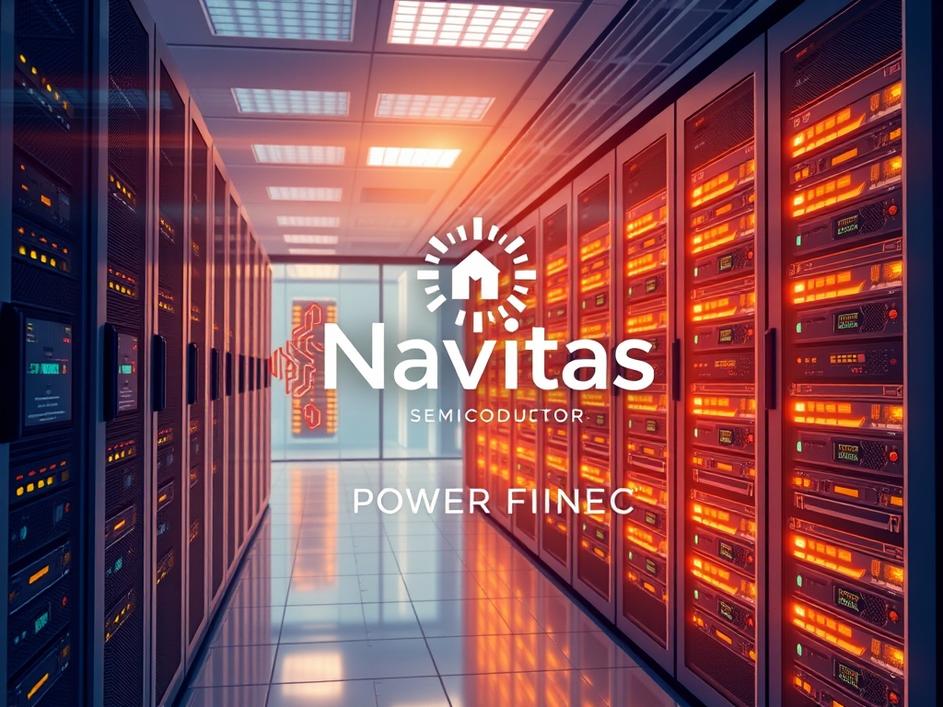
ToggleNavitas Semiconductor is making a significant shift in its business strategy. Instead of primarily focusing on the mobile market, they are now setting their sights on the booming AI data center infrastructure. This change, dubbed “Navitas 2.0,” signals a bold move to capture a larger share of a rapidly expanding market. It is a strategic pivot and the company has appointed a new executive to spearhead this change. This is a company signaling that it is not afraid to adapt to the currents of technological advancement.
So, why the sudden change of heart? The answer lies in the immense growth potential of AI. Data centers, the backbone of AI development and deployment, require enormous amounts of power. Navitas specializes in gallium nitride (GaN) and silicon carbide (SiC) power semiconductors, which are more efficient than traditional silicon-based solutions. These advanced materials can significantly reduce energy consumption and improve the overall performance of data centers. As AI continues to evolve and demand even more processing power, the need for efficient power solutions will only intensify, making Navitas’s technology highly valuable. The previous market, mobile, is already saturated.
To guide this transformation, Navitas has brought in a new executive. While specific details of the appointment may vary over time, the underlying message is clear: Navitas is serious about its new direction. New leadership often brings fresh perspectives, innovative strategies, and a renewed sense of purpose. This is important, as the company may need to reorganize or retrain workers. The right leader can navigate these changes effectively and drive the company toward its goals in the AI space.
Of course, any strategic shift comes with its own set of risks. The AI data center market is competitive, with established players already vying for dominance. Navitas will need to prove that its GaN and SiC technology offers a compelling advantage over existing solutions. The company will also need to invest heavily in research and development to stay ahead of the curve and adapt to the evolving needs of the AI industry. Navitas must also demonstrate that the tech is mature and robust, not just a theoretical improvement. But the potential rewards are substantial. If Navitas can successfully penetrate the AI data center market, it could experience significant revenue growth and establish itself as a key player in this critical sector.
Where will Navitas be in three years? That’s the million-dollar question. If the company executes its strategy effectively, it could be a major force in the AI power solutions market. Its GaN and SiC technology could become the industry standard for data centers, leading to widespread adoption and significant financial gains. However, if Navitas struggles to compete with larger, more established players, it could face challenges in achieving its goals. The next few years will be crucial in determining the company’s long-term success. How quickly the AI market grows, and how quickly Navitas can adapt to it, will decide the future.
Navitas’s shift towards AI also reflects a larger trend in the semiconductor industry. As AI becomes increasingly integrated into various aspects of our lives, semiconductor companies are racing to develop specialized chips and power solutions that can meet the demands of this emerging technology. This competition is driving innovation and leading to breakthroughs in materials science, chip design, and power management. It would not be surprising if other semiconductor firms follow suit, and shift their focus to the AI sector. The ultimate winners will be those companies that can deliver the most efficient, reliable, and cost-effective solutions for AI applications.
For investors, Navitas’s strategic transformation presents both opportunities and risks. The company’s stock price could potentially soar if it successfully captures a significant share of the AI data center market. However, investors should also be aware of the risks associated with the company’s new strategy, including increased competition, technological advancements, and potential setbacks in research and development. It’s essential to conduct thorough due diligence and assess the company’s financial performance, market position, and competitive landscape before making any investment decisions. The AI sector is red hot, but that also means that more speculative investments will appear. It’s a “buyer beware” situation.
Navitas Semiconductor’s decision to shift its focus to AI data center infrastructure is a calculated gamble. It’s a bold move that could pay off handsomely if the company executes its strategy effectively. However, it’s also a risky proposition, as the AI market is highly competitive and constantly evolving. Only time will tell whether Navitas can successfully navigate this transformation and establish itself as a leader in the AI power solutions market. This is definitely a company to watch, but also one to analyze closely.



Comments are closed