

We are a digital agency helping businesses develop immersive, engaging, and user-focused web, app, and software solutions.
2310 Mira Vista Ave
Montrose, CA 91020

2500+ reviews based on client feedback
What's Included?
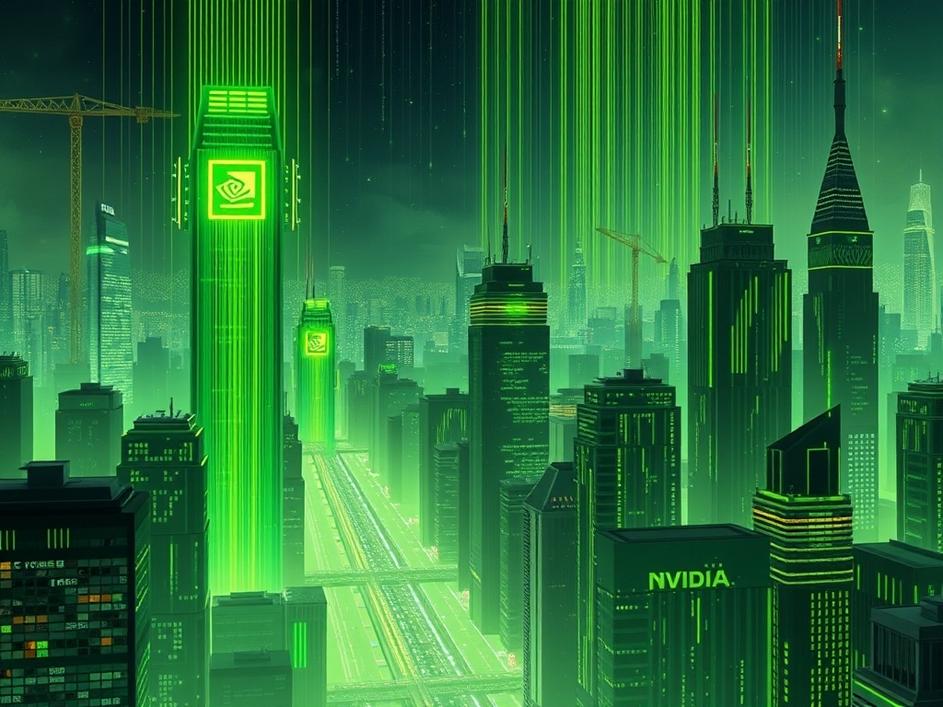
ToggleNvidia recently announced a staggering 65% jump in profits, translating to a cool $31.9 billion. That’s a huge number, even in the world of tech. This news comes hot on the heels of Nvidia briefly surpassing a $5 trillion market cap, making it one of the most valuable companies on the planet. The reason for this explosive growth? Artificial intelligence. Nvidia’s chips are the brains behind many AI applications, and demand is soaring.
Nvidia’s dominance in the AI chip market is no secret. They essentially have a lock on the high-end GPU market, which is crucial for training and running complex AI models. Companies like Google, Microsoft, and Amazon Web Services are all clamoring for Nvidia’s chips to power their AI initiatives. This creates a powerful position for Nvidia, allowing them to command high prices and enjoy massive profit margins. But the question is, can this dominance last?
Despite the impressive profit surge, some analysts are questioning whether it’s “enough” to satisfy Wall Street’s insatiable appetite for growth. The stock market is a forward-looking machine, and investors are constantly trying to predict what will happen next. The big question is whether Nvidia can continue to deliver these kinds of growth numbers in the future. The market is a bit volatile and the investors are always expecting higher numbers.
While Nvidia currently reigns supreme, several companies are vying for a piece of the AI chip pie. AMD is making strides with its own AI-focused GPUs, and Intel is investing heavily in its AI chip development. Additionally, several startups are emerging with innovative approaches to AI hardware. These companies could potentially disrupt Nvidia’s dominance in the long run. The main issue is creating the complete product line and being able to scale as quickly as Nvidia has. Scaling is difficult when money and access to rare earth materials is key to building chips.
The AI hype is real, but it’s important to remember that AI is still in its early stages of development. While there are already numerous applications of AI in areas like image recognition, natural language processing, and robotics, there’s still enormous potential for further innovation. Nvidia’s chips are playing a crucial role in enabling these advancements, which could have a profound impact on various industries, from healthcare to transportation.
One potential cloud on the horizon for Nvidia is the ongoing trade tensions between the United States and China. The U.S. government has imposed restrictions on the export of advanced chips to China, which could limit Nvidia’s growth in the world’s second-largest economy. China is actively working to develop its own domestic chip industry, which could eventually reduce its reliance on foreign suppliers like Nvidia. The demand in China is still high, but the geopolitical environment keeps shifting.
To sustain its growth in the long run, Nvidia needs to diversify its product offerings and explore new markets. While AI is currently its primary growth driver, the company is also involved in other areas like gaming, data centers, and automotive. By expanding its reach into these different sectors, Nvidia can reduce its dependence on any single market and mitigate the risks associated with rapid technological change. They are also facing new laws about what AI can be used for so they are trying to stay ahead of the curve. This is very tricky as new models can do more and more, so it is a moving target.
Nvidia’s success is a testament to its technological innovation and its ability to capitalize on the growing demand for AI. However, the company faces several challenges, including increasing competition, geopolitical risks, and the need to diversify its business. Whether Nvidia can continue to deliver the kind of explosive growth that Wall Street expects remains to be seen. It will require a delicate balancing act of maintaining its technological edge, navigating the complex geopolitical landscape, and exploring new opportunities for growth. Ultimately, the future of Nvidia depends on its ability to adapt and evolve in a rapidly changing world.



Comments are closed