

We are a digital agency helping businesses develop immersive, engaging, and user-focused web, app, and software solutions.
2310 Mira Vista Ave
Montrose, CA 91020

2500+ reviews based on client feedback
What's Included?
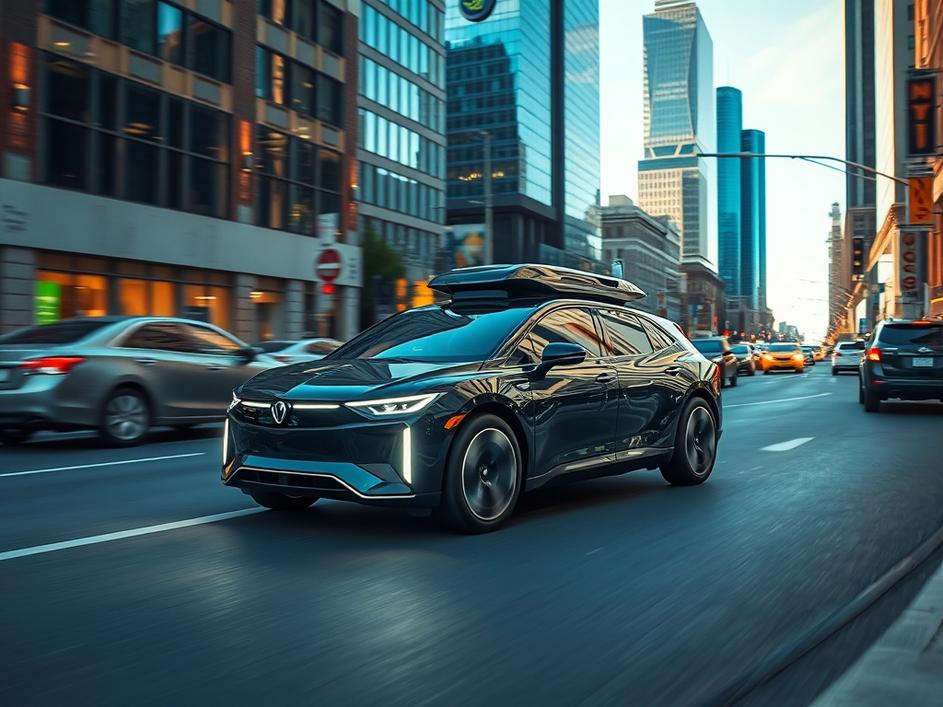
ToggleJensen Huang, the CEO of Nvidia, recently took Nvidia’s self-driving technology, Alpamayo, for a spin. His assessment? It “drives like a human.” Now, that’s a bold statement in a world where self-driving cars have often been criticized for being jerky, overly cautious, or just plain bad at navigating real-world situations. The promise of autonomous vehicles has always been safer roads and more efficient transportation, but the execution has often fallen short. So, what makes Alpamayo different, and why is Huang so confident?
For years, self-driving systems relied heavily on pre-programmed rules and meticulously mapped environments. If a situation deviated even slightly from what the system was designed for, things could go wrong quickly. Alpamayo represents a shift towards a more human-like approach. It seems Nvidia is trying to infuse the system with something akin to intuition – the ability to react to unexpected events, anticipate the actions of other drivers and pedestrians, and make nuanced decisions based on context. If Alpamayo truly drives like a human, it suggests that Nvidia has made significant strides in areas like sensor fusion (combining data from various sensors to create a comprehensive view of the surroundings) and behavioral prediction (forecasting how other actors in the environment will behave). It’s about more than just following the rules of the road; it’s about understanding the unspoken language of driving.
One of the biggest hurdles for self-driving technology is public acceptance. Stories of accidents, near-misses, and general weirdness have fueled skepticism and mistrust. People are simply hesitant to hand over control of a two-ton vehicle to a computer, especially when they’ve seen those computers make questionable decisions. Huang’s claim that Alpamayo drives like a human is a direct attempt to address this concern. It’s a way of saying, “This isn’t some robot trying to follow a rigid set of instructions. This is a system that understands how humans drive and can adapt accordingly.” But words are just words. The key will be demonstrating this capability in real-world scenarios, under a wide range of conditions, and with a proven track record of safety.
Nvidia isn’t the only player in the self-driving game. Companies like Tesla, Waymo, and numerous automotive manufacturers are all vying for a piece of the autonomous driving pie. Each company has its own approach, its own strengths, and its own weaknesses. Tesla, for example, has a massive fleet of vehicles on the road collecting real-world data, which gives it a significant advantage in terms of training its AI models. Waymo has focused on a more cautious, geofenced approach, limiting its self-driving operations to specific areas where the technology is proven to be safe. Nvidia’s strength lies in its expertise in artificial intelligence and its ability to develop powerful computing platforms that can handle the immense processing demands of self-driving systems. Alpamayo could be Nvidia’s way of differentiating itself from the competition, by offering a system that is not only safe and reliable but also feels natural and intuitive to human drivers.
The impact of self-driving technology extends far beyond personal vehicles. Autonomous trucks could revolutionize the logistics industry, making transportation more efficient and cost-effective. Self-driving buses and shuttles could improve public transportation, making it more accessible and convenient. And self-driving delivery robots could transform the way we receive goods and services. The potential benefits are enormous, but so are the challenges. We need to address issues like job displacement, data privacy, and the ethical implications of autonomous decision-making. As self-driving technology becomes more prevalent, it’s crucial that we have a thoughtful and informed conversation about how we want to shape its future.
While Jensen Huang’s statement about Alpamayo driving like a human is encouraging, it’s important to remember that self-driving technology is still in its early stages of development. There will be bumps in the road, setbacks, and unexpected challenges. It may be years before fully autonomous vehicles are a common sight on our roads. But the progress that has been made in recent years is undeniable. And with companies like Nvidia pushing the boundaries of what’s possible, the dream of safer, more efficient, and more accessible transportation is slowly becoming a reality. Alpamayo might just be a significant step in that direction, offering a glimpse into a future where cars drive themselves with the skill and intuition of a human driver.


Comments are closed