

We are a digital agency helping businesses develop immersive, engaging, and user-focused web, app, and software solutions.
2310 Mira Vista Ave
Montrose, CA 91020

2500+ reviews based on client feedback
What's Included?
ToggleNvidia’s recent earnings report wasn’t just a financial win; it was a statement. The numbers exceeded expectations, and the guidance for the future was even more promising. But the real story lies in the insights shared by CEO Jensen Huang during his interview with CNBC’s Becky Quick. He didn’t just talk about profits and projections; he painted a picture of a company at the forefront of a technological revolution, one fueled by artificial intelligence and accelerated computing. It’s easy to get caught up in the stock price and market capitalization, but listening to Huang, you get the sense that he sees something much bigger at play.
One of the key takeaways from the interview was Huang’s perspective on the evolution of AI. He didn’t present AI as a futuristic fantasy but as a tangible force already reshaping industries. From healthcare to automotive, AI is moving beyond simple automation and into complex problem-solving. Huang emphasized that Nvidia isn’t just building chips; they’re building platforms that enable developers and researchers to push the boundaries of what’s possible with AI. This ecosystem approach, where hardware and software are designed to work in harmony, is a crucial element of Nvidia’s long-term strategy. And, by focusing on the needs of developers, Nvidia ensures that its technology remains relevant and adaptable to emerging AI applications. He seems to believe the current excitement isn’t just hype; it’s the beginning of a fundamental shift.
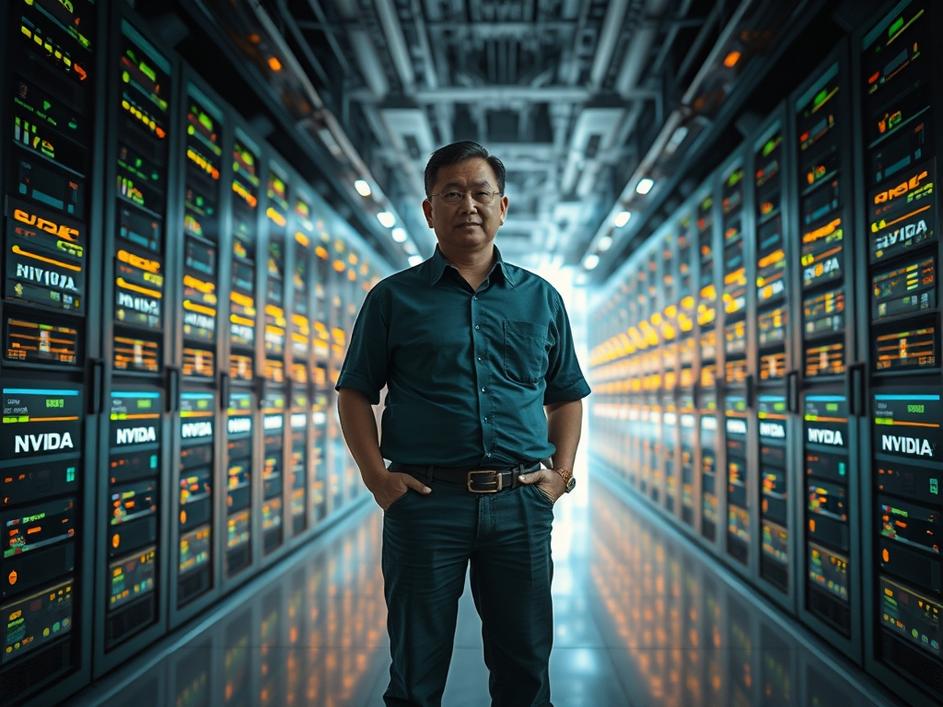
Beyond individual applications, Huang highlighted the changing landscape of data centers. They are no longer just repositories of information; they’re becoming the engines of AI. Nvidia’s GPUs are powering these data centers, enabling them to handle the massive computational demands of AI models. He discussed how traditional CPU-centric architectures are struggling to keep up with the increasing complexity of AI workloads. The shift towards GPU-accelerated computing is not just a trend, but a necessary evolution. This is particularly important considering the increasing importance of machine learning in all types of industries. Huang envisions a future where data centers are optimized for AI, unlocking new levels of performance and efficiency. This represents a major opportunity for Nvidia and a significant shift in the overall computing paradigm.
The interview also touched upon the complexities of operating in a global market, particularly in light of increasing geopolitical tensions. Huang addressed the challenges of navigating export restrictions and ensuring access to key markets. He acknowledged the importance of complying with regulations while also advocating for policies that support innovation and collaboration. It’s a delicate balancing act, and Huang demonstrated a keen awareness of the geopolitical landscape. Nvidia’s success depends not only on its technological prowess but also on its ability to navigate the ever-changing political environment. Huang’s comments suggested a willingness to work with governments and international partners to ensure the responsible development and deployment of AI technologies, but also implied that innovation shouldn’t be stifled by overregulation.
While Nvidia currently enjoys a leading position in the AI chip market, Huang didn’t dismiss the importance of competition. He acknowledged the presence of other players in the field, both established companies and emerging startups. He stated that competition is healthy and drives innovation. Nvidia’s response is to continue pushing the boundaries of what’s possible, investing heavily in research and development, and fostering a culture of innovation. This commitment to continuous improvement is crucial for maintaining its competitive edge in the long run. It’s clear that Huang isn’t complacent; he sees competition as a catalyst for progress and a constant reminder to stay ahead of the curve.
Finally, the interview touched on Nvidia’s vision for the future, including its involvement in the metaverse. Huang described the metaverse as the next evolution of the internet, a space where people can interact, collaborate, and create in immersive 3D environments. Nvidia’s technologies, such as its Omniverse platform, are playing a key role in building the infrastructure for the metaverse. He sees tremendous potential for the metaverse to transform industries like design, engineering, and entertainment. While the metaverse is still in its early stages, Huang’s vision suggests that Nvidia is positioning itself to be a major player in this emerging space. This forward-thinking approach, combined with its technological expertise, could solidify Nvidia’s position as a leader in the next generation of computing.
Jensen Huang’s interview offered a glimpse into the mind of a visionary leader. He not only understands the intricacies of technology but also appreciates the broader implications of AI for society. His insights into the market, geopolitical forces, and the importance of innovation reveal the qualities that have made Nvidia such a success. It’s not just about building better chips; it’s about understanding the world and anticipating its future needs. This is why listening to Huang speak is always insightful, even if you’re not a tech expert.
Nvidia’s success isn’t just about short-term financial gains. It’s about the company’s ability to anticipate the future and position itself at the forefront of technological innovation. Jensen Huang’s vision, coupled with Nvidia’s engineering prowess, has created a company that is shaping the future of AI and computing. As AI continues to transform industries and redefine our world, Nvidia is likely to remain a central player, driving progress and pushing the boundaries of what’s possible. The full impact of Nvidia’s technology will only be realized in the years to come, but one thing is clear: the company is helping to build the future.

Comments are closed