

We are a digital agency helping businesses develop immersive, engaging, and user-focused web, app, and software solutions.
2310 Mira Vista Ave
Montrose, CA 91020

2500+ reviews based on client feedback
What's Included?
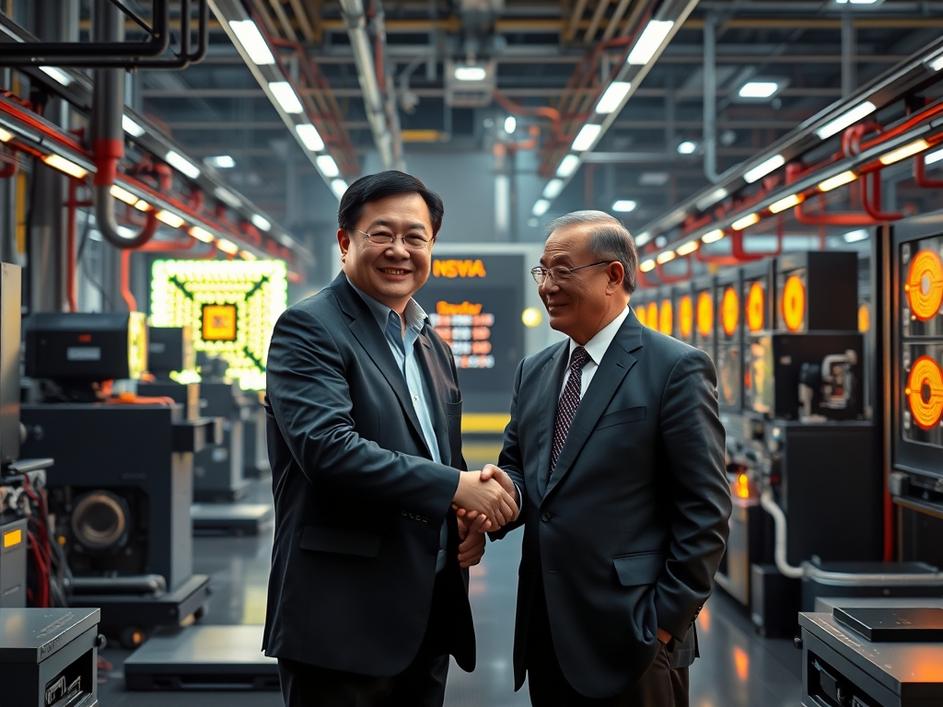
ToggleNvidia CEO Jensen Huang’s recent trip to Taipei, coming right after a visit to China, has set tongues wagging in the tech world. It’s not just about a CEO making business rounds; it highlights the delicate balancing act tech companies must perform amidst escalating tensions surrounding AI chip technology and global dominance. Huang’s movements are closely watched because Nvidia isn’t just any company; it’s the undisputed leader in AI chips, the very components fueling the current artificial intelligence boom. His presence in both China and Taiwan, two key players with complex relationships, underscores the intricate web of geopolitics, technology, and economics that defines the current landscape.
China represents a massive market for Nvidia. The country’s ambition to become a global AI leader is no secret, and it requires access to the best technology available. Nvidia’s chips are essential for training AI models, powering data centers, and enabling a wide range of applications, from facial recognition to autonomous vehicles. However, the US government has placed restrictions on exporting certain advanced chips to China due to national security concerns. This creates a difficult situation for Nvidia, which needs to comply with regulations while also serving a significant customer base. Huang’s visit to China likely involved navigating these restrictions and exploring alternative solutions to continue doing business in the country, perhaps through modified chip designs that meet export requirements.
Taiwan, on the other hand, is home to TSMC, the Taiwan Semiconductor Manufacturing Company, the world’s largest contract chipmaker. TSMC manufactures the vast majority of Nvidia’s high-end chips. This makes Taiwan an absolutely critical link in Nvidia’s supply chain. Huang’s visit to Taipei is undoubtedly aimed at strengthening this partnership and ensuring a steady supply of chips. Given the global chip shortage that has plagued industries in recent years, securing manufacturing capacity is a top priority for any tech company. Furthermore, with geopolitical tensions surrounding Taiwan, ensuring a stable relationship with TSMC is all the more important.
The visits highlight the intense competition for technological leadership in the age of AI. The United States, China, and other nations are vying for dominance in this field, recognizing that AI will be a key driver of economic growth and military power. Nvidia sits at the center of this competition, its technology sought after by all parties. Huang, therefore, becomes a key figure in this geopolitical drama, having to carefully balance competing interests and navigate complex regulations. His decisions will have far-reaching consequences for the future of AI development and the global balance of power. This isn’t just about selling chips; it’s about shaping the future of technology and influencing international relations.
Perhaps Huang’s travels also send a subtle message about the interdependence of the global tech ecosystem. China needs Nvidia’s chips, Nvidia needs TSMC’s manufacturing capabilities, and the US relies on both for its own technological advancement. The semiconductor industry is deeply intertwined, and any disruption to this complex web could have significant repercussions. By visiting both China and Taiwan, Huang may be implicitly advocating for continued cooperation and dialogue, even amidst political tensions. The alternative – a complete decoupling of the tech industry – would likely harm all parties involved.
Ultimately, Jensen Huang’s diplomatic dance underscores a crucial question: Will the future of AI be defined by collaboration or competition? The answer will depend on the choices made by governments, companies, and individuals. If collaboration prevails, the world can benefit from the immense potential of AI to solve global challenges, from climate change to healthcare. But if competition becomes the dominant force, the risk of technological fragmentation, trade wars, and even military conflict will increase. Huang, and Nvidia, are in a pivotal position to influence this future, and the world will be watching closely.

Comments are closed