

We are a digital agency helping businesses develop immersive, engaging, and user-focused web, app, and software solutions.
2310 Mira Vista Ave
Montrose, CA 91020

2500+ reviews based on client feedback
What's Included?
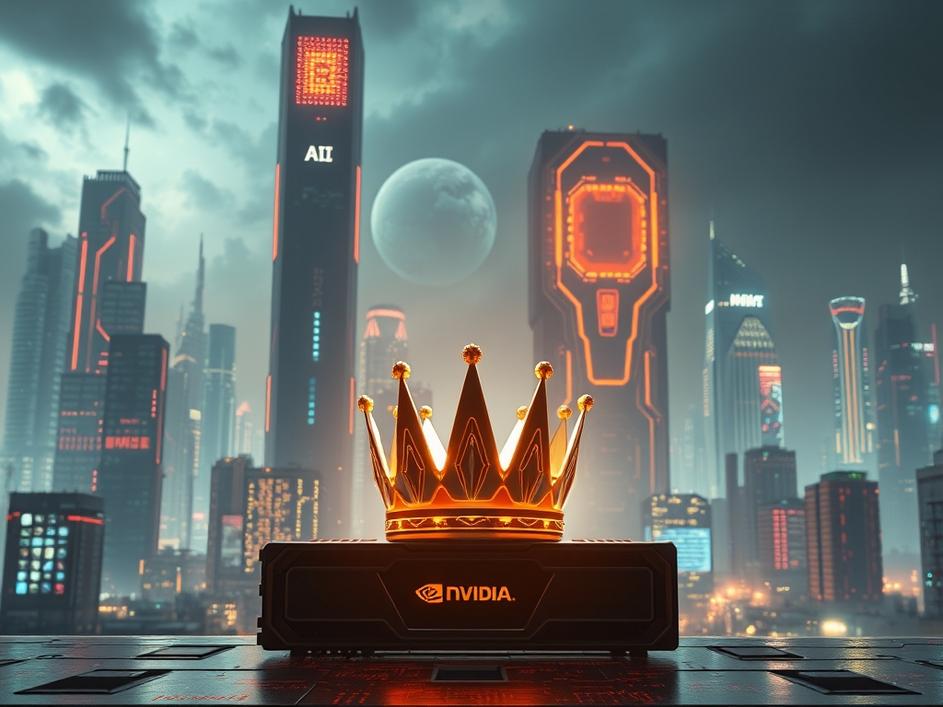
ToggleThe artificial intelligence market is exploding, and everyone wants a piece. Predictions say the market will jump from $235 billion in 2023 to a staggering $631 billion by 2028. That kind of growth attracts a lot of attention, and more importantly, a lot of investment. The hardware powering this boom, specifically the chips designed to handle the intense demands of AI, is at the heart of it all. And right now, Nvidia is sitting on the throne.
Nvidia’s graphics processing units (GPUs) have become the go-to choice for training AI models. They’ve essentially built a $187 billion empire on this dominance. Their chips are powerful, yes, but Nvidia’s real advantage lies in its software ecosystem, particularly CUDA. CUDA is a software platform that makes it easier for developers to program Nvidia GPUs for AI tasks. This has created a lock-in effect – developers learn CUDA, optimize their code for Nvidia hardware, and become less likely to switch to competing platforms, even if those platforms offer comparable performance.
But empires don’t last forever. While Nvidia enjoys a comfortable lead, several companies are nipping at its heels, eager to grab a slice of that rapidly expanding AI pie. Advanced Micro Devices (AMD) is one of the most formidable contenders. AMD has been steadily improving its own GPU technology, and its MI300 series is designed specifically to compete with Nvidia’s flagship AI chips. The MI300 boasts impressive performance and aims to offer a more open and flexible alternative to CUDA, potentially attracting developers who are wary of vendor lock-in. And, AMD’s CPUs are gaining more market share by the day. That could give them a distinct advantage in the future.
It’s not just AMD that Nvidia has to worry about. A host of smaller companies and startups are developing innovative AI chips, often focusing on specific niches or architectural approaches. Some are designing chips optimized for edge computing, bringing AI processing closer to the data source and reducing latency. Others are exploring entirely new architectures, like neuromorphic computing, which mimics the way the human brain works. These smaller players may not have the resources to directly challenge Nvidia across the board, but their specialized solutions could disrupt specific segments of the AI market. Many are betting that specialized AI processors will win in the long run.
Ultimately, the battle for AI chip dominance won’t be won on raw processing power alone. The software ecosystem is just as important, if not more so. Nvidia’s CUDA advantage is significant, but it’s not insurmountable. Other companies are investing heavily in their own software platforms and tools, trying to make it easier for developers to adopt their hardware. AMD is pushing for more open standards and interoperability, aiming to break down the barriers that lock developers into the Nvidia ecosystem. The company that can provide the best combination of powerful hardware and a user-friendly, flexible software platform will ultimately prevail.
And here is where the most interesting developments are taking place. Open-source initiatives are becoming increasingly important in the AI landscape. Frameworks like TensorFlow and PyTorch are widely used for AI development, and they support a variety of hardware platforms. This means that developers are not entirely dependent on proprietary software from chip vendors. As open-source tools become more sophisticated and easier to use, they could level the playing field and make it easier for alternative chip vendors to compete with Nvidia.
Don’t forget about the cloud providers. Companies like Amazon, Google, and Microsoft are designing their own AI chips, optimized for their specific workloads. These custom chips allow them to improve performance, reduce costs, and gain greater control over their infrastructure. While they may not directly compete with Nvidia in the general AI chip market, their internal demand for AI processing power is enormous, and their decision to build their own chips could significantly impact the overall market dynamics. It also creates a scenario where these cloud giants could, in theory, offer their custom chips to smaller companies.
One cannot ignore the geopolitical landscape. Governments around the world recognize the strategic importance of AI, and they are investing heavily in developing their own AI capabilities. This includes funding research and development of AI chips, as well as imposing restrictions on the export of advanced technology. These geopolitical factors could significantly impact the AI chip market, creating new opportunities for domestic chipmakers and disrupting established supply chains. The United States and China are currently locked in a technological arms race, and AI is at the center of it.
Nvidia’s dominance in the AI chip market is undeniable, but the landscape is constantly evolving. AMD and other competitors are making significant strides, and the rise of open-source software and custom chips from cloud providers could further disrupt the market. The company that can offer the best combination of performance, software, and ecosystem support will ultimately win the AI chip race. Nvidia is in a strong position, but it needs to continue innovating and adapting to stay ahead of the competition. The next few years will be crucial in determining whether Nvidia can maintain its reign or whether a new challenger will emerge to claim the AI chip throne.



Comments are closed