

We are a digital agency helping businesses develop immersive, engaging, and user-focused web, app, and software solutions.
2310 Mira Vista Ave
Montrose, CA 91020

2500+ reviews based on client feedback
What's Included?
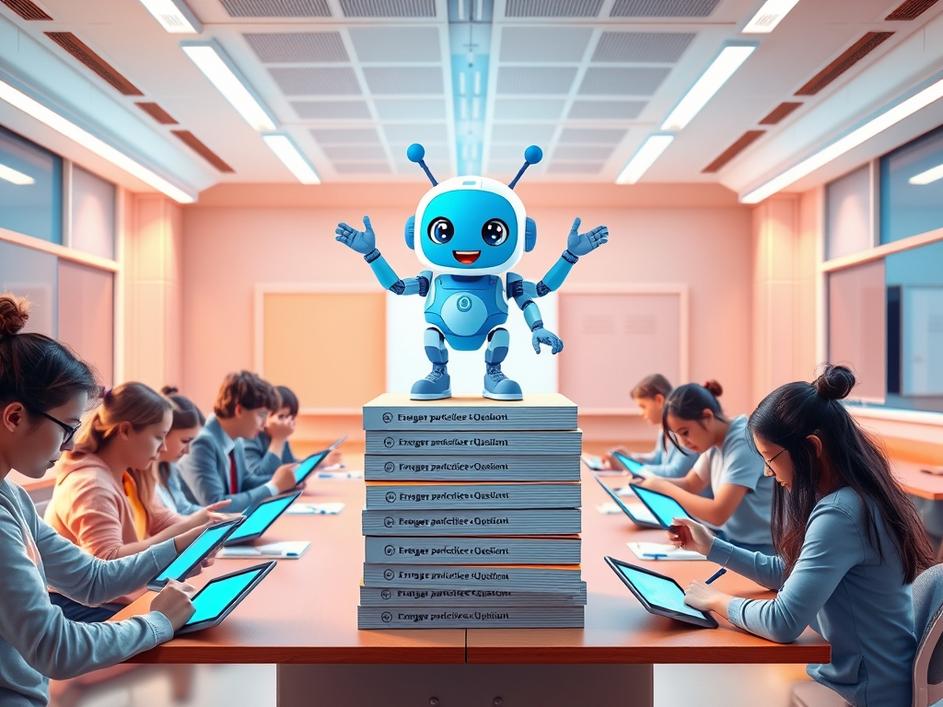
ToggleOn June 3, 2026 Thea announced that it has just delivered its one‑billionth practice question. That number sounds huge, but it is also a clear sign of how many times the platform has asked a learner to think, write, or solve something on its own. The milestone comes after three years of steady growth, during which Thea has focused on pushing questions to students instead of handing them ready answers. In a world where shortcuts are tempting, reaching a billion asks shows that many learners still value the effort of working through a problem. It also gives Thea a solid data set to refine its AI, making each new question a little smarter than the last. The company says the figure was verified by internal logs and third‑party auditors, marking a point where the service moves from being a novelty to a staple in many study routines.
Most students today can type a question into a chat bot and get an instant answer. That feels fast, but it also skips the mental work that helps memory stick. Thea’s model flips the script: it serves a prompt, waits for a response, then checks the answer and offers a hint if needed. This back‑and‑forth mimics a real tutor who nudges rather than solves. Research shows that this “active” style improves retention more than passive reading. By forcing the brain to retrieve information, Thea turns a simple drill into a mini‑practice session that feels more like a conversation than a test.
Behind the scenes, Thea uses a mix of language models and subject‑specific rules to generate questions that match a student’s current level. When a learner logs in, the system looks at past performance, picks a topic, and creates a fresh problem that isn’t just a copy of a textbook example. After the student submits an answer, Thea runs a quick check, then either confirms the result or offers a step‑by‑step hint. The feedback loop is short, so the learner stays in the zone of productive struggle. Over time the AI learns which kinds of hints work best for each user, making the experience feel personal without a human tutor on call.
Students who have tried Thea report that they feel more confident after a study session. Instead of scrolling past a solution, they spend a few minutes wrestling with the problem, then see where they went wrong. That moment of correction is where learning clicks. Teachers also notice fewer “I don’t get it” moments because the platform surfaces misconceptions early. Because the questions are generated on demand, there’s always fresh material, which keeps boredom at bay. The data also lets schools track progress across classes, spotting trends that help shape curriculum tweaks.
The billion‑question milestone sends a clear signal to the education market: AI can be more than a fast answer engine. Companies that chase quick fixes may find themselves left behind as schools look for tools that actually build skill. Thea’s growth shows that a model built around asking, checking, and guiding can scale. It also puts pressure on larger platforms to add similar active‑learning loops, or risk being seen as shallow. In the longer run, we may see hybrid solutions where big language models supply the question‑generation power while smaller, focused systems handle the tutoring feedback.
Reaching a billion questions is impressive, but it’s just a step. The next challenge will be to keep the questions relevant as curricula evolve and as new subjects emerge, like data ethics or AI basics. Thea will need to stay ahead of those changes, perhaps by partnering with educators to feed fresh content into its engine. If it can keep the feedback loop tight and the experience enjoyable, the platform could become a go‑to study buddy for millions more students. For now, the milestone reminds us that learning still thrives on curiosity and effort, not just on instant answers. The future looks brighter when technology pushes us to ask more, not less.
Source: Original Article


Comments are closed