

We are a digital agency helping businesses develop immersive, engaging, and user-focused web, app, and software solutions.
2310 Mira Vista Ave
Montrose, CA 91020

2500+ reviews based on client feedback
What's Included?
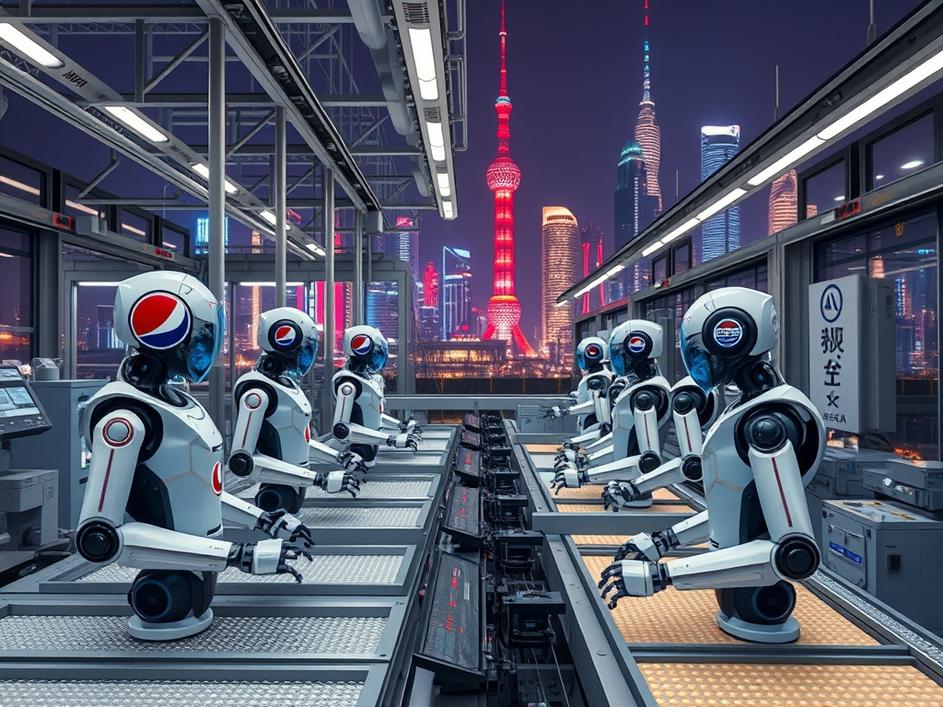
TogglePepsiCo is making a significant move in China, integrating artificial intelligence across its operations. This isn’t just a minor upgrade; it’s a full-fledged commitment to using AI to streamline everything from manufacturing to distribution. The goal? To boost efficiency and stay ahead in a competitive market. The details are still somewhat limited, but the overall message is clear: PepsiCo believes AI is the key to unlocking new levels of productivity in one of the world’s largest and most dynamic economies.
China’s appeal as an AI testing ground is undeniable. The country has a massive consumer base, a rapidly evolving technological landscape, and a government that’s increasingly supportive of AI innovation. For PepsiCo, this presents a unique opportunity to refine its AI strategies and potentially scale successful implementations to other markets. And the timing makes sense. Global supply chains are still recovering from recent disruptions, and companies are under pressure to optimize their operations. AI offers a pathway to achieve this, providing real-time insights and automation capabilities that were previously out of reach.
So, what specific areas could AI impact within PepsiCo’s China operations? Think about supply chain management. AI algorithms can analyze vast amounts of data to predict demand fluctuations, optimize inventory levels, and route deliveries more efficiently. Manufacturing processes can also be enhanced through AI-powered quality control and predictive maintenance, reducing downtime and improving product consistency. And don’t forget marketing. AI can personalize advertising campaigns, target specific consumer segments, and analyze the effectiveness of different marketing strategies in real time. The potential applications are broad and varied, suggesting that PepsiCo is likely pursuing a multi-faceted approach.
While the potential benefits of AI are substantial, there are also challenges to consider. Data privacy is a major concern, particularly in China, where regulations are constantly evolving. PepsiCo will need to ensure that its AI systems comply with all applicable laws and regulations, and that consumer data is protected. And there’s also the question of workforce impact. As AI automates certain tasks, there could be job displacement, requiring PepsiCo to invest in retraining and upskilling programs for its employees. But overcoming these challenges offers a significant opportunity for PepsiCo to establish itself as a leader in AI adoption and innovation.
PepsiCo’s investment in AI is part of a broader trend in the food and beverage industry. Companies are increasingly turning to AI to address a range of challenges, from optimizing supply chains to developing new products. For example, AI is being used to analyze consumer preferences and identify emerging flavor trends, helping companies create products that are more likely to resonate with consumers. And AI is also being used to improve food safety, by detecting potential contaminants and identifying sources of contamination more quickly. As AI technology continues to evolve, we can expect to see even more innovative applications in the food and beverage industry.
Is this move a competitive advantage, or a necessary step to keep up with the competition? It’s likely a bit of both. In today’s business environment, companies that fail to embrace new technologies risk falling behind. AI is no longer a futuristic concept; it’s a practical tool that can deliver tangible results. PepsiCo’s investment in AI suggests that the company recognizes this and is committed to staying ahead of the curve. But other companies are also investing in AI, so PepsiCo will need to execute its AI strategy effectively to realize its full potential.
Ultimately, PepsiCo’s AI endeavor in China provides a glimpse into the future of food production and distribution. It signals a shift towards more data-driven, automated, and efficient operations. While the specific outcomes remain to be seen, the company’s commitment to AI underscores the growing importance of technology in the food and beverage industry. It will be interesting to see how PepsiCo’s AI initiatives evolve and whether they serve as a model for other companies in the sector.
Only time will tell if PepsiCo’s AI gamble in China pays off. There are significant hurdles to overcome, but the potential rewards are also substantial. If PepsiCo can successfully navigate the challenges and harness the power of AI, it could gain a significant competitive advantage and set a new standard for efficiency in the food and beverage industry. And if that happens, expect other major players to follow suit, further accelerating the adoption of AI in the sector.

Comments are closed