

We are a digital agency helping businesses develop immersive, engaging, and user-focused web, app, and software solutions.
2310 Mira Vista Ave
Montrose, CA 91020

2500+ reviews based on client feedback
What's Included?
ToggleRemember the last time your doctor prescribed a new medication? You likely left their office with a mix of relief and a tiny bit of dread. Relief, because you had a path to feeling better. Dread, because you knew the next step involved a bit of a guessing game. You’d take that prescription, maybe a paper slip or an electronic message, to your pharmacy. Then, you’d wait. And wait. The pharmacist would eventually tell you the price, and sometimes, it was a real shocker. Maybe it was too expensive. Maybe your insurance didn’t cover it the way you thought it would. Then began the back-and-forth: calls to your doctor, calls to your insurance, maybe trying different pharmacies. It was a common, frustrating dance, and it wasted a lot of time for everyone involved. For years, this has been the standard. We just accepted that figuring out prescription costs was a post-appointment hassle, a separate chore divorced from the actual medical decision-making. But what if that whole process could be avoided? What if your doctor knew all this information – the cost, the insurance coverage, the cheaper alternatives – right there, in the room with you?
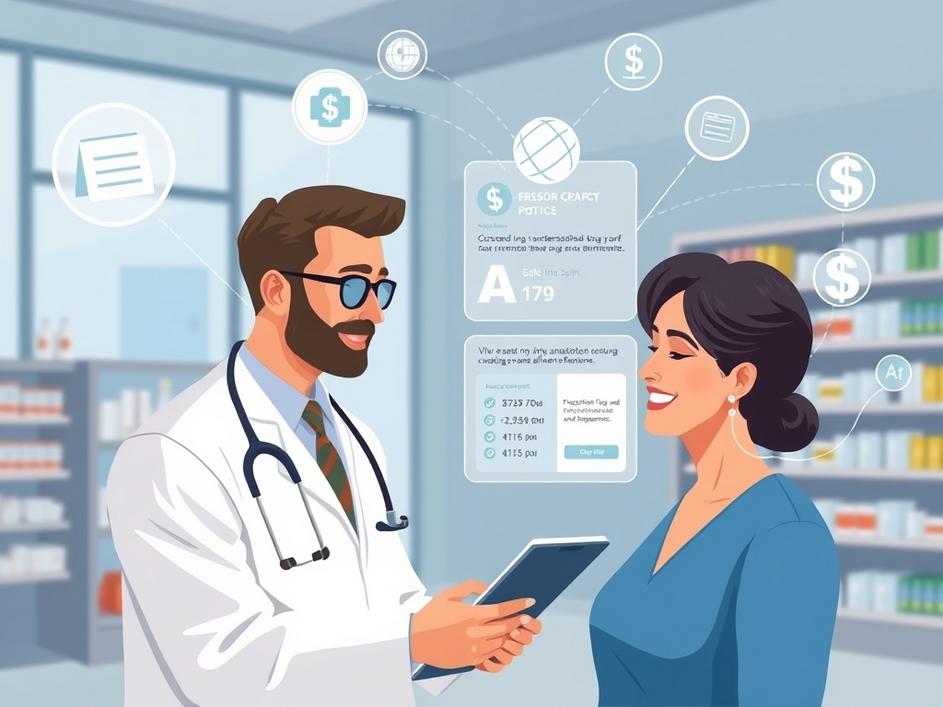
Well, that “what if” is quickly becoming our reality, and it’s all thanks to something called real-time prescription drug market technology. Imagine this: your doctor types in a prescription, and instantly, a small window pops up on their computer screen. This window doesn’t just show the drug’s name. It displays the exact price you’d pay with your specific insurance. It highlights if there are any cheaper generic versions. It even suggests similar, equally effective drugs that might be covered better by your plan. This isn’t just about saving money, though that’s a huge part of it. It’s about empowering your doctor to make more informed decisions right then and there. Instead of waiting for you to call back with sticker shock, they can say, “This drug costs $X with your plan, but we could switch to Y, which is just as good for you and costs only $Z.” This transparency at the point of care changes everything. It means fewer surprises, fewer frustrating phone calls, and most importantly, a much higher chance that you’ll actually pick up and stick with the medication your doctor prescribed. It turns the guessing game into a clear, open conversation between you and your healthcare provider.
Why is this happening now? It’s not just luck; it’s a perfect storm of policy and new technology. For a while now, there’s been a big push for doctors and pharmacies to use digital systems for prescriptions – what we call e-prescribing. Government mandates and healthcare organizations have really encouraged, and in some cases required, doctors to send prescriptions electronically. This move alone laid the groundwork. Once prescriptions were digital, it became much easier to plug into other digital systems. On the technology side, we’ve seen incredible leaps in how fast and securely information can be shared between different healthcare systems. Think about the complex web of insurance companies, pharmacies, drug manufacturers, and doctor’s offices. Getting all that data to talk to each other in real-time used to be a huge hurdle. But with better software platforms, more robust data security, and standardized ways of sharing health information, those hurdles are shrinking. These technological innovations aren’t just making things possible; they’re making them efficient. The ability to instantly pull in a patient’s specific insurance formulary, cross-reference it with drug pricing data, and present alternatives – all in seconds – is a testament to how far health IT has come. It’s not just about digital paperwork; it’s about digital intelligence working for patient care.
The impact of this shift is huge, benefiting many. For patients, the most obvious advantage is financial transparency. No one likes surprise bills, especially for critical medication. Knowing the cost upfront means you can plan, budget, and avoid abandoning prescriptions because they’re too expensive. This directly leads to better adherence; you’re more likely to take a medication if you can afford it and understand its value. For doctors, it’s about better clinical decision-making and less administrative burden. They can prescribe with confidence, knowing their patient won’t face an unexpected financial barrier. They also save time not having to deal with calls about alternative drugs or insurance denials. Pharmacists also benefit from clearer, less ambiguous prescriptions and fewer calls to physician offices. Beyond the individual level, this technology is also helping healthcare systems overall. It reduces waste, improves patient outcomes by increasing medication adherence, and makes the entire process smoother and more efficient. It even has the potential to help identify broader trends in drug pricing and access, feeding back into efforts to control healthcare costs and improve public health. It truly is a win-win situation when technology is deployed to solve real-world problems in healthcare.
While the promise of real-time prescription data is incredibly exciting, it’s important to remember that it’s not a magic fix for all our healthcare woes. There are still significant challenges to navigate. One of the biggest is data integration and standardization. We’re talking about countless different systems from various payers, pharmacies, and electronic health record (EHR) vendors. Getting them all to speak the same language, securely and reliably, is a monumental task. Ensuring data privacy and security is also paramount; patient health information is highly sensitive, and any system handling it needs the strongest safeguards. Another concern is equitable access. While this technology can significantly benefit many, we need to make sure it doesn’t inadvertently leave anyone behind. What about patients whose doctors are not yet using these advanced systems, or those in rural areas with less technological infrastructure? We also need continuous training for healthcare providers to effectively use these new tools, understanding how to interpret the data and discuss options with patients. My take is that while this direction is very positive, successful implementation needs ongoing teamwork, strong infrastructure investment, and a focus on making sure the benefits reach everyone, not just those with the best healthcare setups.
The journey from a confusing, often expensive prescription process to a transparent, real-time system marks a huge step forward in healthcare. It’s a powerful example of how technology, when guided by smart policies, can genuinely improve the patient experience and support better clinical care. We’re moving away from a reactive system where problems are solved after they happen, to a proactive one where potential issues are addressed before they even arise. This shift isn’t just about efficiency; it’s about building trust, reducing financial burdens, and ultimately, ensuring that people get the medications they need without unnecessary obstacles. As these systems become more widespread and sophisticated, we can look forward to a future where navigating your healthcare, especially your prescriptions, feels less like a gamble and more like a guided, informed process. It’s a future where healthcare truly works for you, giving you and your doctor the tools to make the best decisions together. This is more than just an upgrade; it’s a fundamental reshaping of how we interact with our medical care, making it smarter, more affordable, and ultimately, kinder.



Comments are closed