

We are a digital agency helping businesses develop immersive, engaging, and user-focused web, app, and software solutions.
2310 Mira Vista Ave
Montrose, CA 91020

2500+ reviews based on client feedback
What's Included?
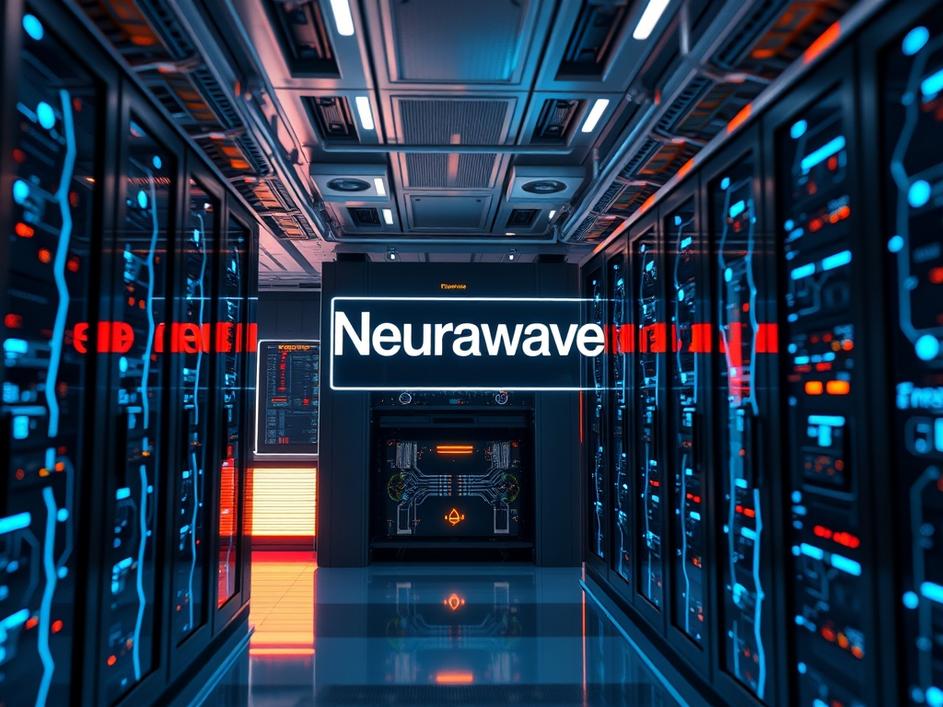
ToggleQuantum Computing Inc. (QCi) is gearing up to reveal its newest innovation, a photonics-based reservoir computer called Neurawave, at SuperCompute25 in St. Louis. This announcement signals a significant step in QCi’s plan to use photonics in quantum computing. The event, scheduled for November 18–20, 2025, will offer attendees a close look at the new PCIe-based platform at booth #4344. What makes this interesting, though, is not just another tech release; it is a possible shift in how we approach AI hardware, blending the lines between classical and quantum methods. It makes you wonder if this is a glimpse into the future of computing architectures.
Reservoir computing is a special type of neural network, and it’s interesting because of its efficiency. Instead of training the entire network, you only train a small part of it. Imagine a complex system, a “reservoir,” that transforms input data in complicated ways. Then, you train a simple layer to read the output of this reservoir. This approach can drastically reduce the computational power needed for training, making it suitable for tasks where resources are limited or speed is crucial. Using photonics takes it one step further. Photonic reservoir computing uses light to perform these calculations, potentially offering speed and energy advantages over traditional electronic systems. The potential is huge if they can pull it off.
Neurawave uses the principles of reservoir computing combined with photonics. This combination could lead to significant improvements in processing speed and energy efficiency compared to traditional computing methods. The PCIe-based platform suggests that Neurawave is designed for integration into existing computer systems, allowing researchers and developers to experiment with photonic computing without completely overhauling their infrastructure. I am curious about the practical applications they are targeting and how it compares to existing solutions.
QCi’s move is not happening in isolation. There’s a growing interest in hybrid quantum-classical systems, where quantum processors handle specific tasks while classical computers manage the overall workflow. Neurawave could be positioned as an accelerator for AI tasks, offloading computationally intensive operations to the photonic reservoir. This approach could be particularly beneficial for applications like pattern recognition, time-series analysis, and signal processing, where reservoir computing has shown promise. The key challenge will be demonstrating a clear advantage over existing hardware solutions in terms of speed, power consumption, and cost.
While the potential of photonics-based reservoir computing is exciting, significant challenges remain. Building and maintaining stable photonic systems can be complex and expensive. Integrating these systems with existing computing infrastructure also requires careful engineering. Furthermore, the software tools and algorithms needed to effectively utilize photonic reservoir computers are still in their early stages of development. However, QCi’s unveiling of Neurawave at SuperCompute25 signals a commitment to addressing these challenges and pushing the boundaries of what’s possible in AI hardware. I am personally waiting to see real-world benchmarks and application demonstrations. The promise is there, but execution will be everything.
Why does any of this matter? For one thing, AI is becoming more and more prevalent. It is used in everything from medical analysis to how your social media feeds are populated. The current way computers work might not be able to handle it forever. This new technology promises faster and less power-hungry computing, which could mean advances in everything from climate modeling to faster diagnoses of diseases. It could also mean that cloud providers can offer much powerful AI computation at a lower cost. So, even if you don’t understand all the technical stuff, know that this kind of advancement can impact everyone.
SuperCompute is a venue where the most advanced things get showcased. The unveiling of Neurawave will be more than just a product announcement; it will be a demonstration of where computing technology could be heading. As QCi prepares to present its innovation, the industry will be watching closely to see if photonics-based reservoir computing can deliver on its promise and pave the way for a new generation of AI hardware. Make sure to keep your eyes on St. Louis come November 2025; it might just be a turning point.
Neurawave represents a bold step towards combining the strengths of quantum-inspired techniques with the practical advantages of photonics. While challenges undoubtedly lie ahead, QCi’s initiative could potentially lead to more efficient and powerful AI systems. The next few years will be crucial in determining whether photonics-based reservoir computing can transition from a promising concept to a mainstream technology. The future of AI hardware might just be a little bit brighter, thanks to the possibilities that light offers.



Comments are closed