Hearing the Noise, Listening for Meaning
News feels loud lately. Every hour brings a flash of new numbers, quotes, and bold headlines. It can make you think the world is moving at the speed of a feed. But the real world moves slower. It changes in small steps, through conversations, mistakes, and tiny acts of kindness. The noise is not the whole story. It is one piece. The brave thing is to stand and listen between the blips and buzz. In this post, I want to look at how we read the news today, not to dodge it, but to understand what it asks from us. How do we stay curious without burning out? How do we notice what matters without losing our way in the noise?
Speed vs. Careful Thought
Speed matters in the news. The urge to be first is strong. If you see a headline, the next thing is to share something, to have a take. But speed can hack our judgment. It invites knee-jerk takes and vague certainty. The problem isn’t the facts. It’s how we treat them. We can train ourselves to pause. A minute of silence can save hours of regret. We can check a few sources, compare the numbers, look for context, ask who benefits. It isn’t a perfect shield, but it helps. The goal is not to be slow for the sake of it. It’s to be fairer and more careful with the truth we carry forward.
A Simple Routine to Protect Your Focus
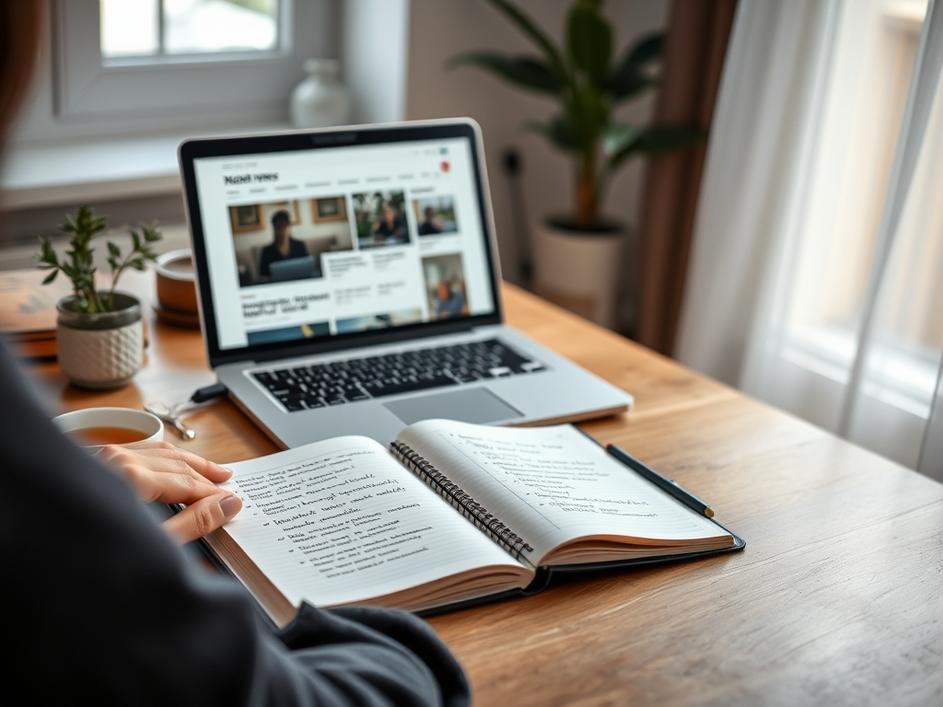
Find a calm center. When a wave hits, breathe. Do not scroll in a crowded headspace. Create small routines: a daily 20-minute news check from two different outlets, no social media during meals, a notebook for questions. In the notebook, write what you understand and what you doubt. The act of writing makes you slow down in a good way. It helps you see what you actually know and what you need to learn. It also creates a record you can revisit later. The point is not to block the news. It is to learn to process it. A plan makes you less vulnerable to fear and hype. You’ll notice you start to trust your own judgment a little more each day.
Human Stories in the Numbers
People behind the headlines matter. Behind every chart, there is a person affected. A policy tweak changes a family routine. A local project helps a student after school. When we think about those human pieces, news becomes less abstract. It gains gravity. It invites empathy. You don’t have to cry or switch sides to feel it. You can simply ask: who does this help, who is left out, what does that look like on the ground? Stories with faces are easier to hold in memory than numbers alone. They remind us what is at stake and why we should stay informed, not just entertained.
A Healthier News Diet
What a healthier news diet looks like. Limit how long you spend with it. Pick one or two trusted sources and rotate them every few weeks. Read with a note pad and a question list. Practice skepticism, not cynicism. Distinguish facts from opinion. Encourage dialogue, not shouting. Balance what you read with a little offline life—time with friends, a walk, a book. If you feel anger rising, step away. Sleep helps. The brain needs rest to sort facts from fears. A steady diet keeps you sane and helps you spot real shifts rather than flash in the pan moments.
News as a Civic Tool
News is not a weapon; it’s a tool. It should help us make better choices, not wreck us. Our role is to listen, ask questions, and share what matters with care. We owe it to each other to stay informed without losing our humanity. The news isn’t a single story; it’s a thread that ties many lives together. If we treat it gently, it can push us to act with thought, kindness, and a bit of courage. That feels like a good takeaway for any day.






Comments are closed