

We are a digital agency helping businesses develop immersive, engaging, and user-focused web, app, and software solutions.
2310 Mira Vista Ave
Montrose, CA 91020

2500+ reviews based on client feedback
What's Included?
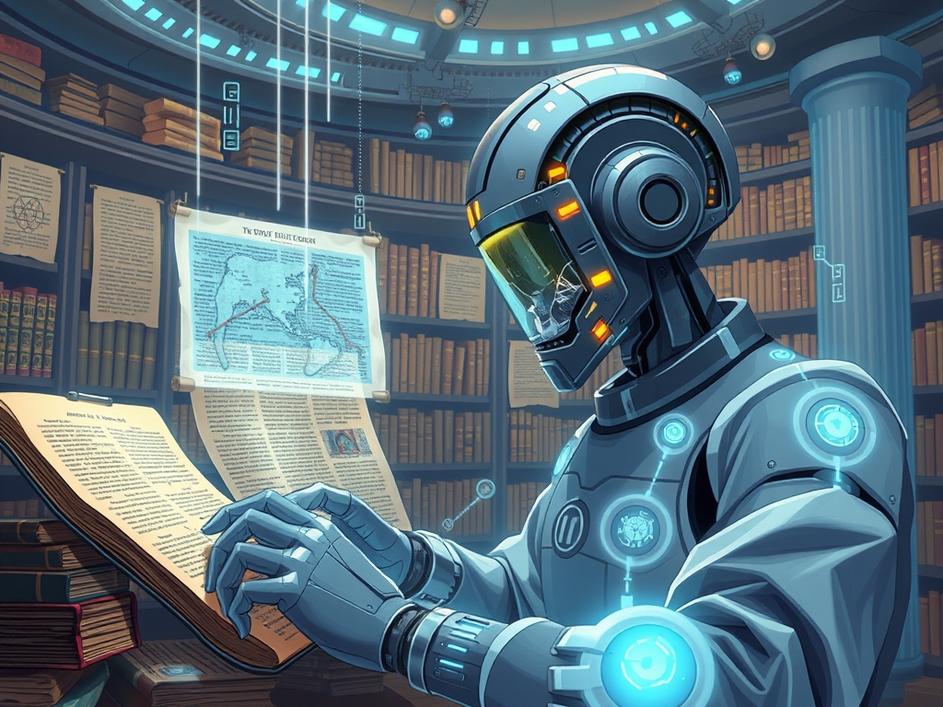
ToggleHistory books tell us stories, but are those stories always accurate? It’s a question that’s been debated for centuries. Now, artificial intelligence is entering the arena, offering new ways to analyze historical data and potentially uncover discrepancies or biases in the accepted narratives. The idea isn’t to simply dismiss everything we know, but rather to use AI as a tool for critical examination.
Think of AI as a super-powered research assistant. It can sift through massive amounts of text, analyze patterns, and identify inconsistencies that a human historian might miss. For example, AI could analyze thousands of primary source documents from a specific period, looking for subtle clues about the social, economic, or political realities that were downplayed or ignored in later accounts. It can cross-reference information from different sources to expose potential contradictions or fabrications. This isn’t about replacing historians, but augmenting their abilities with cutting-edge technology.
One of the key strengths of AI is its ability to process and analyze data on a scale that’s impossible for humans. Imagine using AI to analyze census records, land deeds, and tax documents from a particular era. By identifying trends and anomalies in the data, AI could reveal previously unknown aspects of society, such as the distribution of wealth, the prevalence of certain diseases, or the migration patterns of different groups. This kind of data-driven analysis can provide a more nuanced and complete picture of the past than traditional historical methods alone.
Of course, it’s crucial to remember that AI is not a perfect tool. Like any technology, it has its limitations and biases. The algorithms that power AI are created by humans, and those humans inevitably bring their own perspectives and assumptions to the table. Furthermore, the data that AI is trained on can also be biased, leading to skewed or inaccurate results. For example, if AI is trained primarily on historical texts written by wealthy, white men, it may struggle to accurately represent the experiences of women, minorities, or the working class. It is important to note that people use AI; therefore, it is only a tool. We have to take the results with a grain of salt. It is critical to use AI as another form of research and not to create new falsities.
Let’s say we want to re-examine the American Civil War. AI could analyze letters, diaries, and military records from both the Union and the Confederacy, searching for patterns of communication, logistical challenges, and ideological motivations. By identifying key turning points and analyzing the decisions made by key figures, AI could offer new insights into the causes, conduct, and consequences of the war. It could also help us to better understand the perspectives of marginalized groups, such as enslaved people and free blacks, whose voices were often excluded from traditional historical accounts. The Civil War is an event that has been heavily researched; however, AI can give different perspectives and ideas on the rationale of the war.
While AI can be a valuable tool for uncovering new information, it’s essential to approach its findings with a critical eye. Just because an AI algorithm identifies a pattern or inconsistency doesn’t necessarily mean that it’s accurate or meaningful. Historians still need to use their expertise and judgment to evaluate the evidence, consider alternative explanations, and place the findings in their proper context. AI should be seen as a supplement to, not a replacement for, traditional historical methods. Ultimately, it is a matter of historical interpretation and understanding based on the available information. AI can expose that and we have to be willing to accept the results.
As AI becomes more prevalent in historical research, it’s important to address the ethical considerations surrounding its use. Who gets to decide which historical questions are investigated using AI? How do we ensure that AI is used in a responsible and unbiased manner? How do we protect the privacy of individuals whose data is used to train AI algorithms? These are complex questions that require careful consideration and open discussion. If people are not careful, AI can be weaponized and used for evil. It is the user’s responsibility to use AI in the correct manner.
The integration of AI into historical research is still in its early stages, but the potential is enormous. As AI technology continues to advance, we can expect to see even more sophisticated tools and techniques being developed for analyzing historical data and uncovering new insights into the past. This could lead to a deeper and more nuanced understanding of history, challenging existing narratives and offering new perspectives on the events and people that have shaped our world. This is the new frontier of information, and people should be wary of this new way of research.
AI offers a powerful new lens through which to examine history. It’s not about discrediting established narratives, but about enriching our understanding by surfacing hidden details and questioning long-held assumptions. By embracing AI responsibly and critically, we can unlock new insights into the past and gain a more complete picture of the human experience. The user is responsible for the information produced, so one should always double-check the information produced.



Comments are closed