

We are a digital agency helping businesses develop immersive, engaging, and user-focused web, app, and software solutions.
2310 Mira Vista Ave
Montrose, CA 91020

2500+ reviews based on client feedback
What's Included?
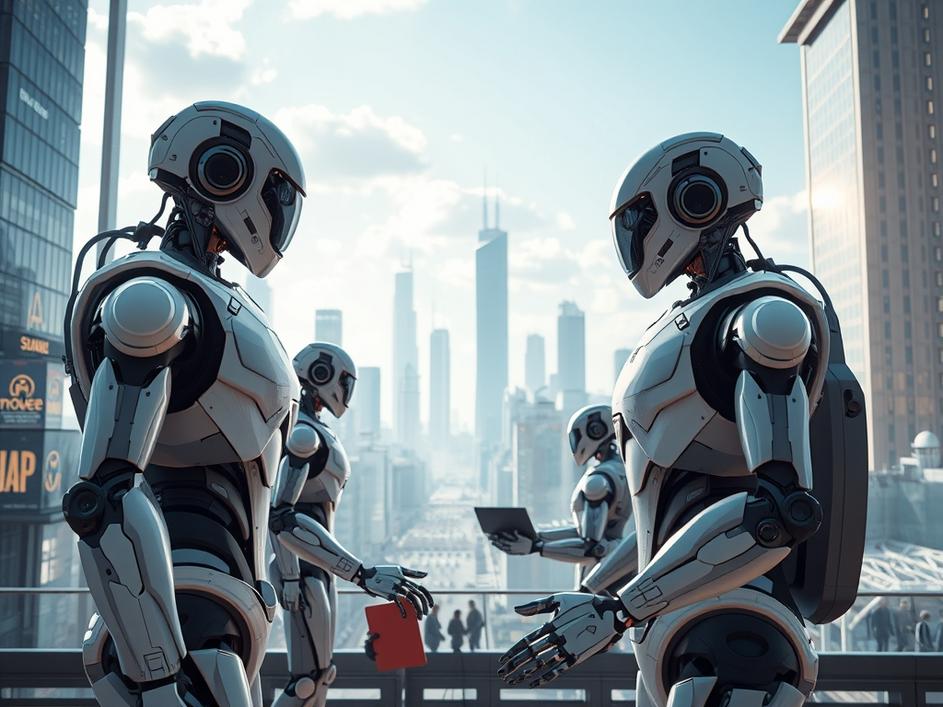
ToggleFor decades, science fiction has painted a picture of robots taking over the world, leaving humans jobless and obsolete. This fear has seeped into our collective consciousness, making us wary of advancements in automation and artificial intelligence. But what if the reality is far less bleak? What if, instead of replacing us, robots become our partners, augmenting our abilities and freeing us from mundane tasks? That’s the optimistic view being presented by some leaders in the tech industry, and it’s a perspective worth exploring.
Recently, the CEO of Affirm shared his thoughts on the future of work, suggesting that while robots are indeed coming, they aren’t necessarily coming for our jobs. This isn’t a naive dismissal of the potential impact of automation; rather, it’s a recognition that technology can be a tool for empowerment, not just displacement. The key lies in how we choose to integrate these technologies into our workplaces and our lives. Instead of fearing job losses, we should focus on how robots can enhance human capabilities and create new opportunities.
The idea is that robots and AI can handle repetitive, manual, and even dangerous tasks. This frees up human workers to focus on more creative, strategic, and interpersonal aspects of their jobs. Imagine a world where doctors are assisted by AI that can analyze medical images with incredible accuracy, allowing them to focus on patient interaction and complex diagnoses. Or picture construction workers using robotic exoskeletons to lift heavy materials, reducing the risk of injury and increasing productivity. In these scenarios, robots aren’t taking jobs; they’re making existing jobs safer, easier, and more fulfilling.
Of course, this transition won’t be seamless. As certain tasks become automated, some jobs will inevitably change, and new roles will emerge. This is where upskilling and adaptation become crucial. Workers will need to acquire new skills to work alongside robots, manage AI systems, and fill the roles that automation creates. Education and training programs will need to evolve to meet these changing demands. It’s not just about learning new technical skills, but also about developing uniquely human abilities like critical thinking, problem-solving, and emotional intelligence, which are difficult for robots to replicate.
It’s important to acknowledge the legitimate concerns surrounding automation. Job displacement is a real possibility, and we need to have systems in place to support workers who are affected. This could include unemployment benefits, retraining programs, and even exploring ideas like universal basic income. Furthermore, we need to ensure that the benefits of automation are shared broadly, not just concentrated in the hands of a few. This requires careful consideration of policy and regulation to prevent exacerbating existing inequalities. And we should consider how robots could help people in ways beyond just the workplace. What if robots could help the elderly stay in their homes longer? What if robots could help disabled individuals achieve greater independence?
The future of work in the age of robots isn’t predetermined. It’s up to us to shape it. By embracing a mindset of collaboration, focusing on upskilling, and addressing the potential challenges proactively, we can create a future where robots and humans work together to create a more prosperous and fulfilling world for everyone. Instead of fearing the rise of the machines, we should see it as an opportunity to redefine work, enhance human potential, and build a more equitable and sustainable society. It may sound optimistic, but by focusing on the possibilities, we can work towards making this vision a reality. If we prepare for this transition, future generations will not fear robots, but embrace them. Instead of taking our jobs, robots will help us create better ones.
Ultimately, the success of this human-robot partnership hinges on collaboration. Collaboration between businesses, governments, and educational institutions to develop effective training programs and support systems. Collaboration between engineers and ethicists to ensure that AI is developed and used responsibly. And, most importantly, collaboration between humans and robots, recognizing that each brings unique strengths to the table. By working together, we can unlock the full potential of automation and create a future where technology empowers us all. The future doesn’t have to be a dystopian nightmare. It can be a world where human ingenuity and robotic efficiency combine to solve some of the world’s biggest problems.
The real transformation isn’t about robots replacing humans; it’s about humans evolving and adapting to a world where technology plays an increasingly prominent role. It’s about learning to work alongside machines, leveraging their strengths while focusing on our own unique abilities. It’s about creating a future where work is more meaningful, more fulfilling, and more equitable for everyone.



Comments are closed