A New Era in Athletics
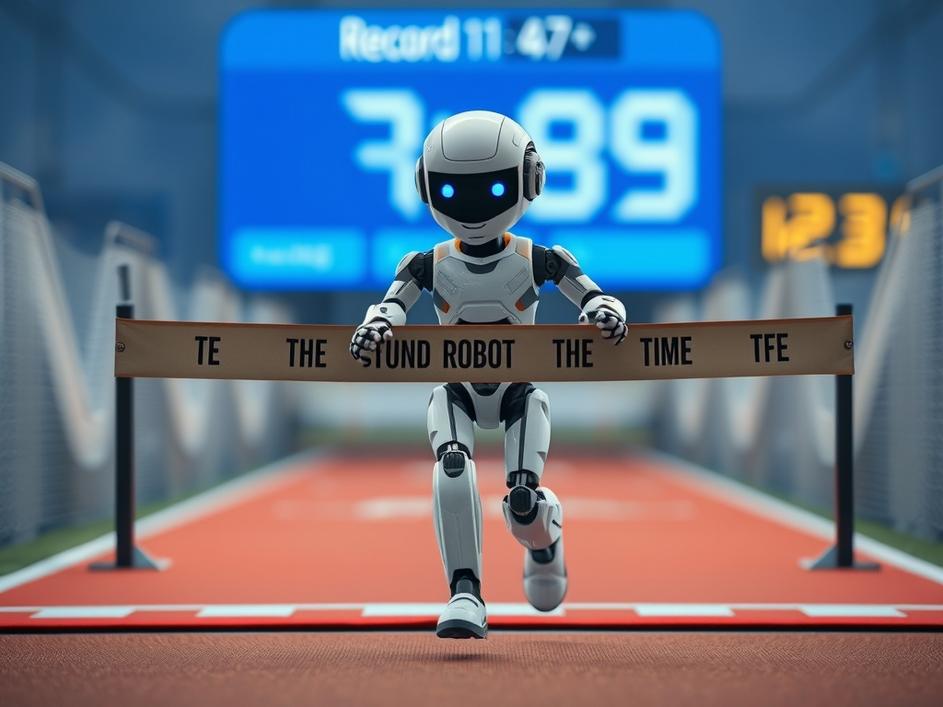
Recently, a humanoid robot in China made headlines by breaking the human world record for the half-marathon. This achievement has significant implications for the world of sports and beyond. The robot, designed to mimic human-like movements, completed the 13.1-mile course in a staggering time, leaving many to wonder what the future holds for human athletes.
The Robot’s Advantage
So, what gives this robot an edge over human runners? For starters, it doesn’t get tired like humans do. The robot’s advanced technology allows it to maintain a consistent pace throughout the race, without the need for rest or hydration. This is a significant advantage, especially in long-distance events where endurance is key. Additionally, the robot’s precise movements and lack of fatigue reduce the risk of injury, allowing it to perform at optimal levels.
Implications for Human Athletes
The robot’s record-breaking feat raises important questions about the future of human athletics. Will robots eventually replace human athletes in competitive events? It’s unlikely, but they may certainly change the way we approach training and competition. Human athletes can learn from the robot’s efficiency and precision, incorporating these principles into their own training regimens. Moreover, robots can help humans analyze their performance, providing valuable insights into areas for improvement.
Technological Advancements
The development of this humanoid robot is a testament to the rapid advancements in technology. The robot’s creators have made significant strides in artificial intelligence, robotics, and engineering, paving the way for future innovations. As technology continues to evolve, we can expect to see even more sophisticated robots that can perform complex tasks with ease. The potential applications are vast, from healthcare and education to transportation and entertainment.
A Thoughtful Conclusion
The robot’s achievement is a remarkable milestone, but it also prompts us to reflect on the role of technology in our lives. As machines become increasingly capable, we must consider the ethical implications of their development and use. While robots can certainly enhance our lives, they should not replace human connection and experience. Ultimately, the rise of the machines is a reminder of the importance of balancing technological progress with human values and principles. By doing so, we can harness the power of technology to create a better future for all.






Comments are closed