

We are a digital agency helping businesses develop immersive, engaging, and user-focused web, app, and software solutions.
2310 Mira Vista Ave
Montrose, CA 91020

2500+ reviews based on client feedback
What's Included?
ToggleRivian, the electric vehicle maker known for its rugged trucks and SUVs, is making a significant push into autonomous driving technology. It’s not just about lane keeping and adaptive cruise control anymore. The company has unveiled plans for a comprehensive self-driving system that includes custom-designed silicon, advanced sensors like lidar, and even hints at a future involving robotaxis. This move signifies a major shift in Rivian’s strategy, positioning them as more than just an EV manufacturer; they’re aiming to become a key player in the autonomous vehicle space.
One of the most interesting aspects of Rivian’s announcement is their commitment to developing custom silicon. This is a big deal. Most automakers rely on chips from established suppliers. By designing their own chips, Rivian gains greater control over the performance and efficiency of their autonomous driving system. They can tailor the silicon to specifically handle the complex algorithms and data processing required for self-driving, potentially leading to a more optimized and responsive system. And, in a time of chip shortages, having internal control over development and manufacturing partners gives them an advantage.
Lidar (Light Detection and Ranging) is another key component of Rivian’s autonomous platform. Lidar uses laser beams to create a detailed 3D map of the vehicle’s surroundings. While some automakers have moved away from lidar, arguing that cameras and radar are sufficient, Rivian seems to believe that lidar is essential for achieving true Level 4 autonomy. This likely means they are pursuing a sensor fusion approach, combining data from lidar, cameras, and radar to create a more robust and reliable perception system.
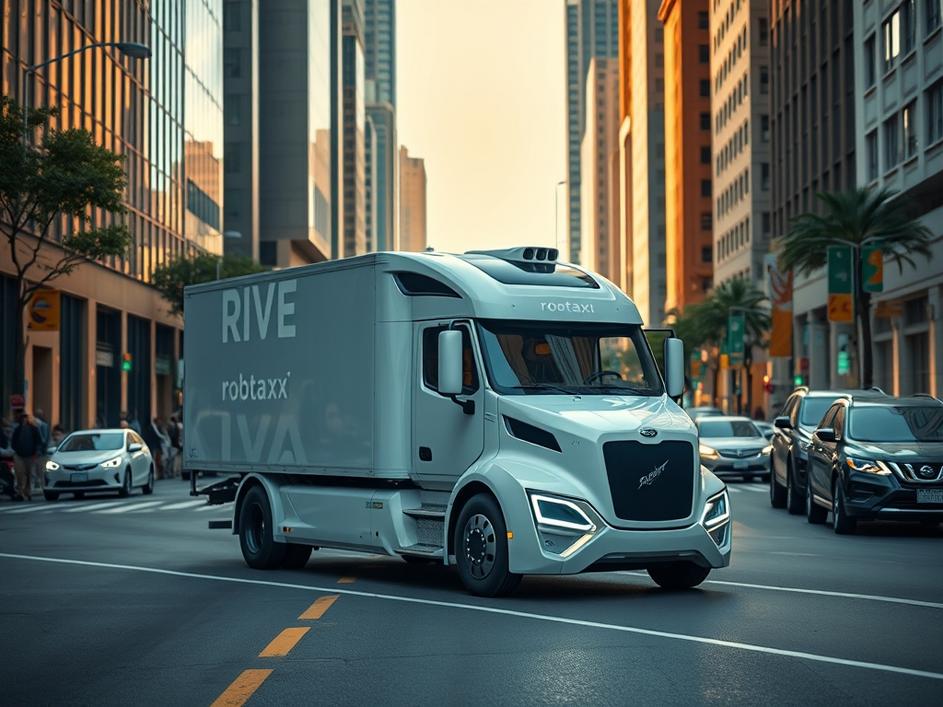
The most intriguing part of Rivian’s announcement was the subtle suggestion of future robotaxi services. While they didn’t explicitly state that they’re building robotaxis, the emphasis on Level 4 autonomy – which allows for driverless operation in certain conditions – certainly points in that direction. If Rivian can successfully develop a safe and reliable autonomous driving system, offering robotaxi services could be a lucrative way to monetize their technology and expand their business beyond vehicle sales. But Rivian will also need to navigate the difficult regulatory landscape around robotaxis.
Rivian’s ambitious plan faces several challenges. Developing custom silicon is a complex and expensive undertaking. Integrating lidar and other sensors into a seamless autonomous system requires significant engineering expertise. And of course, ensuring the safety and reliability of self-driving technology is paramount. But if Rivian can overcome these hurdles, they have the potential to disrupt the automotive industry and become a leader in the autonomous vehicle revolution. Their focus on purpose-built EVs combined with cutting-edge self-driving tech could resonate strongly with consumers looking for sustainable and convenient transportation solutions.
What sets Rivian apart from other automakers dabbling in self-driving features is their apparent commitment to true autonomy. Many companies focus on Level 2 or Level 3 systems, which still require driver supervision. Rivian seems to be aiming for Level 4, which allows the vehicle to handle all driving tasks in specific environments. This is a much more ambitious goal, but it also offers the potential for greater benefits, such as increased safety, reduced traffic congestion, and new mobility services.
Rivian’s decision to develop its own silicon and integrate various sensors reflects a desire for greater control over the entire autonomous driving stack. By controlling the hardware and software, Rivian can optimize the system for its specific vehicles and driving environments. This holistic approach is essential for achieving true autonomy, as it allows for seamless integration and optimization across all components.
Developing autonomous driving technology is a marathon, not a sprint. It will take years of research, development, and testing to achieve Level 4 autonomy. Rivian’s success will depend on their ability to attract and retain top engineering talent, secure funding, and navigate the complex regulatory landscape. And they’ll need patience and persistence, as there will inevitably be setbacks and challenges along the way.
Rivian’s bold bet on autonomy signals a significant shift in the automotive industry. As self-driving technology matures, it has the potential to transform how we move around our cities and towns. Rivian’s vision of a future where electric vehicles seamlessly integrate with autonomous driving technology is compelling. Whether they can successfully execute this vision remains to be seen, but their ambition and innovative approach are certainly worth watching.
Ultimately, Rivian’s success in the autonomous space will come down to execution. They have the vision, the technology, and the resources. Now they need to deliver on their promises and build a safe, reliable, and compelling autonomous driving system. The next few years will be critical as they ramp up their development efforts and begin testing their technology on public roads. The automotive world will be watching closely to see if Rivian can live up to the hype and become a true leader in the autonomous vehicle revolution.



Comments are closed