

We are a digital agency helping businesses develop immersive, engaging, and user-focused web, app, and software solutions.
2310 Mira Vista Ave
Montrose, CA 91020

2500+ reviews based on client feedback
What's Included?
ToggleRobCo, a robotics company based in Munich, Germany, just secured a massive $100 million in funding. This isn’t just pocket change; it’s a serious investment aimed at expanding their reach into the United States. What makes this funding particularly interesting is who’s behind it: Volkswagen’s venture capital arm and Exor, among other investors, are placing a big bet on RobCo’s vision for the future of automation.
So, why the big push into the US market? The United States represents a huge opportunity for robotics companies. Demand for automation is rising across various industries, from manufacturing and logistics to healthcare and agriculture. Companies are looking for ways to improve efficiency, reduce costs, and address labor shortages. RobCo clearly sees a gap they can fill with their AI-powered robotics solutions. The US, with its large economy and appetite for innovation, is a logical next step for a company looking to scale.
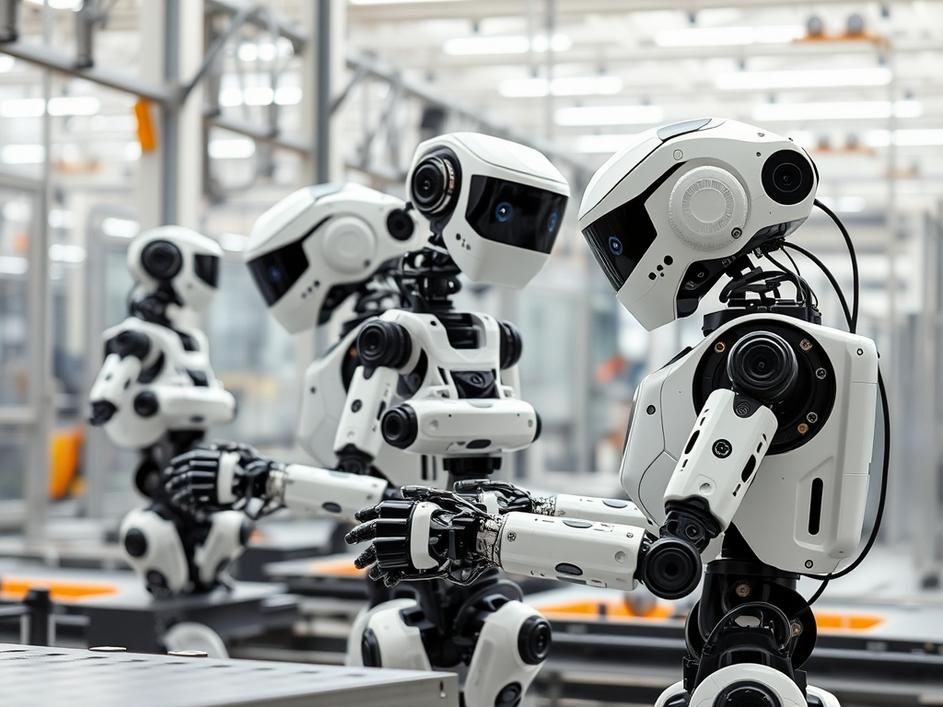
RobCo specializes in developing and deploying modular robotic systems. Unlike traditional robots that are often fixed and designed for specific tasks, RobCo’s robots are designed to be flexible and adaptable. This means they can be easily reconfigured and redeployed to handle different tasks as needed. This modularity is a key selling point, as it allows companies to invest in a robotic solution that can evolve with their changing needs. Think of it like Lego bricks for automation – you can build and rebuild them to fit your specific requirements.
What sets RobCo apart from other robotics companies is its focus on artificial intelligence. Their robots are not just pre-programmed machines; they are equipped with AI algorithms that allow them to learn, adapt, and make decisions on their own. This is crucial for handling complex and unpredictable tasks. For example, an AI-powered robot in a warehouse can learn to identify different types of packages, navigate crowded environments, and optimize its route for maximum efficiency. The integration of AI makes these robots more autonomous and less reliant on human intervention.
The involvement of Volkswagen’s venture arm and Exor as investors is significant. Volkswagen, as a major player in the automotive industry, has a strong interest in automation and robotics. Investing in RobCo allows them to gain access to cutting-edge technology that could be used to improve their own manufacturing processes. Exor, a holding company controlled by the Agnelli family (which also controls Ferrari and Stellantis), has a diverse portfolio of investments across various industries. Their investment in RobCo suggests that they see the potential for robotics to disrupt a wide range of sectors.
While the $100 million funding round is a major boost for RobCo, expanding into the US market won’t be easy. They will face competition from established robotics companies, as well as navigating the complexities of the US regulatory environment. Building a strong sales and support network will also be crucial for success. And, as with any company rapidly expanding, maintaining the quality of their product and service will be key. They’ll need to demonstrate a clear return on investment for their clients.
While the initial focus is likely on manufacturing and logistics, the potential applications of RobCo’s technology extend far beyond these areas. Consider healthcare, where robots could assist with surgery, patient care, and medication delivery. Or agriculture, where robots could automate tasks such as planting, harvesting, and crop monitoring. As AI and robotics technology continues to advance, we can expect to see robots playing an increasingly important role in all aspects of our lives.
Of course, the rise of automation raises important questions about the future of work. As robots become more capable, there are concerns that they will displace human workers. However, many experts believe that automation will create new job opportunities as well. While some jobs may be automated, new jobs will emerge in areas such as robot design, programming, maintenance, and training. The key will be to ensure that workers have the skills and training needed to adapt to these changes.
RobCo’s $100 million funding round is not just about short-term profits; it’s a long-term investment in the future of automation. It reflects a growing recognition that robotics and AI have the potential to transform industries, improve efficiency, and create new opportunities. While there are challenges ahead, RobCo’s modular approach, combined with its AI capabilities, positions them well to capitalize on the growing demand for automation in the US market and beyond. The bet made by Volkswagen and Exor, and other investors, demonstrates a great confidence in RobCo’s business model and potential.
The influx of $100 million into RobCo signals a strong belief in the future of robotics and AI. It’s not just about replacing human workers; it’s about creating new possibilities and solving complex problems. As RobCo expands into the US, we can expect to see even more innovation in the field of automation, ultimately shaping the way we work and live. Whether they succeed in the US is an open question, but there is no denying that smart, modular robots are going to be a bigger part of our lives from now on.



Comments are closed