

We are a digital agency helping businesses develop immersive, engaging, and user-focused web, app, and software solutions.
2310 Mira Vista Ave
Montrose, CA 91020

2500+ reviews based on client feedback
What's Included?
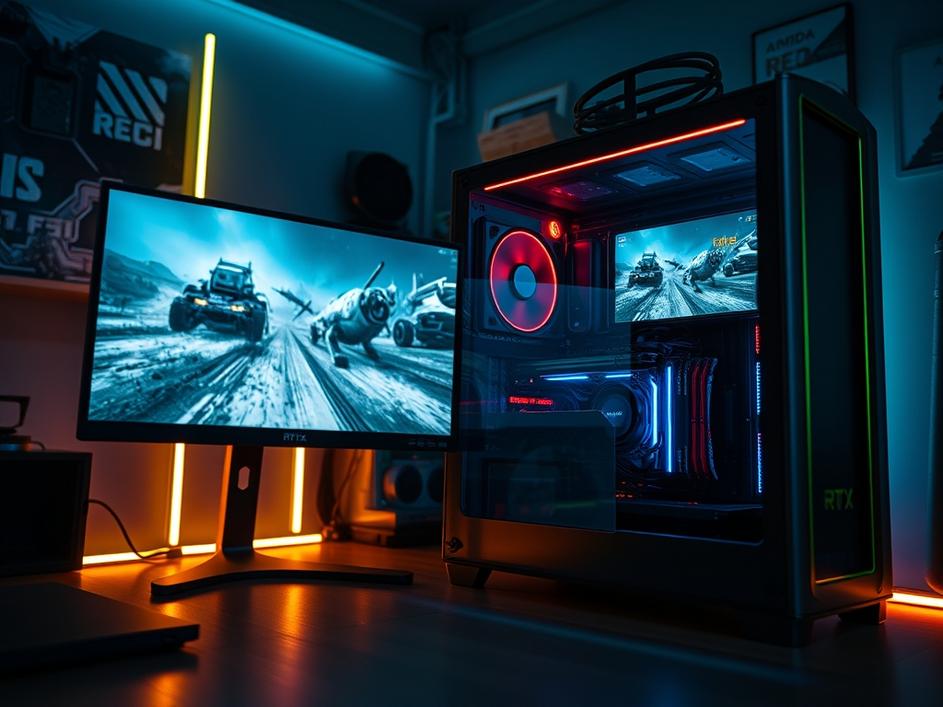
ToggleRumors and leaks surrounding the next generation of NVIDIA graphics cards, the RTX 50 series, have been swirling for months. And now, we’re starting to see some actual benchmark numbers trickle out. A recent video from Jegs TV on YouTube pitted the rumored RTX 5050 against the RTX 5060 in 15 different games. While these aren’t official numbers straight from NVIDIA, they give us an early peek at what we can expect from the lower end of the 50 series lineup. It’s important to keep in mind that these are pre-release models, and performance is likely to change by the time the cards officially launch.
The testing was conducted using a Ryzen 7 9800X3D processor. This is important context, because the CPU plays a significant role in overall gaming performance, especially at lower resolutions. The choice of CPU means that the GPU performance isn’t bottlenecked by the CPU itself. The games were tested at both 1080p and 1440p resolutions, which are the most common resolutions used by gamers today. Testing at multiple resolutions helps us understand how the cards perform under different levels of graphical load.
So, what did the benchmarks show? The RTX 5060 consistently outperformed the RTX 5050, as expected. The exact performance difference varied depending on the game, but the 5060 generally offered a noticeable improvement in frame rates. At 1080p, both cards were able to deliver playable frame rates in most of the tested titles. However, at 1440p, the RTX 5060 started to pull ahead, offering a smoother and more enjoyable gaming experience in demanding games. It remains to be seen how well they perform with Ray Tracing enabled but is expected to further separate the performance between the two cards, particularly at higher resolutions.
These early benchmarks suggest that the RTX 5050 will likely be a good option for gamers who are primarily playing at 1080p and are looking for a budget-friendly upgrade. It should offer a decent performance boost over older cards in the RTX 3050 or RTX 2060 range. The RTX 5060, on the other hand, appears to be better suited for 1440p gaming, providing a more comfortable experience in visually demanding titles. It will be a reasonable upgrade for users with an RTX 3060 or lower looking to experience the latest games at a higher resolution.
While frame rates are important, it’s crucial to remember that they’re not the only factor to consider when choosing a graphics card. Other factors, such as power consumption, cooling performance, and features like DLSS (Deep Learning Super Sampling) also play a significant role. We’ll need to wait for official reviews and more comprehensive testing to get a complete picture of what the RTX 5050 and RTX 5060 have to offer. It’s also crucial to consider the price of these cards. The RTX 4060 currently sells for around $300. If the RTX 5050 or 5060 are priced much higher than their predecessors, it could affect their value proposition.
NVIDIA is expected to announce the RTX 50 series later this year, with the first cards likely to launch in early 2025. The company is facing increasing competition from AMD and Intel, so it will need to deliver a compelling product lineup to maintain its dominance in the graphics card market. The RTX 50 series is expected to be based on a new architecture, which should bring significant performance improvements over the current RTX 40 series. One of the biggest questions surrounding the RTX 50 series is the impact of AI on gaming. NVIDIA has been heavily investing in AI technologies, and it’s likely that we’ll see more AI-powered features in the next generation of graphics cards, going beyond DLSS.
These early benchmarks are an exciting glimpse into the future of gaming, but it’s important to take them with a grain of salt. A lot can change between now and the official launch of the RTX 50 series. It will be interesting to see how the RTX 5050 and RTX 5060 stack up against AMD’s upcoming offerings. Ultimately, the best graphics card for you will depend on your budget, your gaming preferences, and the resolution at which you play. So, stay tuned for more updates and be sure to do your research before making a purchase.


Comments are closed