

We are a digital agency helping businesses develop immersive, engaging, and user-focused web, app, and software solutions.
2310 Mira Vista Ave
Montrose, CA 91020

2500+ reviews based on client feedback
What's Included?
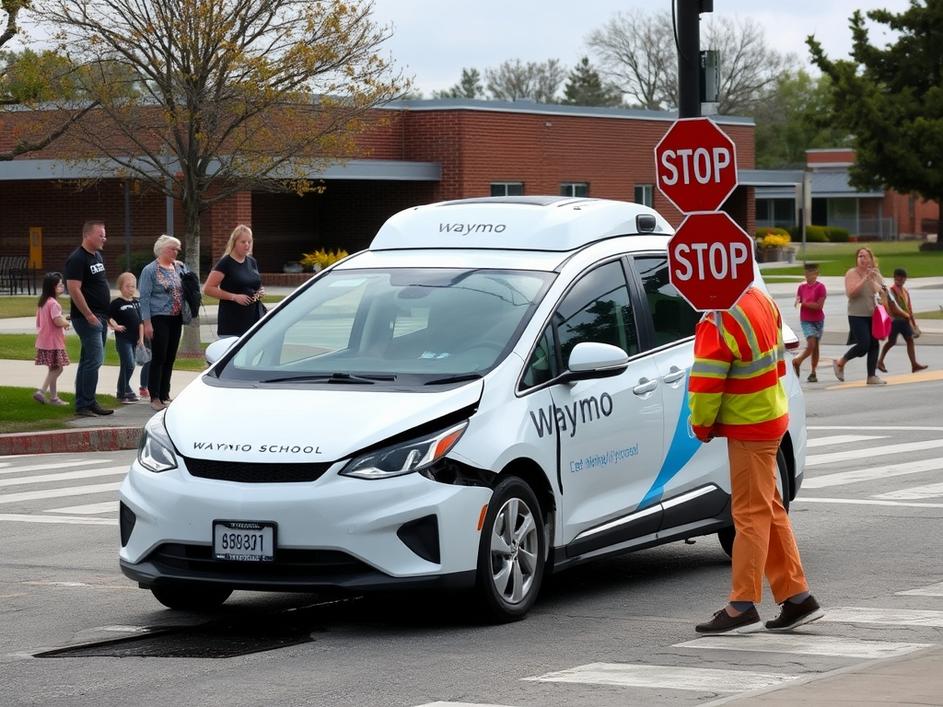
ToggleSelf-driving technology promised a future of safer, more efficient transportation. But recent events keep throwing cold water on that vision. A Waymo autonomous vehicle was involved in an incident near an elementary school in California, hitting a child. While details are still emerging, this event has understandably sparked renewed concerns about the safety of self-driving cars, especially in areas with high pedestrian traffic. Reported by Yahoo News Canada, the incident is already fueling the debate around how ready our streets are for this technology.
The Yahoo News report indicates the incident occurred near an elementary school. Specific details about the child’s condition haven’t been widely released, but any incident involving a pedestrian, especially a child, is deeply concerning. It’s not yet clear what factors contributed to the accident. Was it a sensor malfunction? A software miscalculation? Or a situation the AI simply wasn’t prepared to handle? The investigation will likely focus on these key areas to determine fault and prevent future occurrences.
Incidents like these erode public trust in self-driving technology. For widespread adoption to occur, people need to feel safe sharing the roads with these vehicles. Every accident, regardless of severity, reinforces the perception that the technology is not quite ready for prime time. It’s important to remember that while human drivers certainly make mistakes, the idea of a machine making similar errors is far less palatable for many. There’s an expectation of perfection or near-perfection when we cede control to a computer, an expectation that’s proving difficult to meet.
Even with advanced AI, the question of human oversight remains crucial. Are there safety drivers present in these Waymo vehicles? If so, what level of intervention are they authorized to perform? And perhaps most importantly, who is ultimately responsible when an accident occurs? Is it the technology company, the vehicle manufacturer, or the individual who might be present in the driver’s seat? Clear lines of accountability are essential for building confidence in self-driving systems. The legal and ethical implications of autonomous vehicle accidents are complex and still being sorted out.
It’s easy to get caught up in the hype surrounding self-driving cars. The promise of reduced accidents, increased efficiency, and greater accessibility is certainly appealing. But it’s crucial to maintain a realistic perspective on the technology’s current capabilities and limitations. Self-driving systems are still under development, and unexpected situations can arise that challenge their programming. The incident near the elementary school is a stark reminder that there’s still much work to be done before these vehicles can navigate real-world environments with complete safety and reliability. The focus needs to shift from simply achieving autonomous driving to ensuring *safe* autonomous driving.
This incident will undoubtedly put more pressure on regulators to establish stricter guidelines for self-driving car testing and deployment. We can expect increased scrutiny of the technology, potentially leading to more stringent safety requirements and limitations on where and when these vehicles can operate. A balance must be struck between fostering innovation and ensuring public safety. Overly restrictive regulations could stifle progress, but lax oversight could lead to more accidents and further erode public trust. Finding that balance will be a major challenge in the years to come.
Moving forward, transparency will be key. Waymo and other companies developing self-driving technology need to be open and honest about the challenges they face and the steps they’re taking to address them. Sharing data and collaborating with researchers and regulators can help accelerate the development of safer, more reliable systems. Continuous improvement is also essential. Every incident, every near miss, provides valuable data that can be used to refine algorithms and enhance safety features. The ultimate goal is to create self-driving technology that truly lives up to its promise of making our roads safer for everyone.
Beyond the immediate safety concerns, the rise of self-driving cars raises broader societal questions. What impact will this technology have on employment, particularly for professional drivers? How will it affect urban planning and transportation infrastructure? And how will it change our relationship with cars and mobility in general? These are complex issues that require careful consideration as we move toward a future with increasingly autonomous vehicles.
The Waymo incident serves as a powerful reminder that the road to self-driving cars is not without its bumps. It’s a time for reflection, reassessment, and a renewed commitment to safety. While the potential benefits of this technology are undeniable, they cannot come at the expense of public well-being. Only through rigorous testing, transparent communication, and a focus on continuous improvement can we hope to realize the promise of a truly safe and efficient autonomous transportation future.



Comments are closed