

We are a digital agency helping businesses develop immersive, engaging, and user-focused web, app, and software solutions.
2310 Mira Vista Ave
Montrose, CA 91020

2500+ reviews based on client feedback
What's Included?
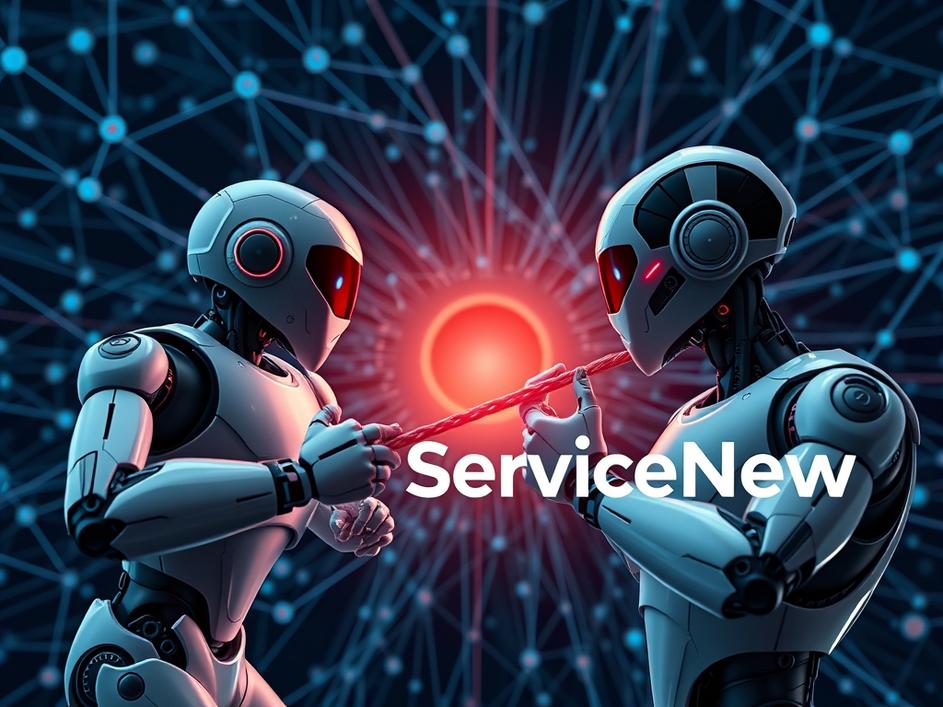
ToggleServiceNow CEO Bill McDermott recently made a pretty strong statement: ServiceNow can “beat” AI. It’s not a boxing match, of course, but the idea is that ServiceNow holds a crucial position in the business world that AI can’t easily replicate. The company handles a massive amount of enterprise workflows – over 80 billion each year. That’s a lot of digital to-do lists getting checked off.
For those not deeply familiar, ServiceNow provides a platform for businesses to manage their digital workflows. Think of it as the operating system for getting things done inside a company. It automates tasks, manages processes, and helps different departments work together more efficiently. It touches everything from IT support to human resources to customer service. It’s the plumbing that keeps a lot of businesses running smoothly.
McDermott argues that ServiceNow controls the “execution layer.” This means they’re not just providing insights or suggestions (like many AI tools do). They’re actually orchestrating the actions. AI might tell you there’s a problem with a server, but ServiceNow can automatically create a ticket, assign it to the right person, and track its resolution. It’s the difference between getting a weather forecast and having someone build you an ark before the flood. And that’s a critical piece that AI has yet to fully grasp.
It’s important to understand that McDermott isn’t saying AI is useless. He’s suggesting that AI, in its current form, is more of an augmentation tool than a complete replacement for platforms like ServiceNow. AI can analyze data, identify trends, and even automate some simple tasks. But it still needs a system like ServiceNow to put those insights into action and manage the end-to-end process. Think of AI as a powerful assistant, and ServiceNow as the project manager who keeps everything on track.
One of ServiceNow’s strengths is the sheer volume and variety of data it processes. Because it touches so many different parts of a business, it has a holistic view of operations. This data can be incredibly valuable for AI. ServiceNow can feed its data into AI models to improve predictions, personalize experiences, and identify areas for optimization. In other words, ServiceNow can use AI to make its own platform even more powerful.
However, it’s not all smooth sailing for ServiceNow. The rise of AI presents both opportunities and challenges. One potential challenge is that AI could eventually become sophisticated enough to handle more of the execution layer itself. As AI models become more autonomous, they might be able to bypass platforms like ServiceNow and directly interact with systems and data. This would require ServiceNow to constantly innovate and adapt to stay ahead of the curve. This puts pressure on the company to stay agile, responsive, and forward-thinking. The other is security. As AI begins to control more and more of business processes, it becomes a target for malicious actors. So ServiceNow must ensure it can handle these attacks and keep data safe.
ServiceNow isn’t the only player in this space. Other companies, like Salesforce and Microsoft, also offer platforms for managing business workflows and are investing heavily in AI. The competition is fierce, and the lines between these platforms are becoming increasingly blurred. Each company is trying to position itself as the central hub for managing business operations in the age of AI. This means ServiceNow needs to clearly articulate its value proposition and differentiate itself from the competition.
Ultimately, the future likely involves a partnership between platforms like ServiceNow and AI technologies. ServiceNow can provide the foundation for managing workflows and the data needed to train AI models. AI can then be used to automate tasks, improve decision-making, and personalize experiences within the ServiceNow platform. Instead of viewing AI as a threat, ServiceNow can embrace it as a powerful tool for enhancing its own capabilities. The key is to find the right balance between human oversight and automation, and to ensure that AI is used responsibly and ethically. This is a delicate balance to find, but one that ServiceNow is uniquely positioned to deliver.
McDermott’s claim is bold, but it highlights a crucial point: AI isn’t a magic bullet. It needs a solid foundation to operate effectively. ServiceNow, with its established platform and vast network of enterprise workflows, could be that foundation. It’s a fascinating dynamic to watch unfold. It also sets up a very interesting space to observe which tech companies will integrate AI successfully and which will fall to the side.



Comments are closed