

We are a digital agency helping businesses develop immersive, engaging, and user-focused web, app, and software solutions.
2310 Mira Vista Ave
Montrose, CA 91020

2500+ reviews based on client feedback
What's Included?
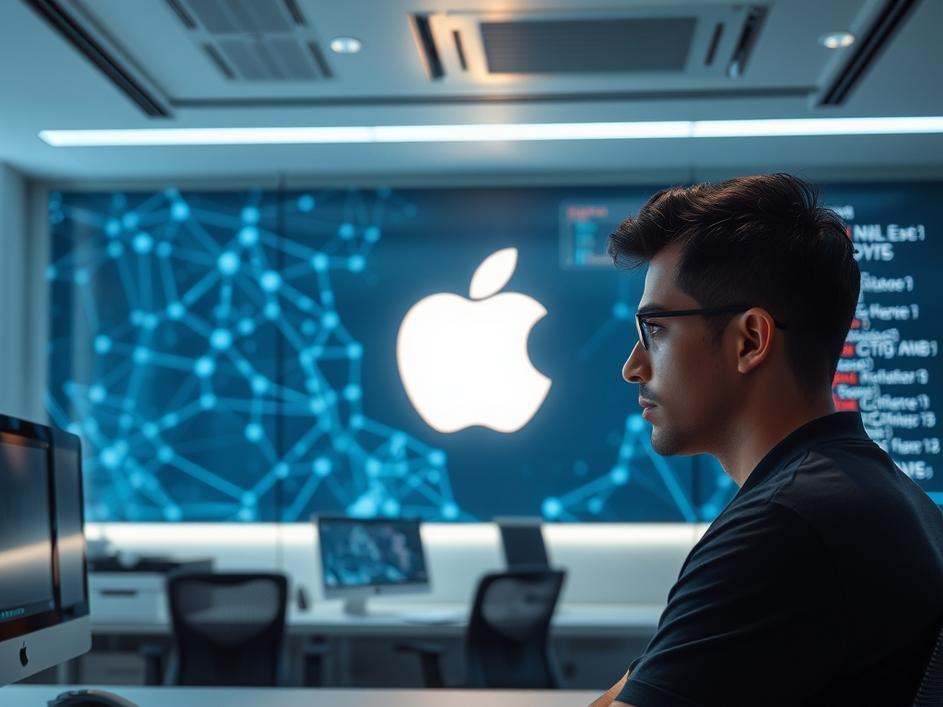
ToggleApple’s AI efforts are undergoing a significant shift. John Giannandrea, who has been leading the company’s artificial intelligence division, is stepping down from his role. This news arrives at a crucial time, as Apple is facing increasing pressure to improve its AI capabilities, especially with its voice assistant, Siri.
Siri, once a pioneer in the world of voice assistants, has been struggling to keep pace with competitors like Amazon’s Alexa and Google Assistant. While these other assistants have become more intuitive and capable, Siri has often been criticized for its limitations, misunderstandings, and general lack of sophistication. This has led many users to express frustration and even switch to rival platforms. The issue isn’t just about bragging rights; it’s about providing a seamless and genuinely helpful user experience, something Apple has always prided itself on.
So, why is this leadership change happening now? It’s hard to say for sure, but it’s likely a combination of factors. Performance is definitely a key consideration. Apple is known for its high standards, and if Siri isn’t meeting those standards, changes need to be made. Furthermore, the AI landscape is rapidly evolving, with new models and techniques emerging all the time. Apple needs to stay ahead of the curve to remain competitive, and perhaps a fresh perspective is seen as necessary to achieve that goal.
The big question is, what does this mean for the future of Apple’s AI initiatives? While the details of Giannandrea’s departure and any succession plans haven’t been fully revealed, we can make some educated guesses. We might see a renewed focus on fundamental research and development, with Apple investing more heavily in cutting-edge AI technologies. Another possibility is a strategic shift in how Apple approaches AI, perhaps with a greater emphasis on integration with other Apple services and devices. And naturally, improvements to Siri are likely to be a top priority, with the aim of making it a more reliable, intelligent, and user-friendly assistant. There is talk of Large Language Models or LLMs playing a bigger part of the assistant in the future.
This change at Apple also reflects the broader trends in the tech industry. AI is no longer a niche technology; it’s becoming increasingly integral to everything from search engines to self-driving cars. Companies that can successfully harness the power of AI will have a significant competitive advantage. Apple understands this, and they are clearly committed to strengthening their AI capabilities. This also places importance on the privacy debate; Apple has placed itself as the champion of user privacy, but AI models need data to train. If Apple cannot find an equilibrium between the two, it will be difficult to improve Siri, and other AI applications, without access to user data that can be used for training and improvements.
Ultimately, the success of Apple’s AI efforts will depend on the user experience. If Siri can become a truly helpful and indispensable tool, users will embrace it. If it continues to frustrate and disappoint, they will look elsewhere. Apple has a long history of creating products that are both technologically advanced and incredibly easy to use. They need to bring that same magic to the world of AI.
Apple is facing intense competition in the AI space, not just from Amazon and Google, but also from other players like Microsoft and OpenAI. These companies are investing heavily in AI research and development, and they are rapidly pushing the boundaries of what’s possible. Apple needs to respond with a strong and innovative AI strategy of its own. This situation also highlights the different approaches taken by companies. Google and Microsoft have embraced AI in almost all of their products. Apple has taken a more cautious approach, focusing on specific features and applications. Only time will tell which approach will ultimately be more successful.
It’s also important to remember that Apple’s AI efforts extend beyond Siri. AI is already playing a role in many other Apple products and services, from image recognition in Photos to fraud detection in Apple Pay. As AI technology continues to advance, we can expect to see it integrated even more deeply into the Apple ecosystem. Features such as automated photo organization, smarter search capabilities, and more personalized user experiences are all likely to be powered by AI in the future.
The departure of Apple’s AI chief is a significant event, but it’s not necessarily a cause for alarm. It could be a sign that Apple is taking a proactive approach to addressing the challenges and opportunities in the AI space. It’s also a reminder that AI is still a relatively young field, and there’s a lot of experimentation and innovation going on. The next few years will be critical for Apple as it seeks to strengthen its AI capabilities and maintain its position as a leader in the tech industry. Only time will tell if Apple can deliver an AI experience that truly lives up to its reputation for excellence, with particular emphasis on the balance between privacy and accuracy.



Comments are closed