

We are a digital agency helping businesses develop immersive, engaging, and user-focused web, app, and software solutions.
2310 Mira Vista Ave
Montrose, CA 91020

2500+ reviews based on client feedback
What's Included?
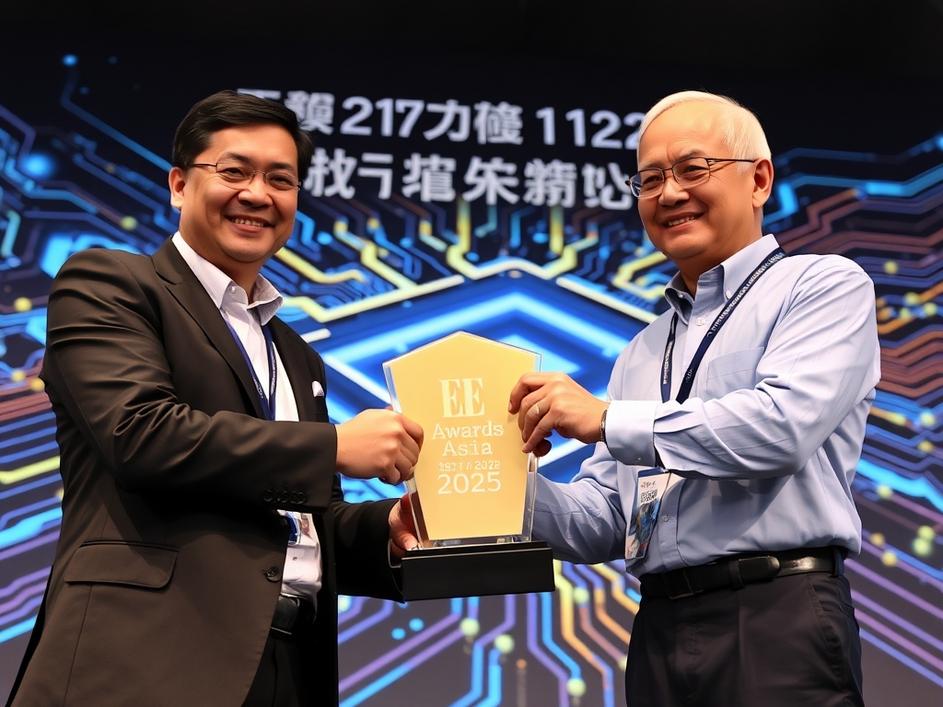
ToggleSkymizer, a company you might not have heard of yet, just scored a major victory at the EE Awards Asia 2025. Their HyperThought™ LLM Accelerator IP snagged not one, but two prestigious awards: “Best IP/Processor of the Year” and “Most Promising Product.” That’s a pretty big deal, and it signals some interesting shifts happening in the world of artificial intelligence hardware.
So, what exactly *is* HyperThought™? Well, it’s essentially a specialized piece of hardware designed to make large language models (LLMs) run faster and more efficiently. LLMs are the brains behind things like ChatGPT and other AI assistants. They require a ton of processing power, which can be a bottleneck. HyperThought™ aims to solve that problem by providing a dedicated engine specifically for LLM computations. Think of it as a turbocharger for your AI.
The EE Awards Asia are a significant benchmark in the electronics and electrical engineering industries. Winning “Best IP/Processor of the Year” means HyperThought™ has been recognized by a panel of experts as being truly innovative and impactful. And being named “Most Promising Product” suggests that the industry sees a bright future for this technology. These awards aren’t just trophies; they’re a validation of Skymizer’s hard work and a sign that their technology could become a major player in the AI landscape.
This win highlights a crucial trend in AI development: the increasing importance of specialized hardware. For a long time, AI relied heavily on general-purpose processors (GPUs) to do the heavy lifting. But as AI models become more complex, the need for more efficient and dedicated hardware solutions grows. HyperThought™ represents a move towards this specialization. It suggests that the future of AI will involve a combination of software innovation and hardware optimization, working together to achieve greater performance and efficiency. This also potentially lowers the barrier to entry for smaller companies to innovate in the AI space, as they can design specialized IP instead of competing directly with the mega-corporations on general purpose processors.
Skymizer might not be a household name yet, but their HyperThought™ win puts them firmly on the radar. This achievement could open doors to new partnerships, investments, and opportunities. It will be interesting to see how they leverage this success and what innovations they bring to the market in the coming years. They’ve proven they have the talent and technology to compete, and their focus on LLM acceleration positions them well to capitalize on the growing demand for AI-powered solutions.
While the awards are great, the true measure of HyperThought™ will be its real-world impact. Will it actually make LLMs significantly faster and more energy-efficient? Will it enable new applications and use cases for AI? These are the questions that will ultimately determine its success. If HyperThought™ can deliver on its promise, it could have a profound effect on various industries, from healthcare and finance to education and entertainment. Imagine faster medical diagnoses, more personalized learning experiences, and more efficient financial analysis – all powered by more accessible and efficient AI.
Of course, Skymizer faces challenges. The AI hardware market is competitive, and there are other companies working on similar solutions. Skymizer will need to continue innovating and refining their technology to stay ahead of the curve. They’ll also need to build strong relationships with customers and partners to ensure that HyperThought™ is integrated into real-world applications. It’s one thing to win an award; it’s another to build a sustainable and successful business.
Ultimately, Skymizer’s HyperThought™ winning these awards is more than just a company achievement. It’s a reflection of the broader trends shaping the future of AI. It signals the growing importance of specialized hardware, the increasing demand for LLM acceleration, and the ongoing quest for more efficient and powerful AI solutions. Keep an eye on Skymizer – they might just be building the future of AI, one chip at a time.



Comments are closed