

We are a digital agency helping businesses develop immersive, engaging, and user-focused web, app, and software solutions.
2310 Mira Vista Ave
Montrose, CA 91020

2500+ reviews based on client feedback
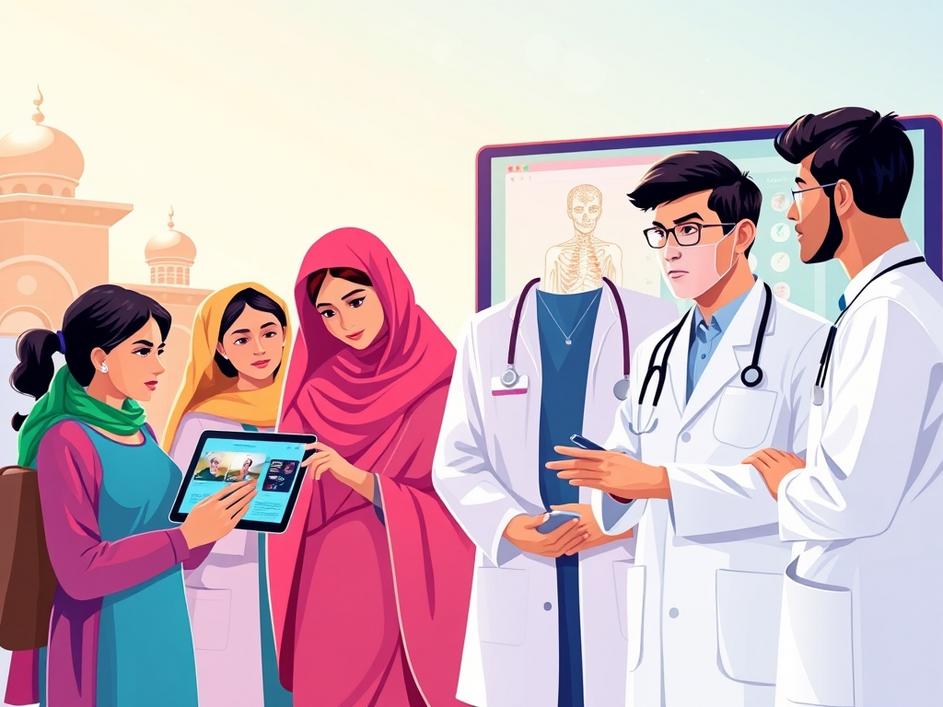
You know how technology just keeps changing everything around us? Sometimes, these changes feel far away, but every now and then, they hit really close to home, offering real solutions to big problems. That’s what’s happening right now in Pakistan. There’s some big news about an artificial intelligence company, MindHYVE.ai, teaming up with a well-known institution called the Prime Institute of Health Sciences. This isn’t just another tech announcement. It’s a story about bringing smart computer programs into medical schools and clinics to help both students learn better and patients get better care. It’s about building a brighter future, one innovative step at a time, for people who need it most.
What's Included?
TogglePakistan, like many places, has its own unique set of challenges when it comes to getting quality education and healthcare to everyone. Think about how hard it can be to train enough doctors and nurses, especially in specialized medical fields, and then make sure they all have the best, up-to-date knowledge. And on the patient side, making sure everyone, no matter where they live, can get top-notch medical attention is a huge task. These are not simple problems with easy answers. This new collaboration is an effort to tackle some of these big, tricky issues. It’s about using clever tools to fill gaps, make learning more engaging, and help doctors work more efficiently. Imagine medical students learning in ways that truly click with them, or doctors getting quick, helpful insights to guide their patient care. That’s the big idea here – making sure more people have access to great learning and better health.
So, when we talk about terms like “agentic artificial intelligence” and “adaptive learning,” what does that actually mean for everyday people? Let’s break it down simply. Forget about robots taking over. Think of agentic AI not just as a computer program that answers questions, but as a digital assistant that can actually understand a goal, plan how to reach it, and then carry out tasks on its own. It’s like having a very smart study buddy or a highly organized medical intern who learns your preferences and figures out the best way to help you succeed. Adaptive learning then builds on this. Instead of every student going through the exact same lessons at the exact same pace, an adaptive system learns about *you*. It figures out your strengths, where you might be struggling, and how you learn best. Then, it adjusts the lessons, practice questions, and examples just for you. If you grasp something quickly, it moves you forward. If you’re stuck, it offers more help, a different explanation, or even a fun simulation to try. This means learning becomes a personal journey, truly designed to fit your unique needs. For future doctors, this could mean complex medical topics become much clearer, and vital practical skills get practiced until they’re second nature.
This kind of personalized and responsive learning could truly revolutionize how medical students are taught in Pakistan. Picture a student trying to understand a complicated surgical procedure or diagnose a rare disease. With this system, the AI could notice if they’re having trouble, then offer tailored resources: maybe extra animated diagrams, a series of detailed case studies to review, or even virtual reality simulations where they can practice without any real-world risk. It’s not about forcing everyone into the same mold. Instead, it lets students get instant, direct feedback on their progress, study at a pace that works for them, and really focus on the areas where they need the most support. This approach could lead to doctors who graduate with a much deeper understanding of medicine, more practical confidence, and a truly robust set of skills. It also has the potential to help standardize the quality of medical education across different regions, ensuring that all students, no matter where they are, have access to cutting-edge learning tools and opportunities to excel.
But the benefits of this partnership stretch far beyond just the classroom. This AI also has huge potential for how doctors actually treat patients every day. Think about the incredible amount of information a doctor has to juggle: new research coming out constantly, each patient’s unique history, and countless possible conditions and treatments. An AI assistant could become an invaluable aid, helping doctors quickly sort through vast amounts of medical data. It could suggest possible diagnoses based on a patient’s symptoms, flag potential drug interactions that a human might miss in a busy moment, or even help tailor treatment plans based on the latest evidence. This is not about replacing the vital role of doctors; it’s about giving them an incredibly powerful, intelligent assistant that helps them make the best possible decisions faster and more accurately. This could mean quicker, more precise diagnoses, more effective treatment paths, and ultimately, better health outcomes for patients. Especially in areas where specialist doctors might be scarce, this kind of AI support could help local practitioners provide a higher standard of care than ever before, narrowing some of the existing gaps in healthcare access across the nation.
The impact of this collaboration could reach much further than just Pakistan. If this project proves successful, it could serve as a valuable blueprint, showing other countries with similar challenges how to effectively use AI to improve their own education and health systems. It’s a promising model for global progress. However, bringing this kind of advanced technology into daily life, especially in critical areas like medicine, is not without its challenges. We need to think carefully about things like ensuring fair access for everyone, regardless of their background or location. We also need to plan for proper training, making sure both students and medical staff know how to use these new tools effectively and confidently. And, of course, there are important ethical questions around using AI, particularly with sensitive patient health information. Protecting privacy and ensuring the AI systems are fair, unbiased, and transparent are huge considerations that require constant attention. Building trust – making sure both students and patients feel comfortable and confident in these new, smart tools – is also key. This is a very big step, and it needs careful thought and planning every step of the way to make sure the benefits truly reach and uplift everyone.
So, this exciting new venture between MindHYVE.ai and the Prime Institute of Health Sciences is much more than just a piece of tech news. It signals a truly hopeful future where technology serves people in deeply meaningful ways. It’s about creating smarter, more personalized learning paths for the doctors of tomorrow and giving today’s medical professionals cutting-edge tools to better care for their communities. The journey ahead will surely have its own set of challenges, but the immense promise of better education and healthier lives for countless individuals is a powerful reason to keep moving forward. It’s truly exciting to imagine the positive changes this new chapter could bring to Pakistan and beyond.



Comments are closed