

We are a digital agency helping businesses develop immersive, engaging, and user-focused web, app, and software solutions.
2310 Mira Vista Ave
Montrose, CA 91020

2500+ reviews based on client feedback
What's Included?
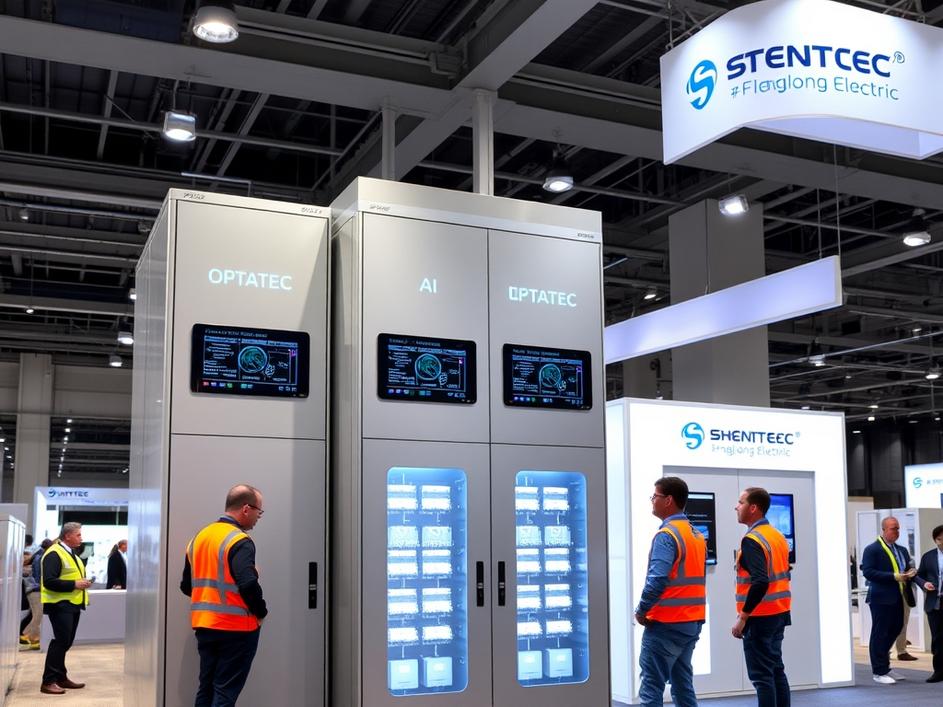
ToggleOn a bright May morning in Frankfurt, the hall of OPTATEC buzzed with curious visitors. Among the many booths, Shenglong Electric set up a modest stand that quickly drew attention. The reason? Their new AI Distribution Cabinet was being shown for the first time to a public crowd. The press release called it a paid announcement, but the real story is in what the machine actually does. It is not just another metal box; it mixes sensors, software and a bit of clever thinking to make power handling smarter.
The AI Distribution Cabinet is a compact unit that sits between the main power source and the smaller circuits that feed a building or a small grid. Inside, there are traditional breakers and switches, but also a set of tiny computers that run a simple neural net. These computers watch voltage, current, temperature and even the pattern of usage over time. When something looks off, the system can decide to open a breaker, send an alert, or even reroute power to keep things running.
Think of the cabinet like a guard who watches a street. The guard has eyes that see everything, and a brain that knows what normal traffic looks like. If a car speeds or a bike crashes, the guard steps in. In the cabinet, the “eyes” are the sensors, and the “brain” is the AI model that has been trained on lots of data from other cabinets. When the model spots a spike that could mean a fault, it tells the breaker to act. All of this happens in a few seconds, without a human having to press a button.
For a power company, any unexpected outage costs money and hurts reputation. The AI cabinet promises to catch problems early, so crews can be sent out before customers notice a flicker. It also records detailed logs that can be used later to improve maintenance schedules. In places where the grid is old and fragile, having a smart device at the distribution point could mean fewer blackouts and smoother operation during peak demand.
The timing of the launch lines up with a growing push for smarter grids across Europe. Regulators are asking for better monitoring, and many cities are rolling out renewable sources that need more flexible control. Shenglong’s product is positioned as a drop‑in upgrade for existing cabinets, which could make adoption easier. Rather than replacing whole substations, a utility can add a few AI cabinets where they need the most insight.
Other firms have been adding communication modules to their breakers for a while now. Some have built cloud platforms that collect data from many devices. What sets Shenglong apart, at least on paper, is the on‑board AI that can act locally. This reduces the need for a constant internet connection and lowers latency. Companies like Siemens and Schneider Electric have similar concepts, but they often rely on a central server to make decisions.
Even with the tech in place, there are practical issues to think about. First, the AI model needs good data to stay accurate. If a cabinet is installed in a very different environment, the model may need retraining. Second, customers may be wary of handing over control to a black‑box algorithm. Trust will have to be built through transparent reporting and clear safety standards. Finally, the cost of the unit must be low enough for utilities to see a return on investment.
Seeing the cabinet at OPTATEC felt like a glimpse of how everyday power infrastructure could get a bit smarter without a huge overhaul. The idea of putting a small brain on a breaker is not brand new, but doing it in a compact, ready‑to‑install package could be useful. I think the real value will come from the data it gathers over months and years. If utilities can turn that data into better planning, the cabinet becomes more than a safety device; it becomes a source of insight.
In the end, the success of Shenglong’s AI Distribution Cabinet will depend on how well it fits into existing workflows and how clearly it shows cost savings. The demo at OPTATEC was clean, and the engineers seemed impressed. If the company can prove reliability in real‑world conditions, we may see a slow but steady rollout across Europe’s aging grids. For now, it’s a promising piece of hardware that hints at a future where power networks are a little more aware of themselves.
Source: Original Article



Comments are closed